Thobile Mpumza was shot dead in Marikana in 2012. The family is fighting for compensation as Thobile was their breadwinner.
Thobile Mpumza was running like he was a mad man, his hands up in the air, begging not to be shot. Yet the police still shot him. Although this was one of the few incidents where the police were recorded shooting and killing someone on 16 August 2012, the state has refused to compensate his family.
Xolelewa Mpumza and her family refuse to participate in the Marikana massacre commemorations. Standing in her parents’ yard on the outskirts of Mount Ayliff in the Eastern Cape, she speaks of the burden she has been left with after her brother was gunned down.
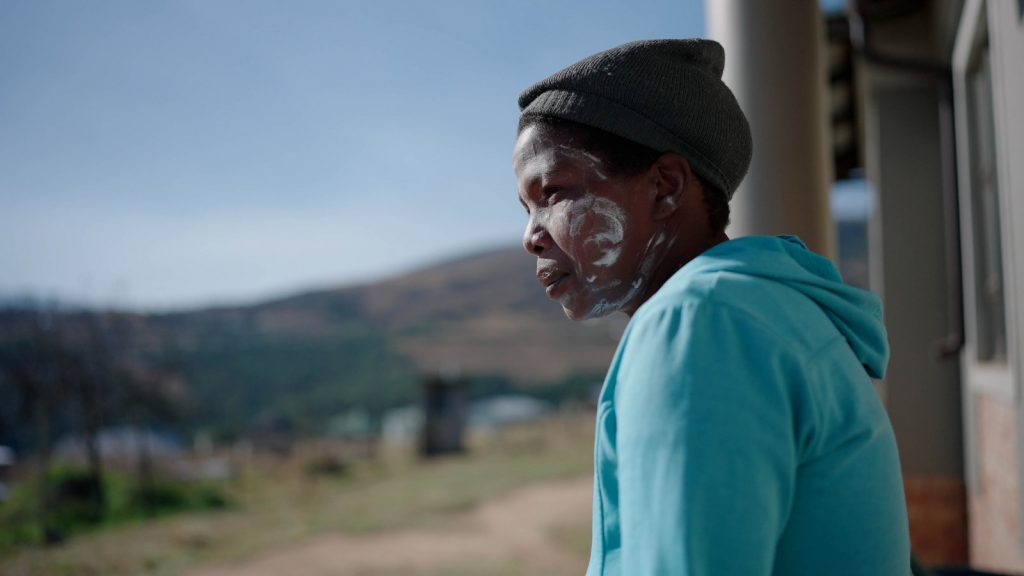 ‘He died like a dog’: Xolelewa Mpumza, whose brother Thobile Mpumza was shot dead in Marikana in 2012. The family is fighting for compensation as Thobile was their breadwinner
“It would have been better if Thobile had died with my parents. Their loss I could easily deal with; his I don’t think I can ever,” she says in Xhosa.
She detests the commemorations that happen every year, refusing to even turn on the television in case she stumbles upon a photograph of her brother being shot.
“I still remember the day my siblings told me what had happened to Thobile. That really hurt. I asked what kind of God is he? He should have taken me rather than Thobile. But we don’t choose for God.”
Xolelwa cries, using her pale blue jersey to wipe the tears streaming down her clay-smeared face.
“Talking about this awakens the pain I have had to carry and it hasn’t become easier. I have asked the lawyers to remove my brother’s name from the list of Marikana victims. He died like a dog and in death is treated like one too.”
Xolelwa’s face becomes hard when she describes how she found out that her family would not receive compensation from the government.
“I asked our lawyers why we were not receiving compensation. I told them they were treating us as if my brother was not killed like everyone else during the massacre. The state makes it as if he was the cause of the massacre.
“I have tried to ask that they remove my brother’s name there. They must stop saying that there were 34 families who had lost loved ones. They must say there are 33 families.”
According to Khuselwa Dyantyi, an attorney at the Socio-Economic Rights Institute (Seri), two families, the Mpumza and Sagalala families, have still not received compensation.
Modisaotsile van Wyk Sagalala died in a police van after the shootings on 16 August. The three police officers who said he died in hospital were found not guilty of defeating the ends of justice by lying about where the mine worker died.
“In terms of the Sagalala family, they recently received their offer and we are finalising the administration so that the money can be paid. In terms of the Mpumza family, the state rejected their claim and argued that there was no legal duty from the deceased to support his siblings as all were major at the time of his death,” said Dyantyi.
Thobile was the main breadwinner after their parents died.
“He made sure that our parents’ home did not crumble. He took care of us because there was no one else who would live here. Back then, I was still healthy enough to find piece jobs but he took care of so much here at home. We could always count on him. Now I can’t even find work because of how sick I have been since the massacre — and he is gone too,” said Xolelwa.
Dyantyi said the Mpumza family is challenging the state’s argument. The matter would be brought before a judge to decide whether the family must be compensated.
“It’s not just about money. If you look at the Mpumza family, they also want the officer who shot their brother and bragged that he had ‘killed the bastard’ to stand trial.
“At the Marikana commission, Xolelwa saw her brother running away from the police. He was running away like he was crazy. He got shot. Not once, several times. On the video, you could hear the police boasting that they had shot ‘the bastard’.”
Dyantyi argued that the Mpumza family deserved justice and said Seri would continue to fight for them.
“The state says that it was Thobile’s will to support them and it had no obligation to do so. They refused to compensate. It’s been so difficult to explain to the family.
“But that compensation will never be enough for the family. They have suffered immensely. It’s not even about the loss of support. They want to hear from the person who they saw killing their brother. He must be prosecuted. That police officer cannot even justify their actions.”
Dyantyi argues that without prosecutions for the 16 August killings, there is little hope the families will find closure. Seri would continue following the criminal proceedings so that one day “we see the matters of 16 August being prosecuted”.
“We will continue supporting the families in their struggle until they find justice, until someone from the state meets the families and apologises.”
Seri is also fighting for constitutional damages for the violation of their rights and the rights of the deceased, which include loss of parental care and family life. But Dyantyi says they have not heard from the state regarding this claim since 2018, when the families were offered R500 000.
The solicitor general Pandelani Fhedzisani was not available for comment at the time of going to print.
Thobile Mpumza was running like he was a mad man, his hands up in the air, begging not to be shot. Yet the police still shot him. Although this was one of the few incidents where the police were recorded shooting and killing someone on 16 August 2012, the state has refused to compensate his family.
Xolelewa Mpumza and her family refuse to participate in the Marikana
massacre commemorations. Standing in her parents’ yard, on the outskirts of Mount Ayliff in Eastern Cape, she speaks of the burden she has been left with after her brother was gunned down.
“It would have been better if Thobile had died with my parents. Their loss I could easily deal with; his I don’t think I can ever,” she says in Xhosa.
She detests the commemorations that happen every year, refusing to even turn on the television in case she stumbles upon a photograph of her brother being shot.
“I still remember the day my siblings told me what had happened to Thobile. That really hurt. I asked what kind of God is he? He should have taken me rather than Thobile. But we don’t choose for God.”
Xolelwa cries, using her pale blue jersey to wipe the tears streaming down her clay-smeared face.
“Talking about this awakens the pain I have had to carry and it hasn’t become easier. I have asked the lawyers to remove my brother’s name from the list of Marikana victims. He died like a dog and in death is treated like one too.”
Xolelwa’s face becomes hard when she describes how she found out that her family would not receive compensation from the government.
“I asked our lawyers why we were not receiving compensation. I told them they were treating us as if my brother was not killed like everyone else during the massacre. The state makes it as if he was the cause of the massacre.
“I have tried to ask that they remove my brother’s name there. They must stop saying that there were 34 families who had lost loved ones. They must say there are 33 families.”
According to Portia Khuselwa Dyantyi, an attorney at the Socio-Economic Rights Institute (Seri), the Mpumza and Sagalala families have still not received compensation.
Modisaotsile van Wyk Sagalala died in a police van after the shootings on 16 August. The three police officers who said he died in hospital were found not guilty of defeating the ends of justice by lying about where the mineworker died.
“In terms of the Sagalala family, they recently received their offer and we are finalising the administration so that the money can be paid. In terms of the Mpumza family, the state rejected their claim and argued that there was no legal duty from the deceased to support his siblings as all were major at the time of his death,” said Dyantyi.
Thobile was the main breadwinner after their parents died.
“He made sure that our parents’ home did not crumble. He took care of us because there was no one else who would live here. Back then, I was still healthy enough to find piece jobs but he took care of so much here at home. We could always count on him. Now I can’t even find work because of how sick I have been since the massacre – and he is gone too,” said Xolelwa.
Dyantyi said the Mpumza family is challenging the state’s argument. The matter would be brought before a judge to decide whether the family must be compensated.
“It’s not just about money. If you look at the Mpumza family, they also want the officer who shot their brother and bragged that he had ‘killed the bastard’ to stand trial.
“At the Marikana commission, Xolelwa saw her brother running away from the police. He was running away like he was crazy. He got shot. Not once, several times. On the video, you could hear the police boasting that they had shot ‘the bastard’.”
Dyantyi argued that the Mpumza family deserved justice and said Seri would continue to fight for them.
“The state says that it was Thobile’s will to support them and it had no obligation to do so. They refused to compensate. It’s been so difficult to explain to the family.
“But that compensation will never be enough for the family. They have suffered immensely. It’s not even about the loss of support. They want to hear from the person who they saw killing their brother. He must be prosecuted. That police officer cannot even justify their actions.”
Dyantyi argues that without prosecutions for the 16 August killings, there is little hope the families will find closure. Seri would continue following the criminal proceedings so that one day “we see the matters of 16 August being prosecuted”.
“We will continue supporting the families in their struggle until they find justice, until someone from the state meets the families and apologises.”
Seri is also fighting for constitutional damages for the violation of their rights and the rights of the deceased, which include loss of parental care and family life. But Dyantyi says they have not heard from the state regarding this claim since 2018, when the families were offered R500 000.
The solicitor general Pandelani Fhedzisani was not available for comment at the time of going to print.
[/membership]