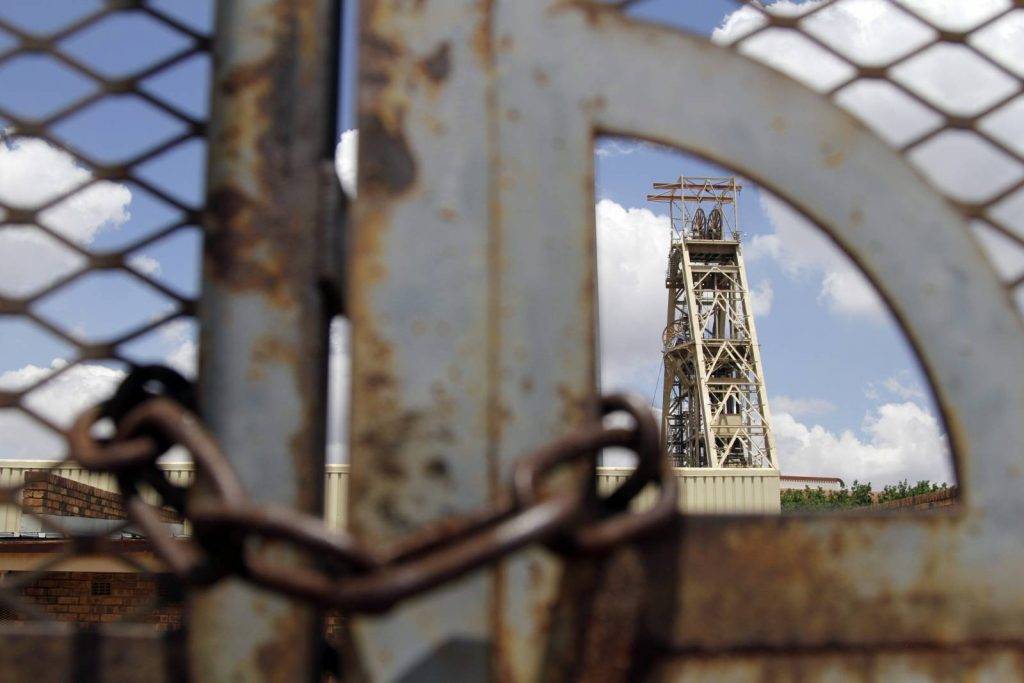
The department of mineral resources and energy has hit back at critics who have spoken against its latest draft report on South Africa Renewable Energy Master Plan released in July. (Dean Hutton/Getty Images & Luca Sola/Getty Images)
A sixfold increase in the price of electricity since 2008 has contributed significantly to the closure of mines as companies struggle to keep up with escalating costs.
“Mines have finite lives and must close at some point. Rapid cost escalations in key items like electricity accelerate mine closures because it simply becomes uneconomic to continue operations,” said the head of communications at the Minerals Council South Africa, Allan Seccombe.
“Electricity costs have increased more than sixfold since 2008 for large industrial energy consumers like mining companies.”
He said many mining companies were turning to renewable energy sources, which are expensive, diverting capital away from investments in sustaining operations and expansions or new projects, which was of serious concern for the mining industry.
Mining output decreased by 1.9% year-on-year in January, according to Statistics South Africa, marking the 12th consecutive month of year-on-year decline after a 3.5% contraction in December 2022.
Economic conditions deteriorated further in early 2023 as global demand weakened, commodity prices declined and load-shedding intensified, economists at Nedbank said. This is expected to have harmed production in most industries.
Sibanye-Stillwater recently announced that it had retrenched 168 employees after completing consultation processes with unions under section 189 of the Labour Relations Act. This followed the closure of two of Sibanye’s gold operations — Beatrix 4 shaft and Kloof 1 plant — which had reached their end of life.
The reasons for a mine’s doors being permanently shut include input costs for items such as electricity, labour, water, rail and port costs as well as other materials, Seccombe said. Wages and electricity are two of the biggest cost items for mines.
“When costs surpass the value of the minerals extracted and sold, the mine becomes loss-making and will be closed.
“Other reasons that lead to mine closure include mineral commodity price drops, or declining grades, closure of downstream industry or loss of markets, unpalatable government decisions, safety and geotechnical factors,” he said.
“The jobs in the mining industry post mine closure should be replaced through the establishment of the post-mining economies or secondary industries such as factories, agriculture, tourism, energy projects, obviously depending on the markets and site specific conditions.”
In a statement, Sibanye-Stillwater chief executive Neal Froneman said although the decision to close or restructure operations “is never taken lightly, the closure of the end of life, and loss-making operations are necessary to ensure sustainability for the remainder of the business”.
The mining industry employed more than 400 000 people as of 2022, with the gold industry accounting for 95 000. Sibanye-Stillwater said the two gold operations that had shut down employed 1 959 people.
The company said 136 employees had accepted transfer opportunities to available positions at other group operations in South Africa, while 552 people were given voluntary separation or early retirement packages. Natural attrition accounted for 103 employees.
“Regrettably 168 employees could not be accommodated, or chose not to participate in the agreed avoidance measures, and as such will be retrenched,” it added.
These workers will join millions of jobless people in a country already sitting on a high unemployment rate of 32.7% of the labour force.
 Offset: Load-shedding forces mining companies to invest in cleaner renewable energy such as this solar field at Gold Fields mine in Westonaria. Photos: Dean Hutton/Getty Images & Luca Sola/Getty Images
As part of their mine closure plans, companies are supposed to retrain the affected workers to create other economic opportunities for the community that surrounds the operations, according to Janine Espin, the managing director at Economic Development Solutions.
“[But] you don’t see that being done,” Espin said. “You can go to so many mining operations that have closed or even railway stations that have closed and the communities are left absolutely destitute.”
There are no provisions by the government for workers and communities for when a mine reaches its end of life, a major failure of the department of mineral resources, she added.
“The rehabilitation fund and the mine closure strategy is not only around the environmental infrastructure of the mine but also around the community and the workers of the mine. Legally, the mines are supposed to retrain the employees to ensure that the employees are employable in different spheres post the mine closure,” Espin said.
The few people who are trained are usually trained in mining skills which are not transferable to other industries. This is against the backdrop of a reduced number of mines in the country and fewer investors pouring money into the sector.
“That’s why you have zama zamas,” Espin said, referring to people who work illegally in abandoned mine shafts to retrieve the minerals left behind.
“You have capable people who, all they know is to mine. It’s the only skill they have. There are opportunists out there and they understand there are these people who have skills and they are providing them with an opportunity to use those skills and abuse those people at the same time.”
A series about mining in the Northern Cape by the Mail & Guardian last year explored the industry largely through the lens of informal miners whose efforts to obtain legal permits have been futile. They are not among the informal miners who work for syndicates without making any attempt to get mining permits.
“I was caught putting food on the table,” said Andrew Arnolds, an illegal miner who has been arrested more than six times since he started the activity in 2012.
Arnolds worked for a mine owned by the De Beers Group and was one of many employees who lost their jobs when the company suspended production at its Namaqualand Mines in 2009, after the global financial crisis of 2008.
Espin says there are more than 6 000 abandoned mines in South Africa. “Of those abandoned mines you have mining houses that obviously did not rehabilitate, did not close shafts appropriately and that’s why you have the opportunist zama zamas going into these abandoned mines or abandoned shafts and mine in those mines.”
The department of mineral resources says it would cost more than R49 billion to rehabilitate these mines.
The abandoned mines are usually the result of companies not receiving a certificate for mine closure, Espin said, and instead they go into care and maintenance.
“And when they put the mine into care and maintenance, in essence, the mine is no longer operating. But it’s actually not a mine closure. In that care and maintenance period that is where your rehabilitation needs to happen,” she said.
Mine rehabilitation is the restoration of the mined landscape to the intended post-mining land use.
Two years ago the mineral resources and energy department unveiled a new mine closure strategy, which is envisioned to deal with the detrimental fallout from mine closures. According to the strategy, mine closure must be environmentally and socially sound and economically viable.
The draft strategy envisions transforming land damaged by mining into agricultural projects, tourism enterprises and the self-generation of energy by mining companies. Non-mining use of mined lands for economic programmes must be planned as an integral element of a mine’s life cycle.
Seccombe says it is a legal requirement for the mine to rehabilitate disturbed land to an agreed end land state and the rehabilitation should take place concurrently as the mining activities are progressing.
Espin said the rehabilitation starts with the vegetation, followed by water purification and ending with a determination on the physical structure. Mine rehabilitation helps communities living around the mine to move forward without the mine.
“The buildings could be destroyed, or the buildings could be repurposed, depending on what the mine actually wants to achieve with the rehabilitation,” she said.
“If you are in a community, buildings could be handed over to either community or NGOs or a community trust, which would use them for the infrastructure, either for clinics or for training centres. It depends on how much the mine actually wants to invest in rehabilitation.”