Panyaza Lesufi was re-elected Gauteng premier last week and it is widely assumed that his cabinet will include a mix of ANC and DA politicians. Photos: Sharon Seretlo and Fani Mahuntsi/Gallo Images
Four times a week, about 80 older people gather at the Vuka Uzenzele Pimville Oldies club in Soweto. There, they receive two nutritious meals, do physical exercise, art and handwork classes — and enjoy each other’s company.
But the club, which started 15 years ago, faces an uncertain future. The Gauteng department of social development has reconfigured its R2.3 billion budget, redistributing funding for NGOs working with vulnerable groups to its “elevated programme areas”, which tackle problems such as substance abuse and homelessness.
In recent weeks, nonprofit organisations have voiced their concern that this will lead to many job losses in the NGO sector, particularly among social work professionals and that thousands of vulnerable people — including children and families, older people, physically and mentally impaired people and people with HIV and Aids — will no longer receive social welfare services.
The R73 920 subsidy the Pimville Oldies received every three months from the department has been terminated and its four staff members are out of work.
The club’s members depend on pensions and many are breadwinners, said coordinator Kidi Mofube.
“After three days, that [pension] money is gone. At least they knew that they can enjoy breakfast and lunch at the service centre but now it’s no longer there,” she said.
She attended a meeting with the department at Gallagher Estate on 5 April where nonprofit organisations were informed about the department’s plans to reconfigure its budget in line with its elevated priorities.
“It was a bombshell. We need to scratch our heads about what we are going to do now.
“Even if we can only provide breakfast, we don’t want to lose these people … If we leave them at home they are going to be vulnerable to crime, to abuse by their grandchildren.
“It’s better when they’re at the club … At least they’re refreshed, they’ve got new things in their minds, unlike at home, where you don’t even know what you’re going to eat during the day,” Mofube said.
‘No budget cuts’
The social development department said that in October, after Panyaza Lesufi was elected premier, the provincial government was reconfigured, resulting in departments being grouped together to respond to priorities identified by Lesufi.
The department of social development was merged with the department of agriculture, rural development and the environment.
Its elevated priorities included “a heightened fight” against substance abuse; drastically reducing homelessness; a “war on poverty through improving food security; welfare-to-work programmes through accelerated skills development and the promotion of environmental sustainability”.
It insisted the budget of R2.3 billion allocated to nonprofit organisations “remains and there is no cut to the budget”.
The “amount remains and has been distributed among the NPO sector and largely on the provincial elevated priorities, accordingly”.
Furthermore, residential care services for older people, child and youth care centres, shelters for women and those with disabilities will remain funded accordingly and service level agreements are being finalised “with sector NPOs where challenges have not been raised”.
‘Moving deckchairs’
But Gert Jonker, the founding trustee and chief executive of the Bethany House Trust, said although the department had kept the budget intact, it had “now moved around the deckchairs”.
Sixty percent of the department’s budget for NGOs had been moved to the elevated priorities, including substance abuse, he said, describing how at least R580 million had been redistributed by the department without proper consultation with the NGO sector.
“They’ve moved R580 million away from children and families, away from services to the elderly and from the disability sector. The rest of the fields of services must then make do with what’s left of the budget.
“Most organisations historically funded by the department had their funding cut by 61% overnight.”
He said there would be huge job losses among social workers and that thousands of poor and marginalised people, including children, older people and disabled people, had been “thrown to the wolves”.
The department had cut or withheld funding for posts and subsidies.
“They’re forcing organisations to close because … if you cut someone’s operational budget, which might be the only income they have, by 61%, most organisations will close down because how do they replace the money?” Jonker said.
He said there was an increase of 55% in funding to substance abuse, a 146% increase in sustainable livelihoods and skills development, a 97% increase to youth development and a 226% increase to development of women.
“All those areas are important and we fully support services to those demographics but you can’t take food from a 90-year-old woman who gets fed three times a week on a welfare budget and give it to a 19-year-old nyaope addict because the premier thinks that he must be rehabilitated and go live on a government farm which we have to pay for.”
There will be a “massive explosion of poverty”, he said. “People who are already marginalised will simply be dragged down into a poverty cycle and, I’m sad to say, but I think many people will simply die because there are no services available for them and, without those social welfare services, they can’t function.
“That’s the net effect of the decision to reprioritise … We will only see this in a few months’ time and then who will be blamed when we close down services? They will say that we chose to close down.”
Safe haven for disabled
Annalene Rossouw has been a social worker for 30 years “but never in my life have I experienced what I’ve experienced in the last week”.
“It’s heartbreaking.”
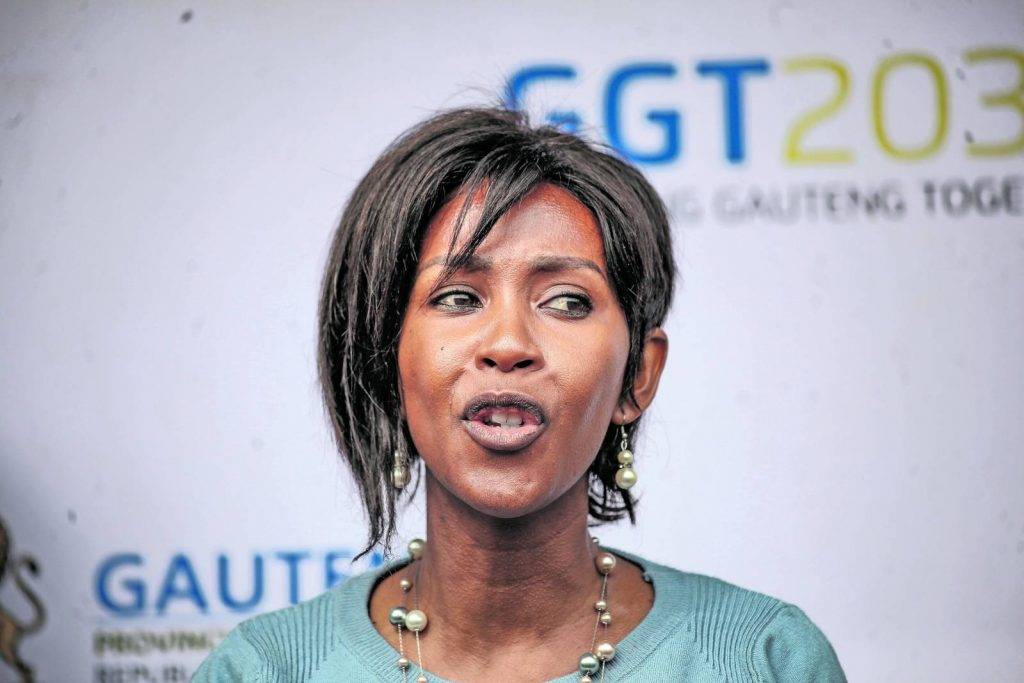 Moving deckchairs: Social development MEC Mbali Hlophe moved part of the budget from NGOs to other priorities, such as substance abuse. Photos: Sharon Seretlo and Fani Mahuntsi/Gallo Images
She is the director of the West Rand Association for Persons with Physical Disabilities, which has spent 76 years delivering support services, residential care, skills development and social work services to more than 2 000 people with disabilities.
Its subsidy, which funded four social worker and two social auxiliary worker posts, has been stopped, as has funding for its outreach programme in Magalies and Tarlton, and the workshops it runs.
Rossouw has to retrench 10 staff members, who are breadwinners.
“We’ve just gone through Covid. We had three very difficult years because corporate and donor funding decreased drastically.
“We were just starting to recover and were highly dependent on the subsidy,” she said. “We’re now short R922 000, so they cut more than 50% of what we used to get.
“We’re going to have a major disaster if these people are going to go back into their communities, where they will be physically, emotionally and financially abused.”
Social worker Bhengu Shongwe, of the Central Gauteng Mental Health Society, said its funding had been cut by R6 million.
“For us, it will mean closure of offices and the termination of social work services for beneficiaries with intellectual disability and mental illness … As social workers, we were depending entirely on the department for our social worker posts so all of us now will be gone.
“We don’t have a problem with change but it has to be communicated properly. You can’t be calling me in April, telling me that in April you are terminating or you are cutting funds from me without preparation.
“We are talking lives here, but it’s clear the department doesn’t care about the people who are vulnerable.”
This week, MEC for social development, agriculture, rural development and the environment Mbali Hlophe met representatives from the Gauteng Social Welfare Forum.
She has established a small working committee made up of sector representatives and the department, “which will, in the interim, look into the authenticity of the number of NPOs approved by the department and those with challenges that need to be urgently addressed”.
Hlope would immediately institute a comprehensive audit into approved NPOs and the department’s internal governance processes and deal with allegations of “ghost NPOs and nepotistic conduct by officials”.
The department said its refocus on the elevated priorities is to strengthen the capacity of the state, to improve living conditions in townships, informal settlements and hostels, to accelerate economic recovery and to improve health and wellness of communities through tackling substance abuse and improving food security.
“As per the State of the Province address delivered by the Premier in February 2023, he reiterated and emphasised on the need for us to do more to help the vulnerable and additionally to safeguard the future of this nation by upscaling on skills development, ensuring that the provision of skills forms a key aspect of the substance abuse rehabilitation work, and equally the work with the poor, GBV victims and homeless within the communities.
“This is to ensure we get more individuals to be independent, particularly those who have the ability to work but lack opportunities to fully actualise and therefore remain reliant on various government grants such as the R350 grant,” Hlophe said.
Traditionally, the department had been viewed as a department of social aid and welfare.
“However, the current socio-economic landscape characterised by high unemployment, poverty, and a low tax base due to a large number of people being reliant on the state, calls upon the department to raise the development imperative in the department … so, as we provide aid to our beneficiaries, we also ought to ensure their development,” she said.