A South African Police Services (SAPS) and South African National Defence Force (SANDF) joint operation on illegal mining in Durban Deep on November 29, 2023 in Roodepoort, South Africa. Illegal mining has been a continuing threat in South Africa for decades, with poverty, unemployment and crime driving the underground industry. (Photo by Gallo Images/Sharon Seretlo)
The deployment of more than 3 000 South African National Defence Force (SANDF) members to tackle illegal mining has unleashed numerous incidents of brutality involving artisanal miners.
The allegation is documented in an open letter to President Cyril Ramaphosa from the National Association of Artisanal Miners (Naam), which represents the interests of artisanal (small-scale) mining in the country.
In November, Ramaphosa authorised the deployment of 3 300 SANDF members, at a cost of R492 million, who would join forces with the police in “an intensified anti-criminality operation against illegal mining across all provinces” until April.
But Naam has condemned Ramaphosa’s decision. “Since your deployment … there have been many incidents of brutality meted out by soldiers on the artisanal mining community,” the letter said, noting most had not been reported on.
“Thousands of men, women and children in distressed mining communities have been pushed further into poverty because artisanal miners have been unable to go to work to feed their families.”
Naam chair Shawn Lethoko said since December he had received reports that informal miners could not afford to buy clothes for their children after raids on their operations. “They were not able to work because soldiers were targeting the surface artisanal miners instead of going underground.”
‘No distinction’
The open letter detailed the “ongoing targeting and harassment by soldiers” of the Batho Pele Artisanal Mining Cooperative, whose members belong to Naam, near Kimberley. This is despite Batho Pele possessing an official mining permit issued by the department of mineral resources and energy in 2017.
Lethoko said soldiers had arrested members and confiscated machinery, rudimentary tools and diamonds. “The problem is when they were released they never got their … diamonds back,” he said, adding that through the intervention of their lawyers, the co-operative’s members were able to fetch their confiscated equipment from the police station and scrapyards.
Soldiers were using a blanket approach to “target and victimise everyone” who was practising artisanal mining. “There is no distinction made between legitimate artisanal miners, such as those who belong to Naam, and so-called ‘zama zamas’, who largely operate under the cover of criminal syndicates.”
The rights of artisanal miners, as enshrined in the Constitution and related legislation, such as the Mineral and Petroleum Resources Development Act (MPRDA), are being “consciously violated”, Lethoko said.
These rights include the right to equality, dignity and life; the right not to be the subject of state violence and degradation; the right to administrative justice and due process; the right to choose one’s own trade, occupation and the right not to be deprived of property.
“The combined result of your actions in deploying SANDF soldiers is the ongoing and gross violation of these basic constitutional and human rights of artisanal miners as well as the undermining of the efforts of Naam and others to fight the stigmatisation of artisanal and small-scale mining,” the letter said.
This does not align with the Africa Mining Vision, which seeks to formalise artisanal mining in all AU member states to fight poverty and create a transparent, equitable and optimal exploitation of minerals to underpin broad-based sustainable growth and socio-economic development, according to the letter.
Naam said the soldiers’ actions were also contrary to the Minamata Treaty on eliminating mercury in artisanal activities because they force miners to operate in the dark.
“In turn, this only helps criminal syndicates to thrive and take advantage of the poor by exploiting their labour and the country’s minerals, while contributing to the further destruction of the environment.”
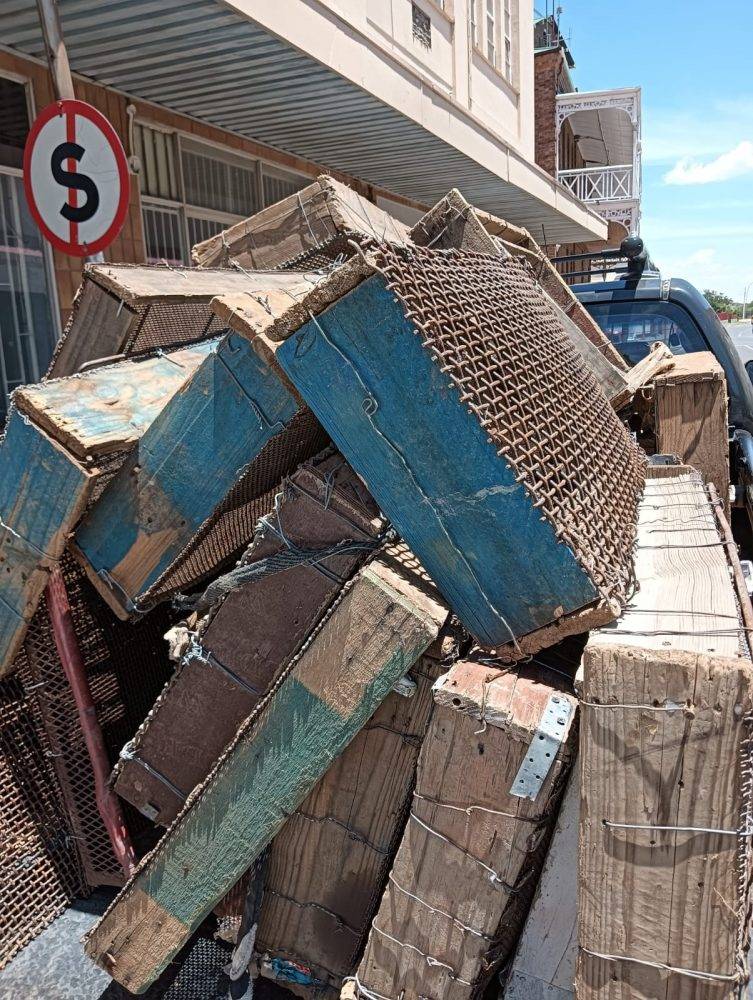
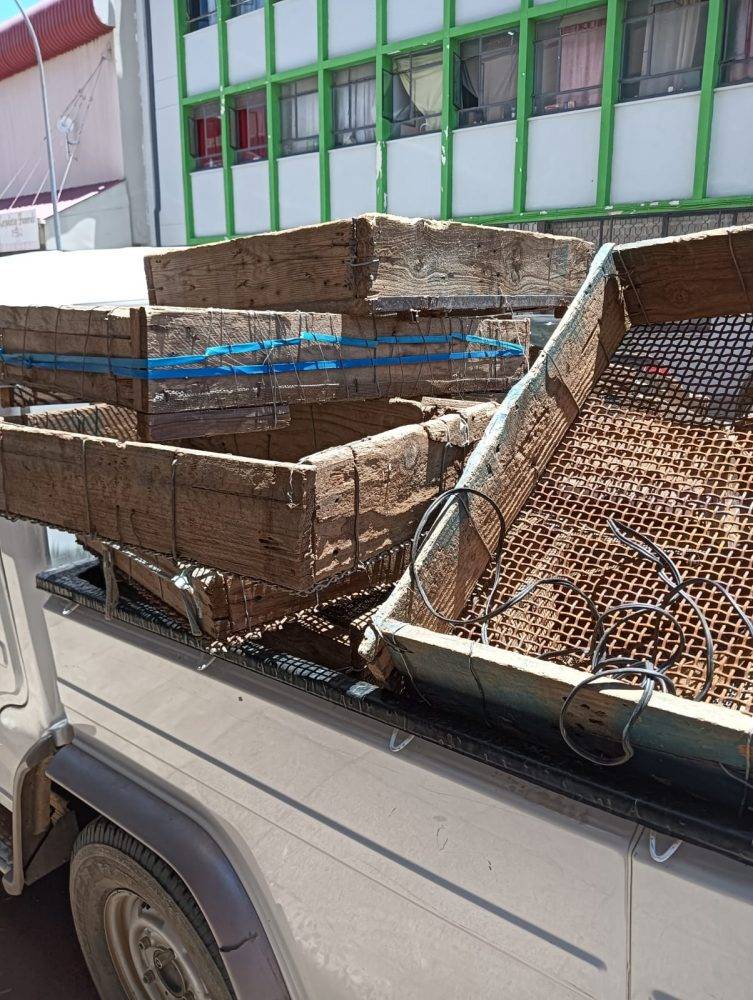 Mine of information: Tools used by ‘zama zama’ illegal miners
Making the situation worse
The artisanal and small-scale mining policy (ASM) should be implemented and improved as an amicable solution, instead of deploying soldiers.
“As Naam, we simply cannot understand why you would choose a militarised approach that completely undercuts your own government’s (through the department’s) stated desire to legislate the ASM policy through proper consultation with the ASM sector.”
Artisanal miners and Naam members have been sidelined from decision-making processes nationally, resulting in decisions such as the SANDF deployment “being based not in facts but on the further criminalisation and stigmatisation of the ASM sector”.
Speaking at the Investing in African Mining Indaba this week, Ramaphosa said illegal mining was placing further strain on mining output and returns.
“Since the establishment of a specialised police unit, working with the defence force, we have seen a number of arrests, prosecutions and convictions of the perpetrators of this crime. The department of mineral resources and energy, through Mintek, continues to seal ownerless and derelict mines.”
But Lethoko, who lives in Stilfontein, Klerksdorp, claimed that some soldiers were in the pockets of illegal mining cartels “so as not to go and raid underground workings” where they operated.
“The report I got in my area is that these soldiers are already in the pockets of the criminal syndicates. They are not raiding them; they are protecting them so that they can continue working without interference, so that is how big these syndicates are. They can even buy the station commanders in other areas.” Tracey Cooper, the executive director of Mining Dialogues 360°, said: “I think there’s a very important issue with making a distinction between normal people who have lived in an area forever, and are simply trying to make a legal living, and criminal syndicates.
“And it’s wrong of the government to not differentiate between normal citizens and apply such force that really should be directed at the criminality that’s involved with the zama zamas,” she said, describing Naam’s hard-won efforts to distinguish its members as being legitimate artisanal miners.
She said indigent people have been denied the right to a self-sustaining livelihood. The brutality that’s been applied to them, that does not distinguish between them and the illegal syndicates, is unjust, she said.
The defence force could be deployed usefully in circumstances “where you are dealing with clearly armed groups of criminals, because then I do think that the skills and the tactics of the SANDF would be very well applied”, Cooper said.
“But I don’t think you can just blanket use them, across the board, to address all forms of [artisanal small-scale mining activity] in whatever location.
“There are specific circumstances where it would be better to use the SANDF but not all of them.”
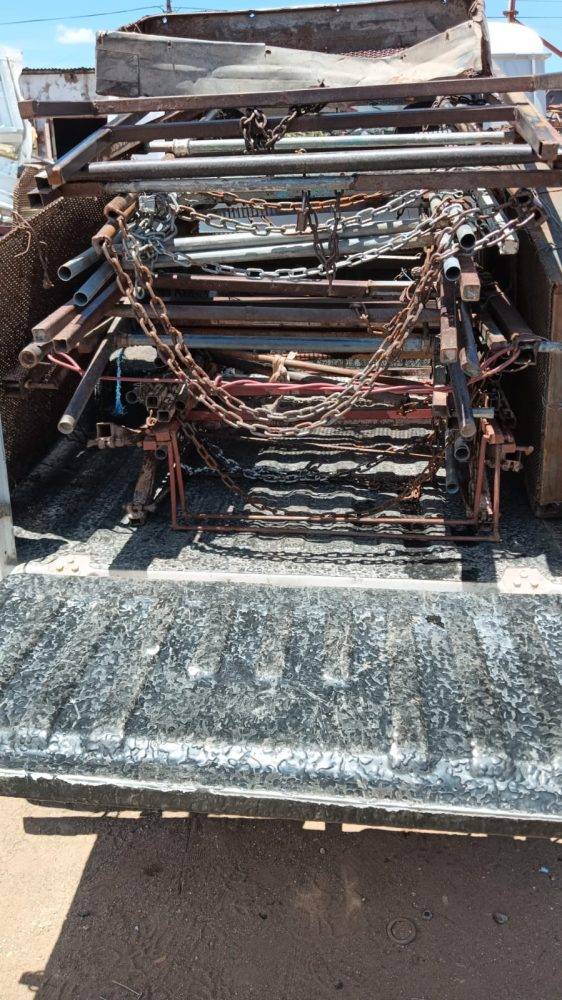
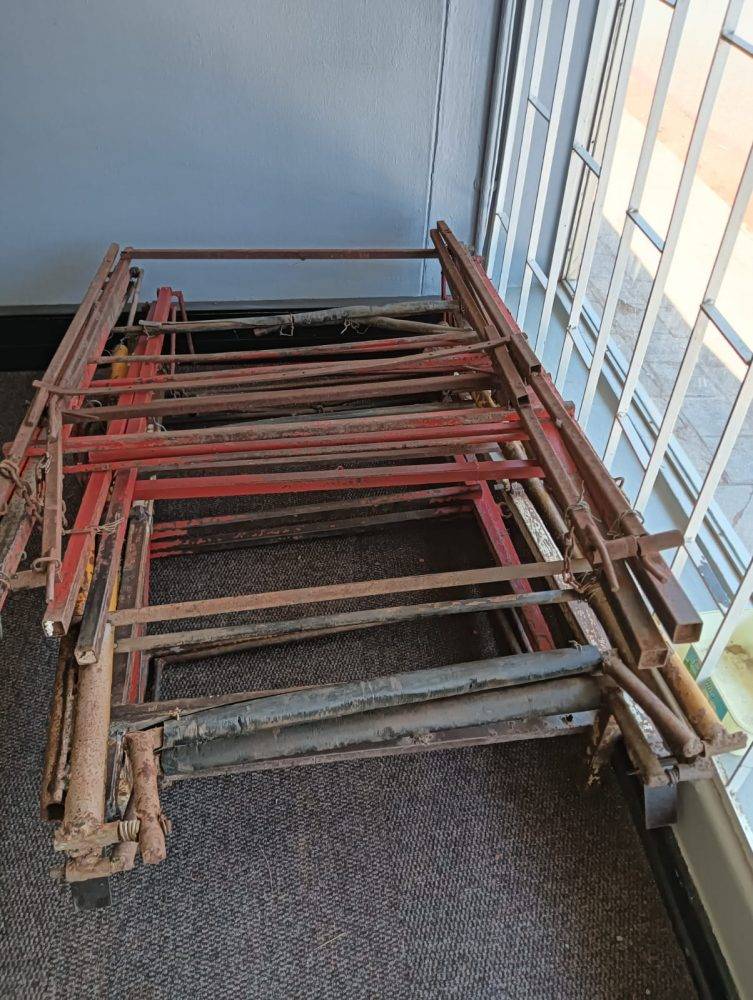 Mine of information: Tools used by ‘zama zama’ illegal miners
Proper closure
Mariette Liefferink, the chief executive of the Federation for a Sustainable Environment, supports the promotion of artisanal and small-scale mining as well as Naam’s “noble endeavours” to legitimise artisanal and small-scale mining.
“We furthermore are in agreement that the department’s systemic non-enforcement of non-compliance with the MPRDA, the National Environmental Management Act, the Mine Health and Safety Act and its regulations has resulted in the externalisation of the risks and impacts to mining affected communities, a mute environment and future generations.”
Loopholes in the MPRDA have allowed mining companies to circumvent their closure and rehabilitation obligations, leaving South Africa with more than 6 000 ownerless and derelict mines.
“Cessation of mining without proper closure and remediation, liquidation, care and maintenance, failure to monitor compliance with social and labour plans and environmental management programme reports, contribute to unlawful mining.”
The Federation for a Sustainable Environment has publicly called on the department for the implementation of the ASM policy and the promulgation of legally enforceable regulations.
Liefferink said the informal nature of artisanal small-scale mining and the non-existent legal protection make it open to illegal dealings.
“The current socio-economic situation in South Africa has also pushed many into unregulated artisanal mining. There is a direct link between retrenchment of mine workers and informal mining.”
Liefferink said it is necessary to clearly distinguish illegal mining from artisanal small-scale mining, adding there is an urgent need for the government to strengthen laws regarding the criminalisation of illegal mining to deter illegal activities, which endangers lives.
The department said it has had an engagement with Naam on various issues related to the small-scale mining programme and the support that it provides. “Public awareness and educational workshops about the policy and small-scale mining activities are done with aspirant and potential small- scale miners by the department,” it said.
During February and March this year, the department will be holding workshops on the small-scale mining programme, the support structure to artisanal and small-scale miners and on the recent ASM policy. It added that its regional office has a “very good working relationship” with the leadership structure of the Batho-Pele Mining Primary Cooperative.
“If there are challenges, the office holds meetings with them in order to resolve those challenges. Batho Pele had challenges late last year with the deployment of the soldiers in their areas of operation. But the directors of Batho Pele had a meeting with the soldiers and explained to them how they operate since they are licensed.
“The soldiers were informed that all members of Batho-Pele have identification cards and that they only work within the boundaries of their issued permit and the matter was now resolved.”