Cape fur seal. Image by Tess Gridley/Sea Search
Eleven Cape fur seals have tested positive for rabies in Cape Town’s waters — the first outbreak of this often fatal viral disease in a marine mammal population in the world.
This figure is likely to rise, according to Gregg Oelofse, the coastal manager for the City of Cape Town.
“This is the first time globally that there’s a recorded case of an outbreak of rabies in a marine mammal population,” he said.
“It’s undocumented in terms of what it is, how we deal with it, and what it means.”
The only known case of rabies in a seal was detected in the Svalbard islands of Norway in 1980 after it was bitten by a rabid Arctic fox.
Rabies, an infectious disease that affects the brain and central nervous system, is nearly 100% fatal once symptoms appear. Immediate medical attention following suspected rabies exposure is critical.
But the city has stressed that there is no cause for panic, noting that although rabies is new in Cape fur seals, it is endemic in many wildlife populations in South Africa.
The rabies virus is spread to humans and other animals through contact with the saliva of infected animals. Humans can be exposed through bites, scratches or licks to wounds, grazes, broken skin or to the lining of the mouth and nose by rabid animals.
Last month, following the confirmation of rabies in Cape fur seals along the coast, the Western Cape health department alerted residents to the risk, noting the “potential for rabies cases along the entire coastline where seals are present”.
It warned individuals who frequently come in contact with seals or use coastal areas for recreational activities, such as surfers, divers, water sports enthusiasts, and those in the fishing industry particularly to be extra cautious.
“If no post-exposure prophylaxis is given, an infected person may start experiencing symptoms one to three months after exposure,” the department said, noting that in rare cases, symptoms can develop after more than six months following exposure.
A committee comprising the City of Cape Town, the department of forestry, fisheries and the environment, the Western Cape government, SANParks, the Cape of Good Hope SPCA (Society for the Prevention of Cruelty to Animals), Sea Search, Two Oceans Aquarium as well as pathologists, independent marine mammal experts, vets and seal researchers has now been established, the city said.
They are working together to better understand the scale and extent of the rabies prevalence in the seal population and to devise and implement management interventions.
“Seals are a normal part of our coastline and one should expect to see seals on the shore line and expect to see seal carcasses on our shoreline.
“These do not equate to or are as a result of rabies,” the city said.
The rabies outbreak is “new territory for all of us”, Oelofse said. As such, there’s no global precedent for understanding how to manage it, the implications for the Cape fur seal population and the potential risks of transfer to other marine mammals — and humans. “We’re trying to figure it out as we go.”
Testing for rabies can only be conducted on the brains of dead animals, he pointed out.
For the past two and a half years, officials had been working in partnership with Tess Gridley, the co-director of Sea Search, after “picking up increased aggression in seals and unprovoked seal bites” on people.
Tess Gridley/Sea Search collecting seals
Gridley had been collecting seal carcasses, performing necropsies and preserving their brains in formalin since 2021.
“And then, the first positive case we got was 6 June,” Oelofse said.
“But we’ve been wondering about rabies for a little while. We didn’t really think it was rabies because rabies hadn’t occurred in any other marine mammal populations before.
In May, in a video posted on Facebook, several surfers documented how they had been attacked and bitten by a seal at Muizenberg beach.
“We were speculating and thinking about it [rabies] and then four particular seals came up on our shoreline that were quite concerning in terms of their behaviour,” Oelofse said. “Those seals were euthanised and their brains were sent for immediate testing. Three of the four came back positive.”
Experts at the University of Pretoria are sequencing the rabies virus to determine where and when rabies entered the seal population.
It is most likely that rabies got into a seal population either from a dog or a black-backed jackal, Oelofse said. “It’s endemic in black-backed jackals in Southern Africa.”
He said the researchers “are sequencing the rabies virus and they’ll learn a bit more in terms of the variant that’s in the seals”.
The university has been looking at the older brains that Gridley had put in formalin.
“We didn’t test them in August 2023 but the animals were collected in August 2023. The tests have only been done now,” Oelofse said. “That just tells us that rabies was in the population as far back as at least August 2023 and I suspect as more tests are done on the historic brains in formalin, we’ll probably find that positive tests go back further than that.”
The Cape of Good Hope SPCA has been involved with the seal “die-offs” since 2021, said its chief inspector, Jaco Pieterse.
“We were the first entity to start the post-mortem process and were shortly joined thereafter by the other organisations. In 2021, we were concerned about rabies and sent three samples for further testing through the state veterinary services, but they came back negative for rabies,” he said.
“We were then advised that there has only ever been one rabies positive case reported/recorded in seals in the 1980s [in Norway] and therefore rabies is highly unlikely.”
No further testing was done until recently.
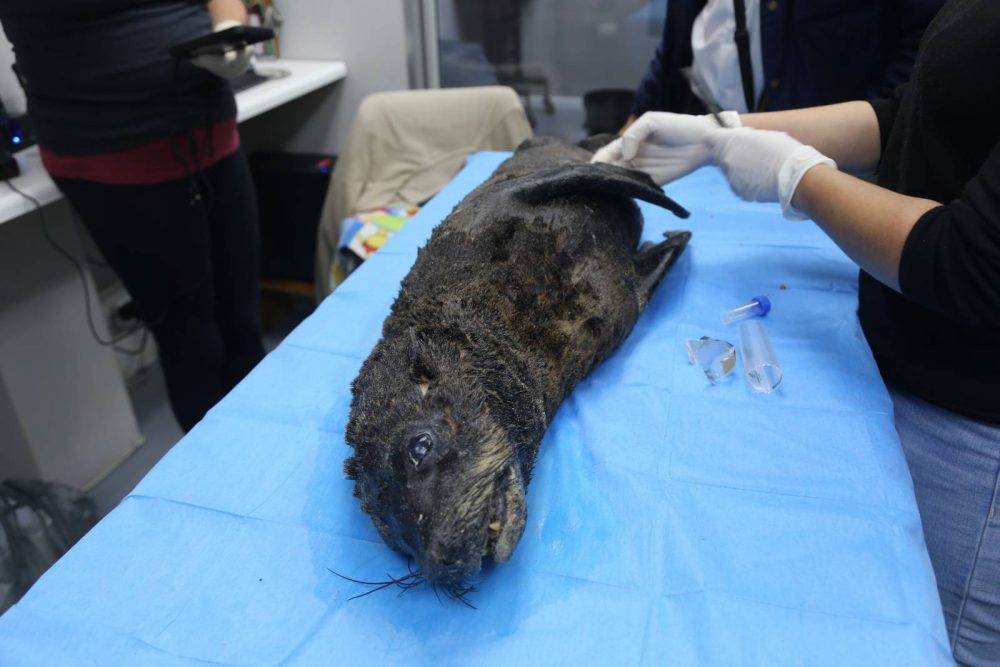 Sampling of a rabid seal, Tess Gridley/Sea Search
“We are very concerned about the current situation as it does not only negatively impact our seal population, but also a human health risk — rabies is deadly if the person does not seek appropriate treatment,” Pieterse said.
Not all cases of unprovoked bites on people or seal aggression can be associated with rabies, Oelofse said.
“Some of the animals that we have tested that had bitten people had not been positive for rabies.
“It does seem like there’s a distinct change [in seal behaviour], which we can probably attribute in large part to rabies — but there are other things going on and we’re still looking at those as well,” he said.
Eight people, who were bitten by seals, had received post-exposure prophylaxis and the human rabies vaccine.
Oelofse stressed that it’s normal for seals to wash ashore on Cape Town’s shoreline.
“We take anywhere between 800 and 8 000 dead seals off our beaches every year and that’s because seals naturally have a high mortality rate,” he said.
“And we haven’t seen huge changes in that number, though they obviously vary from year to year. We would be concerned if we suddenly saw a massive climb in that.”
Knowing how to manage the rabies outbreak is difficult, Oelofse added.
“There are two million seals, they move great distances and mostly live offshore on seal colonies, so it’s not like managing a rabies outbreak in domestic dogs where you can just go and vaccinate all the dogs.
“We don’t yet fully understand what the implications might be for the seal population. It might be that it’s not significant, it might be that it is. It really is a case of fumbling around and trying to figure this out as we get more information.”
Next week, a workshop will be held on rabies in the Cape fur seals and “hopefully after that we’ll have a clear picture around what we should be doing in the long-term to try to mitigate this situation”.