The appeal of Patrice Motsepe as a potential president thus reveals a deeper truth: the ANC’s structural and ideological contradictions remain unaddressed. Photo: Wikimedia Commons
If democracy is truly the rule of the people, why should they not have a direct say in who leads the nation?
For decades, South Africans have longed for a deeper expression of popular agency, not just through protests but by choosing the person who occupies the country’s highest office.
In 2029, that longing could become reality. Instead of factional bargaining behind closed party doors, citizens could cast ballots in a direct presidential election held alongside the proportional vote for parliament.
This would mark a historic shift from the post-apartheid norm, reflecting public frustration with internal party politics and a desire for leadership that transcends the factional gridlock of the government of national unity (GNU).
This is not idealism: it is the next logical step in the democratic evolution of a society shaped by struggles for liberation, dignity and people-centred governance.
Legal reform of Section 86
The 2023-24 electoral reforms finally allow independent candidates to contest national and provincial elections, overturning decades of exclusive party jurisdiction.
Before this, only party candidates could run for parliament; now an independent can qualify by collecting as few as 1 000 signatures from registered voters.
However, the Constitution still requires the president to be elected by the National Assembly (NA), a structure that entrenches party dominance.
As a result, independent executive leadership remains nearly impossible under the current framework. The practical barriers remain:
• Independents may win only one seat in the NA, even if they garner sufficient votes, while parties dominate the rest;
• Electoral thresholds for translating votes into seats continue to favour parties; and
• The Constitution still binds the presidency to the Assembly’s choice.
This disconnect between legal participation and actual executive power is why reform is so consequential.
To empower the electorate and address the political impasse emerging after 2024, Section 86 of the Constitution should be amended to allow for a direct popular election of the president alongside proportional representation in parliament.
Such a model, grounded in semi-presidentialism as a form of executive power-sharing, has global precedent and could align South Africa’s legal framework with public sentiment and democratic theory.
Sentiment analysis: Motsepe vs Lesufi
Two figures are frequently discussed as potential leaders in this emerging scenario: Patrice Motsepe and Panyaza Lesufi. Examining public sentiment towards each highlights the opportunities and limitations of independent versus party-affiliated leadership.
Patrice Motsepe: The reluctant symbol
For many, Motsepe represents the “ideal” philanthropic independent leader: successful, wealthy and untethered from party politics. But in multiple interviews he has repeatedly dismissed rumours about entering formal politics or seeking the presidency, stating that he does not need to hold office to serve the nation.
Nonetheless, Motsepe’s public sentiment is mixed. Some view him as a successful technocrat who thinks beyond factional party interests and appeals to a public desire for leadership outside traditional career politics.
Critics argue that his wealth, limited political experience and elite connections distance him from everyday struggles and complicate claims of true independence.
This duality reflects a broader tension: people want an independent leader but many question whether a billionaire businessperson, even a popular one, can embody grassroots leadership.
Panyaza Lesufi: The party-grounded contender
By contrast, Gauteng Premier Lesufi embodies continuity within the party system, a figure rooted in ANC structures and a potential successor in leadership talks.
He has built a profile around socio-economic policy initiatives and he recently survived a no-confidence motion in the Gauteng provincial legislature, suggesting significant cross-party support despite opposition criticism.
However, public sentiment is equally complex.
Supporters praise his hands-on approach to social needs and his advocacy for economic justice and transformation, whereas critics highlight administrative controversies, debates about his governance style and concerns that his leadership remains too closely tied to party politics to meet the demands of the presidency.
Lesufi has sidestepped talk of a direct candidacy, describing leadership succession speculation as “mute” within the ANC until the official process begins.
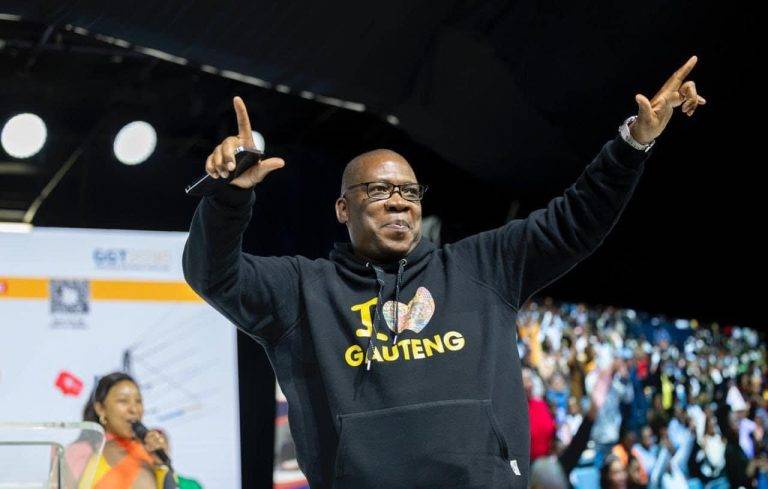 Man of the people: Gauteng Premier Panyaza Lesufi embodies continuity within the party, a potential successor in leadership talks, says the writer. Photo: X
Uncertainty about semi-presidentialism
There are concerns that a direct presidential election could weaken the link between executive legitimacy and parliamentary accountability.
Although Cape Verde and Senegal are predominantly representative democracies, they also feature direct presidential elections.
In Cape Verde, the president is elected directly, whereas the NA is chosen through proportional representation.
Senegal similarly combines direct presidential elections with a multiparty representative parliament and a history of peaceful power transitions.
South Africa could also consider a Botswana-style model, blending representative democracy with participatory governance to reinforce popular sovereignty and increase opportunities for direct citizen participation.
Semi-presidential systems split the roles of head of state and head of government, offering a way around the structural barriers that limit independent political power.
In South Africa, where independents remain constrained by seat limits, electoral thresholds and a presidency chosen by parliament, such a system could justify a Motsepe–Lesufi executive duo: Motsepe, as an independent president, would embody the people’s direct choice, whereas Lesufi, affiliated with the ANC, would ensure legislative cooperation and stability. Together, they would balance citizen preferences with parliamentary representation — the kind of leadership many South Africans may seek in 2029.
Since 1994, South Africa’s democracy has grown and the 2023-24 reforms now allow independent candidates to run. But as long as the president is chosen by parliament, popular sovereignty remains constrained.
Reforming executive elections to include direct mandates could strengthen accountability, adapt proportional systems to citizen expectations and transcend party factionalism. In 2029, let the people decide not just who enters parliament but who leads the nation — a historic chance to redefine democracy itself.
Zimkhitha Manyana is an international relations lecturer at the University of the Witwatersrand and holds a doctoral degree in political science from the University of Johannesburg.