


From a small family business struggling to get bank loans for expansion, to a multibillion-dollar conglomerate.
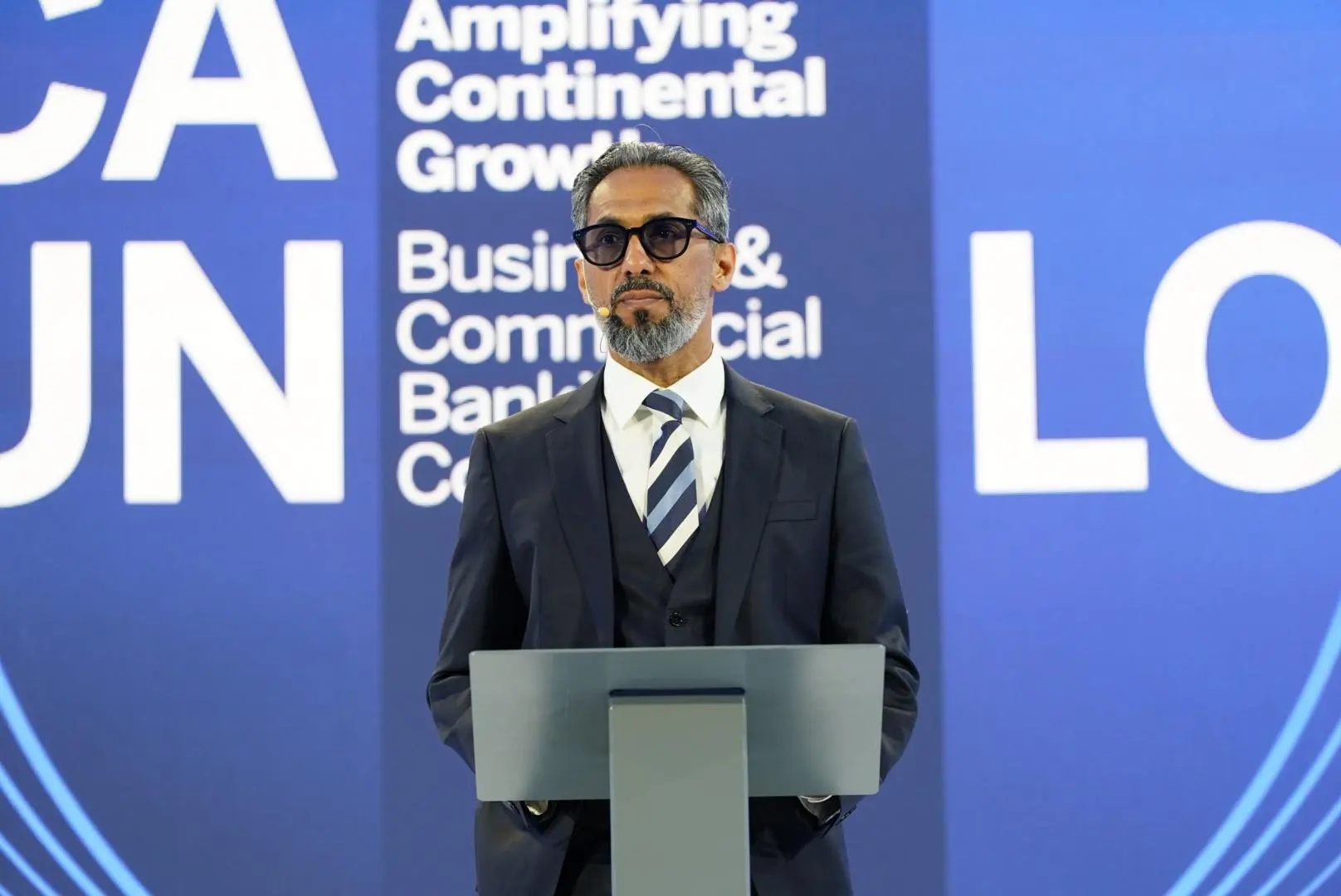
That is the story revered Tanzanian billionaire and philanthropist Mohammed “Mo” Gulamabbas Dewji shared at the Standard Bank Africa Unlocked 2026 conference in Cape Town this week.
The CEO of Mohammed Enterprises Tanzania Limited (MeTL) stated that before the company became a market leader, his grandparents were retailers. They sold small packets of salt and other daily essentials from a corner store in rural Tanzania.
“Talk about the small humble beginnings of retail — at the time people were buying and selling in grams. My father started with transport, moving goods across difficult routes at a time when infrastructure was limited and building a business required extraordinary resilience. He spent countless hours travelling across the country to ensure that goods reached the people who needed them.
“Growing from that small retail outlet into a $30 million [R490m] revenue business required grit, determination and deep belief,” Dewji said.
After graduating from Georgetown University in the US, Dewji returned to Tanzania to join the family business.
“When I began expanding MeTL, Tanzania’s banking sector was in its early stages of development. In 1998, the country’s largest commercial bank had a paid-up capital of approximately$10m. That meant the maximum financing available to a business like ours was only around $2m — far below what was needed to support the scale of our ambitions.
“Like many African entrepreneurs, we had to look beyond our borders for growth capital.”
Like many African entrepreneurs, we had to look beyond our borders for growth capital. Few were prepared to back the ambition.”
Eventually, one bank believed in MeTL. It became a partnership that transformed the company’s trajectory.
With its headquarters in Dar es Salaam, Tanzania's largest privately owned multinational generates more than $2 billion in annual revenue, contributing from 3.5% to 5% of the country’s gross domestic product.
The company operates in 11 African countries and employs more than 40 000 people.
Dewji said Africa rewarded “endurance more than perfection”.
“Success on this continent is rarely about finding the path of least resistance. It is about having the courage to keep building, the resilience to keep adapting and the discipline to keep moving forward, long before the results are visible. Those experiences have shaped my journey,” he said.
MeTL has diversified interests: agro-processing, distribution of agricultural equipment, energy, petroleum, transport, logistics, real estate, infrastructure, manufacturing and consumer goods.
Dewji said Africa was home to nearly 1.5 billion people and predicted that by 2050, one in every four people on Earth would be African.
“It has the world’s youngest population, an estimated 60% of the world’s uncultivated arable land, abundant critical minerals and one of the fastest-growing consumer markets in the world.
“These are not simply indicators of potential but foundations of our future growth. The question is no longer about whether Africa can build but whether we will build boldly enough.”
Dewji said capital was one of the biggest challenges for African businesses.
“While capital matters, confidence and resilience matters first. As leaders, investors and financial institutions, we should always ask ourselves: Whose ambition are we willing to believe in before the market does? When you build around people rather than markets, growth becomes the outcome, not the objective. Businesses that improve everyday life become institutions that earn trust.”
MeTL expanded into food processing, edible oils, beverage production, textile manufacturing, soaps, detergents and consumer goods that millions of African families use every day.
“We also invested in logistics, banking and insurance, recognising that manufacturing does not succeed in isolation. Today, MeTL manufactures more than 50 product categories, operates in 11 African countries, employs more than 40 000 people and is on track to generate more than $3bn in annual revenue in 2026.
“Rather than sitting in a comfortable office, I spent long days on factory floors alongside our teams, helping turn struggling businesses into successful manufacturing operations.
“Many of the factories we acquired were underperforming. We saw potential where others saw problems, investing in newer efficient technology, systems and people to transform them into productive businesses. That ability to adapt has been one of MeTL’s greatest strengths.
“Over the years, we have navigated commodity cycles, currency fluctuations, changing regulations and shifting consumer demand. We have adapted because the needs of our customers have continued to evolve.”
Within the next year, MeTL is expected to commission a processing plant capable of producing about 50 000 tonnes of graphite annually at around 95% purity.
“But this is only the beginning,” Dewji said. “Our medium to long-term ambition is to invest approximately over a quarter of a billion dollars to produce 99.5% battery-grade graphite, creating significantly greater value here in Africa, while supplying global markets.
“That is the future Africa must pursue. Africa should not simply supply the raw materials that power the world, but rather process, manufacture and capture more of the value they create.
“The same principle applies to agriculture and technology. Prosperity comes not from what we extract but from what we create.”