


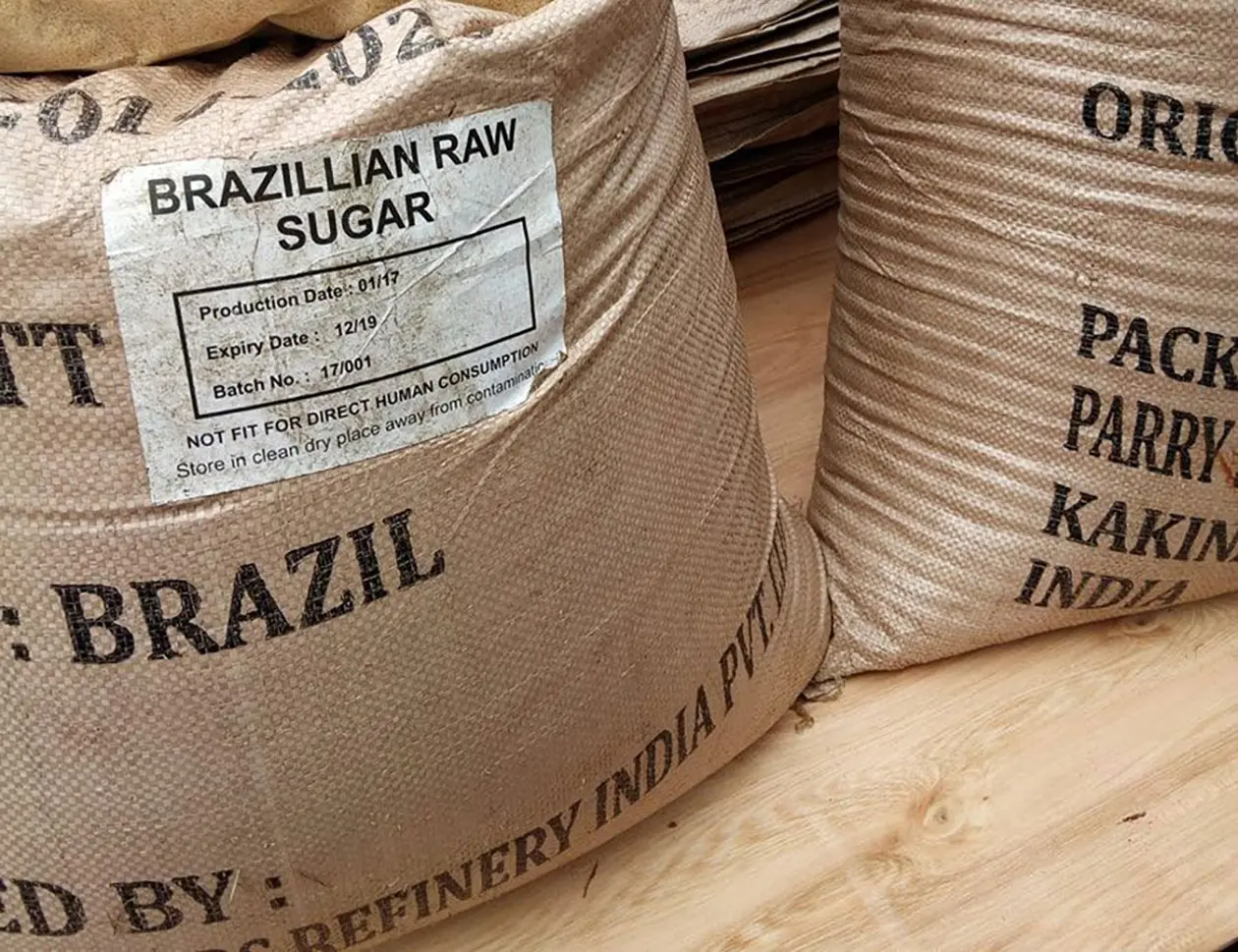
The department of trade, industry and competition (DTIC) has remained tight-lipped about which South African companies sourced sugar from Brazil, Thailand and India, while the government's response to mounting pressure from rising imports on the domestic sugar industry remains far from finalised.
Of three JSE-listed companies approached by the Mail & Guardian about whether they imported sugar from international suppliers, food retailer Shoprite said it sourced sugar only from local producers.
"Sugar sold in our Shoprite, Checkers, Checkers Hyper and Usave supermarkets across South Africa is obtained locally," Shoprite said. "We also support the South African sugar industry's master plan."
The country's sugar industry estimates it has lost about R1.5 billion as a result of subsidised sugar imports, while South African Revenue Service (Sars) data show that sugar imports reached 94 984 tonnes between January and May 2026, nearly double the 55 213 tonnes recorded during the same period in 2025.
The figures have intensified calls from labour and the industry for policy intervention by the DTIC.
After the department of agriculture said the DTIC was responsible for responding to the issue, Kaamil Alli, spokesperson for DTIC Minister Parks Tau, said this week that the government's intervention was far from finalised.
This is despite the DTIC saying it is "prioritising the movement of the DBRP (Dollar-Based Reference Price) through the system".
The DBRP is a benchmark used to calculate the tariff on imported sugar when international prices fall below a set level, helping to protect South African producers from low-priced imports.
The sugar industry said delays in updating the DBRP have contributed to the pressure on domestic producers.
"While the Itac (International Trade Administration Commission) investigation has concluded, there are still a few steps to be followed before the recommendations can be implemented," Alli said.
"The department is in consultation with national treasury on the matter (DBRP) as it requires some concurrence before it is gazetted.
"The details will be shared in the gazette and we are not able to share this publicly at this stage."
Alli said the DTIC has been "working very closely with the industry through the sugar masterplan to find solutions to challenges in the sector.
"This is evidenced by the intervention by the minister in the Tongaat Hulett matter, which saw the company being taken out of business rescue — now on a path to stability through the Industrial Development Corporation.
"This demonstrates the commitment of the minister and the DTIC, ensuring that rural communities benefit from government intervention," Alli added.
The executive oversight committee on the sugar master plan continued to work "towards measures to support the industry", he said.
"It is the platform where all stakeholders are offered the opportunity to make proposals regarding the sustainability of the sector."
Labour has called for an urgent policy intervention. Association of Mineworkers and Construction Union president Joseph Mathunjwa called for "an urgent intervention by South African ports".
"Transnet is a state-owned entity and should not be used to facilitate the destruction of a strategic South African industry. It makes no sense for a state-owned entity to offload products that displace South African production and destroy local jobs," said Mathunjwa.
He called on the government to disclose the names of companies that sourced sugar from Brazil, Thailand and India.
"Sars, Itac, the DTIC and the department of agriculture must disclose who is importing the sugar, the quantities involved, the countries of origin and the companies purchasing it locally," Mathunjwa said.
"The public has a right to know who is profiting while South African jobs and productive capacity are being destroyed."
Mathunjwa said trade agreements "must serve the people and the productive economy of South Africa".
"South Africa must not remain bound by arrangements which permit subsidised foreign products to destroy industries built over generations. Parliament should be debating policies which will industrialise and advance South Africa, protect local production and create employment."
He said South African producers could not compete fairly against countries that subsidised their sugar sectors and used integrated ethanol programmes to dispose of surplus sugar on the international market at artificially low prices.
"If imported sugar from Brazil, India and Thailand is allowed to displace domestic production, South Africa is exporting its jobs and importing dependency.
Mathunjwa said the underlying problem lay in trade agreements and policies, which exposed South African workers and producers to unfair competition.
"South Africa must embargo the importation of products, which it is capable of producing for itself," he said.
Cosatu spokesperson Matthew Parks said the sugar industry, which supported jobs across farming, milling, distribution, food and beverages, was under severe strain "due to large volumes of illicit sugar flooding through our ports of entry".
Parks said thousands of small, emerging and commercial farmers in KwaZulu-Natal and Mpumalanga depended on a stable industry.
"We have been quite worried by a massive increase in the volume of illicit imports entering the market, largely from Brazil. It is critical that Sars be given the full support to crack down on illicit imports. This includes dealing with importers who then fraudulently repackage these imports as locally-produced sugar."

Parks said Cosatu supported ITAC's investigations into costs facing local producers seeking more protection, "as well as the beverage and food industry seeking to reduce production costs".
He said a balance must be found to protect jobs in the farms and the value chains.
With 43.8% unemployment we simply cannot afford to see any jobs lost. The loss of this industry would hit KwaZulu-Natal and Mpumalanga especially hard.
"In addition to exploring options about raising import duties to protect local producers, it is equally critical that other costs be tackled - in particular the price of electricity, logistics, diesel and irrigation.
"A buy local campaign to support local producers needs to be revived as a critical measure to sustain local industries."
SA Canegrowers chief executive Dr Thomas Funke has echoed labour's call for "an urgent and sustainable policy solution".
"The government already has a tariff mechanism available to address distorted international sugar prices. Our call is for the DTIC minister and Itac to finalise the adjustment urgently so that the mechanism reflects current market conditions.
"The longer the delay continues, the more local sales are displaced and the greater the pressure becomes on growers, mills and workers," Funke said.
He added: "The industry applied for an adjustment more than 18 months ago and ITAC is still considering whether the tariff is set at the correct level. The import figures now show how urgently that process needs to be concluded.
"The result is that locally produced sugar is being displaced from our own market, with serious consequences for growers, mills, workers and rural communities."