


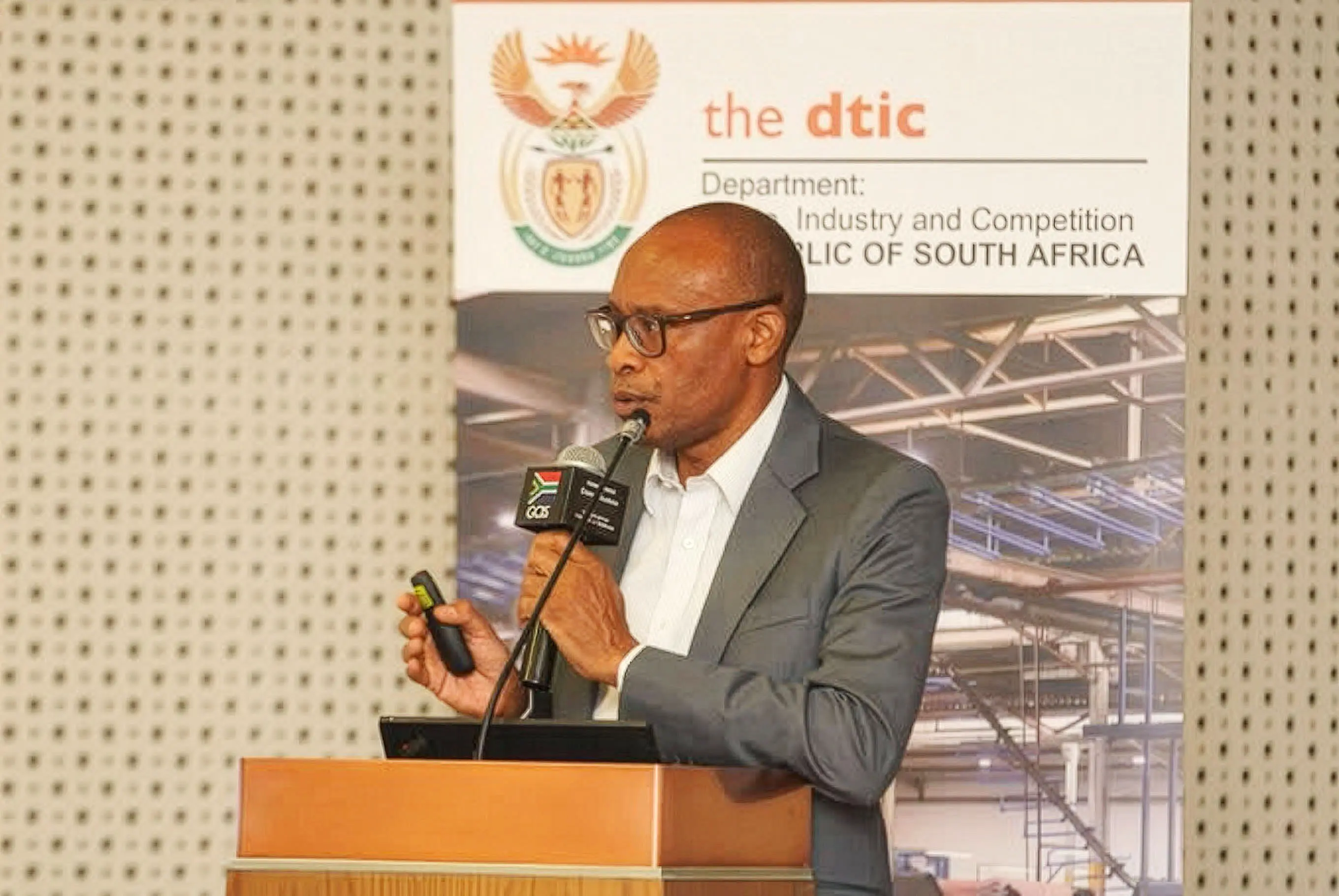
In a frank assessment of progress made by the government since the dawn of democracy, broad-based black economic empowerment (B-BBEE) Commissioner Tshediso Matona, has warned of factors behind a changing political landscape – marked by the ANC’s gradual loss of its traditional support base.
Addressing a panel discussion in Pretoria this week during a media roundtable, Matona said the B-BBEE - a South African government policy and legislative framework designed to address economic imbalances created by apartheid – has not gone far enough in broadening the ownership, management and creating many jobs for the South African majority.
Reflecting on the outcome of the 2026 local government polls, which marked a sharp drop in the ANC electoral support, Matona said he was “not surprised”.
“Black people have become disillusioned with the policy (B-BBEE) and this has been coming a long way – something which has been building up, because there has, over time, developed a wedge between government and the people,” maintained Matona.
He said the black electorate regarded policies like B-BEE as “nice, but an instrument that has not reached them”.
Unhappy with the status quo, people have sought alternatives, including voting for opposition political parties.
Said Matona:
“People look at us in government - ministers, directors-general and CEOs - as living a good life. They have become spectators and I don’t think we have shown enough interest and activism in addressing their needs. This is despite us occupying positions which are supposed to make a difference in the lives of the people.
“We don’t use our positions to help the people. Instead, we use these for ourselves and our networks – benefiting people we know, which is a problem.”
He hoped for “a very thoroughgoing diagnosis”.
When the ANC attained below 50% in the 2024 national elections, “I said to myself I want to see how different things are going to be, without rolling up my sleeves, because people have spoken”.
“Two years down the line, I am not seeing much of leaders going to the people – not just during elections or when campaigning for votes. It is important to regularly go to the people to understand their situation and how we can leverage on our positions to change their living experiences. The political landscape is obviously changing and it is going to be much more fragmented – making it harder to get a consensus on critical priorities.
‘‘Through this recent election, we have heard the latest message from the people,” added Matona.
Despite the challenges, Matona told the Mail & Guardian he was optimistic about the future - inclusive of all people in policy formulation and implementation.
“We need a consultative process, where people have a say in the future and implementation of policy,” said Matona.
He said social and economic transformation was a long-term process.
“The B-BBEE is one of the many policy interventions we envisaged for our country – an uncharted territory. We were trying to do things that have never been done in this country.
“So, it was always going to be the case that we hit some snags. But we also made some mistakes, having missed a couple of things.”
With policy foundations laid out, Matona said the government was “not short on policies”.
He said: “Perhaps what we need to fix is the implementation, commitment, leadership and governance - so that people who have responsibilities and mandates to serve the people, do so faithfully.
“In this regard, we have scored own goals in many ways – allowing negativity to penetrate how the government is perceived,” he said.
Matona was frank about government failure on policy implementation.
“That's what we need to fix. And that's going to mean that we are a lot more critical and careful about who we place in positions of leadership and responsibility. We should make sure that people understand that the government is there to serve the people. And that many of our people have nothing except hope that the government will deliver for them, as it were. I'm optimistic that our work is cut out for us.
Our agenda of fixing is already defined - getting down to business.”
Matona has however, shrugged off widespread criticism that the B-BBEE policy benefitted the “politically-connected” and “the usual suspects”.
“In the past it started like that. Like any policy, those who were close to understand it, made themselves available to it. But that was a long time ago. Not anymore.
“If you look at Royal Bafokeng, Anglo American and Sishen projects, where you see community ownership in the business, you will see that things have changed.”
Despite a post-apartheid political economy spanning more than three decades, a recent study by leading economist Duma Gqubule has pointed to South Africa lagging behind in its transformation crusade, with black ownership in JSE-listed companies still miniscule.
The research, examining black ownership on the JSE during the first three decades of democracy, has provided valuable insights into economic transformation, ownership trends and inclusive participation in South Africa’s capital markets.
Other recommendations included:
• A fusion of racial, gender and structural transformation forming part of BEE reporting;
• The SA Reserve Bank, PIC and IDC should start talks on a super fund to finance purchases of shares on JSE;
• Developmental targets for banks and non-bank-financial institutions;
• Comprehensive review of BEE legislative and policy framework, including ownership;
• Mining and finance charters should align with new BEE policy and law; and • Elimination of the gap between what companies report in their annual reports and what appears on their BEE certificates, with effective and actual ownership being measured.