


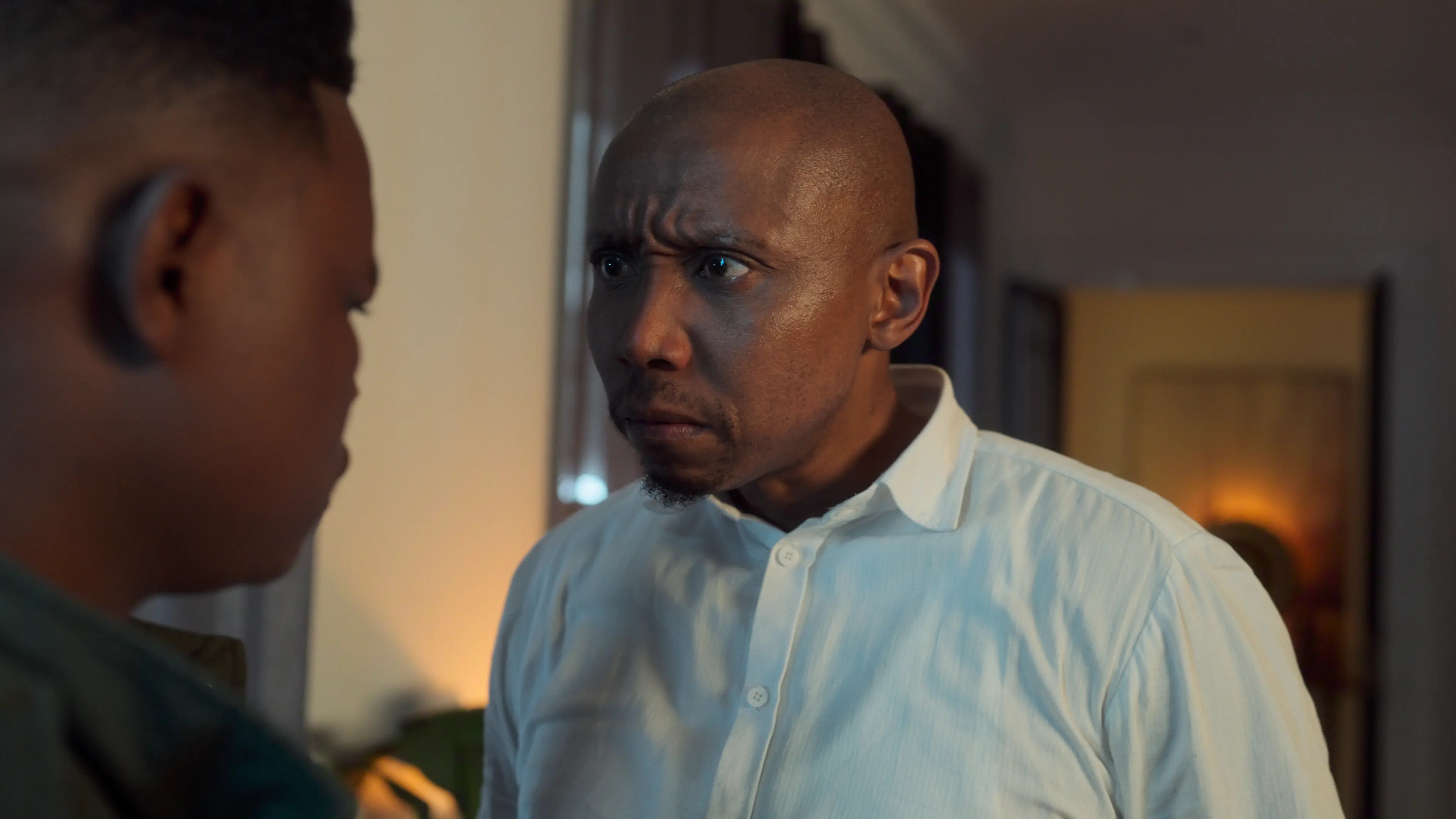
This review contains spoilers for the entirety of The Polygamist
I watched it. All 22 episodes of The Polygamist and damn, it was emotionally draining. Look, from the first scene of the first episode, where a woman shows up at her deceased husband's funeral and then leans her head into the coffin to call him a "motherf*****", I knew what kind of show I was dealing with.
The Polygamist is a telenovela but I put the show in the broader category of trash TV. The category includes everything from melodramatic soapies to wild reality shows. The thing they all have in common is that the main reason to watch them is to stare at your television, mouth agape, in shock at the audacity of some people. At their best, they inspire words like “unhinged”, “preposterous” and “insane”. And on those terms the show seemed like a success from the start.
I mean, the first episode ends with a woman burning down the house where her husband is living with his mistress, while the two of them are having sex in a bath upstairs. If that's not unhinged I don't know what is. At the centre of the fiasco are Joyce, as the long-suffering wife, and Jonasi, as the evil husband. The core problem is simple: Jonasi can't stop having sex with other women and doesn't care how it affects his wife and his family but Joyce can't walk away from the life they've built together. A lot of things can happen over the course of the show's roughly 11-hour runtime but all of it seems to revolve around this core problem.
That's all well and good. For the first maybe eight episodes I would have been able to see it as a watchable piece of trash TV to raise your blood pressure for a few hours and then move on from. But it kept going. And going. And going. My biggest complaint is that it's entirely too long to sustain its wild plot mechanics.
The longer the show goes on, the harder it is to ignore its logical fallacies and the less effective its shock tactics become. For instance, in one episode Jonasi's former mistress Matipa (the one from the bath of sin in the burning house) has moved on and is seeing a minister. But by the next episode, she's giving birth to Jonasi's twin daughters. Nine months seems to pass by in the blink of an eye purely for the sake of booby-trapping the audience. The Polygamist does this a lot.
By the time we get to Menzi walking in on his father, Jonasi, getting sexually intimate with his crush, Lindani, who was also the man's daughter's friend and a teenage girl more than 20 years younger than him, I didn't have the capacity for shock anymore. I was spent. Likewise, when Jonasi beat Matipa to a pulp after she stole a large sum of his money and attempted to flee. None of it had an effect on me because I had resigned myself to the fact that the makers of the show were going to keep throwing outrageous scenes at the wall to try to provoke a reaction from the audience.
Then it got into its last few episodes. And, damn, did those episodes drag. It felt like I was watching an entirely different show because the big bad man of the series had been reduced to a dying old man in a wheelchair, so the engine of the shock and awe had been neutralised. In a scene straight out of Tyler Perry's Diary of A Mad Black Woman, Joyce even throws Jonasi out of his wheelchair and walks upstairs while the camera lingers on him meekly crying for help on the ground.
The show changes tact during the episodes and tries to present itself as a sombre reflection on generational trauma. I wasn’t convinced because I had spent many hours of my life watching a show that consistently chose sensation over subtlety, so it all came off as mawkishly earnest. But by the final episode we realise it was all just a set-up for the show's final reversal.
With Jonasi on his deathbed, scared of what lies before him and pleading for forgiveness from Joyce, she confesses that after he beat her up earlier in the show, she hired a woman she knew was HIV-positive to seduce her husband and pass the virus on to him. Her murder plot finally panned out. Before this, she had tried burning him alive, shooting him and poisoning his food but like a good cartoon villain, Jonasi just kept bouncing back. Joyce just had to play the long game for her death wish to work out because it was at least two years after the infection plot began that Jonasi ended up in the grave.
By the end I couldn't help thinking what the point of all this was. Any fun I was having at the preposterousness of the storyline in the first few episodes had long been replaced by emotional exhaustion and frustration. Like Jesse Pinkman crying out about Walter White in Breaking Bad: "He can't keep getting away with this!", I was tired of Jonasi’s shenanigans by the halfway point.
I suppose watching Jonasi wither and die was supposed to provide some catharsis through seeing the cause of so much pain and trauma finally get his comeuppance but it didn't do much for me. All I could think was: “All right, let's wrap this up now.”