



There is a Xhosa proverb that says indlela ibuzwa kwabaphambili — the way is asked from those who have gone before. It reminds us that progress is rarely achieved in isolation.
Instead, it asks us to recognise those who walked the road before us, whose experiences continue to shape the present.
For artist Mawande Ka Zenzile, the proverb becomes more than a title. It becomes the conceptual foundation of his latest solo exhibition, Indlela Ibuzwa Kwabaphambili, on view at Stevenson Gallery in Cape Town from 4 July to 15 August.
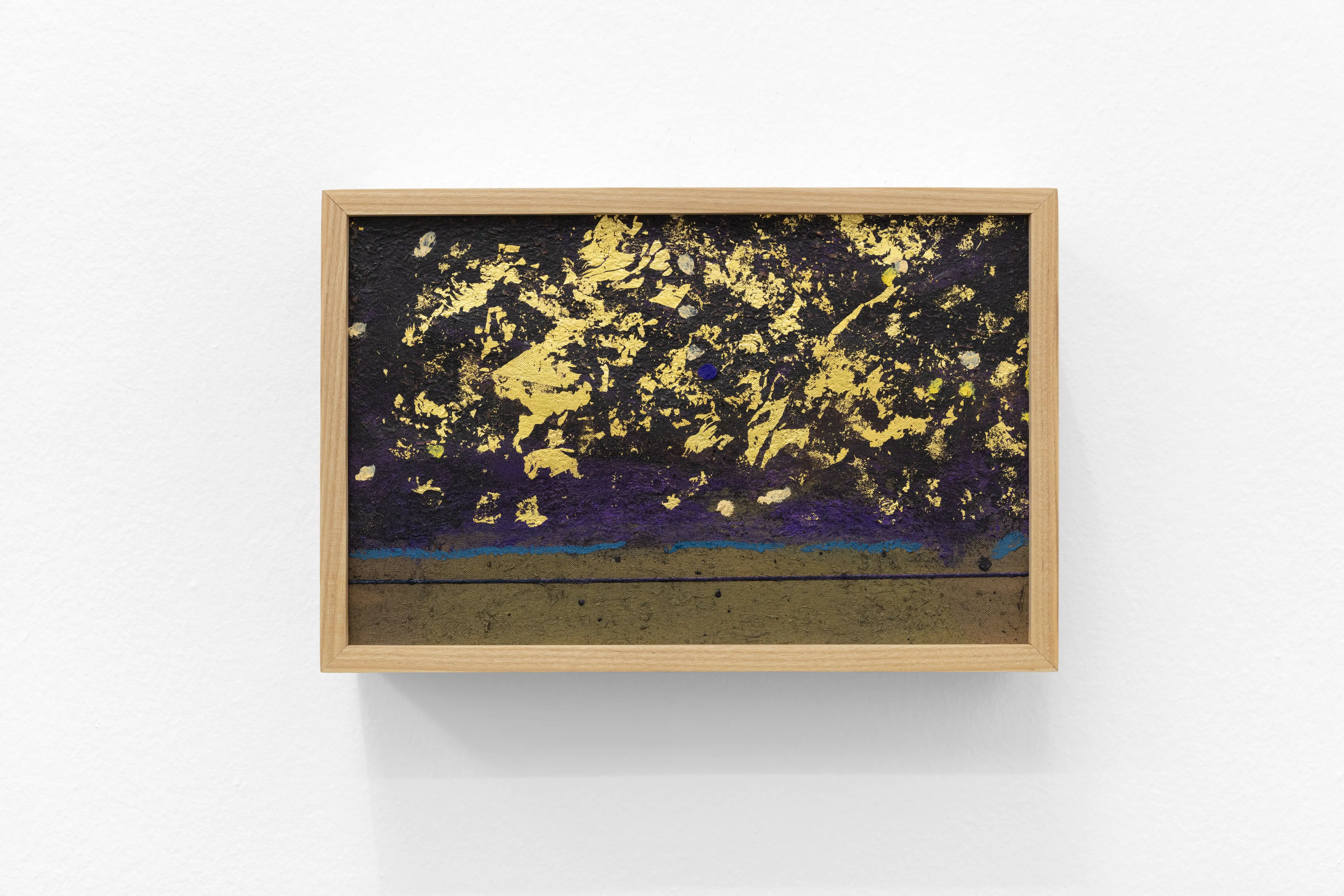
Rather than presenting history as something fixed or nostalgic, Ka Zenzile approaches it as an active conversation. His paintings ask what it means to inherit knowledge, artistic traditions and spiritual practices in a world dominated by Western systems of seeing and understanding.
For more than a decade Ka Zenzile has developed a practice that draws from African material cultures while challenging conventional ideas about painting. His work has become immediately recognisable through the use of cow dung alongside pigments, creating richly textured surfaces that carry physical and conceptual weight.
Yet the material is only one part of a much larger enquiry.
"I've been interested in decolonial practice since the onset of my career," he says.
"I've been using African modalities or aesthetics as a way to counteract the dominant Western knowledge system."
The exhibition, he explains, is also personal. "It is an acknowledgement of my own journey but also how that journey unfolded through engaging with those who came before me, whether they are still alive or whether they have passed on."
That engagement extends beyond formal mentorship. Throughout the conversation, Ka Zenzile speaks of guidance arriving from teachers, elders, strangers and ancestors.
"I meet random people sometimes and they teach me lessons about life."
Among those who shaped his artistic path are celebrated South African artists including Peter Clarke, a figure whose influence continues to echo through his thinking.
Rather than presenting himself as an isolated creative genius, Ka Zenzile insists that artistic practice is built collectively through relationships, conversations and inherited wisdom.
Contemporary art often celebrates novelty. New ideas, new technologies and new aesthetics frequently dominate conversations around exhibitions. Ka Zenzile however, deliberately resists that pressure.
Instead of constantly searching for the next innovation, he asks what might happen if artists paused to reconsider the knowledge systems that have long existed but often been excluded from institutional recognition.
"I've been trying to carve my own path," he says.
The independent path has increasingly moved away from overt political representation towards abstraction, intuition and process.
His earlier paintings were representational and iconographically charged. Today's works emerge differently.
"They're more intuitive," he explains.
When creative blocks emerge, he does not force solutions.
"You have to step away from the work, step away from the canvas. Sometimes there'll be a light or a colour that flashes and then I just do what comes."
The openness to intuition reflects broader shifts in his artistic and spiritual life.
Alongside his career as an artist, Ka Zenzile is also a traditional healer. Rather than separating the two identities, he describes them as informing one another through shared ways of understanding intuition, perception and knowledge.
Before entering traditional healing, he says he experienced moments he could not explain.
"I could see, I could hear. I used to have impulses."
Only later, through spiritual training, did the experiences acquire another framework.
The transition, however, was not straightforward. Coming from an academic background, he found himself needing to unlearn many assumptions about what constitutes legitimate knowledge.
"I had to forget what I thought was concrete knowledge in order to allow this other thing to come in."
The process transformed his healing practice and the way he paints. Instead of beginning with books, archival research or photographic references, many of his works emerge through feeling and instinct.
To create the conditions for that process, Ka Zenzile deliberately quietens analytical thinking.
Music fills the studio. Incense burns. Sometimes pipe smoke becomes part of the ritual. The aim is not performance but concentration.
"I had to silence my rational mind."
For him, painting becomes less an act of control than one of listening.
Few aspects of Ka Zenzile's work have attracted as much attention as his use of cow dung.
To many viewers, the material evokes rural homes, memory and cultural identity. Ka Zenzile does not reject the associations but he insists that nostalgia is not the point.
"I'm not trying to create a sense of nostalgia," he says.
Instead, he sees the material as opening conversations about African epistemologies, the ways knowledge is produced, preserved and embodied.
Growing up surrounded by cow dung in his village, the material was never exotic. It existed as part of everyday life. Initially, incorporating it into painting functioned as a political gesture, challenging Western artistic traditions by foregrounding African materials.
Over time that relationship matured. His concern shifted from opposition towards deeper understanding.
Working with the material over many years required technical experimentation. He learnt how pigments respond, how surfaces change over time and how the medium demands care and patience.
"It gave me time to perfect that process."
What concerns him now is avoiding another trap: exoticism.
The global art market often celebrates African aesthetics while reducing them to spectacle. Ka Zenzile repeatedly returns to this concern. "I always try to run away from that."
Instead of presenting African material culture as something unusual or decorative, he treats it as a legitimate intellectual framework through which contemporary art can think.
Although Ka Zenzile exhibits in a commercial gallery, he continually pushes against commercial expectations.
His exhibitions frequently include installations and interventions that cannot easily be bought or sold. Some works exist purely as experiences.
"I consider them artworks," he says. "They are for the experience of the audience."
The approach places his exhibitions somewhere between commercial presentation and institutional experimentation. It also reflects his broader belief that art should not be constrained by market demands.
Asked what he hopes visitors will take away from Indlela Ibuzwa Kwabaphambili, his answer is immediate: "That art can't be limited by what is fashionable."
Nor, he adds, should it be limited by what is easily sellable.
In an art world increasingly shaped by visibility, trends and commercial value, Ka Zenzile offers a quieter proposition. His paintings ask audiences to slow down. To remain open to forms of knowing that cannot always be explained through academic language or market logic.
The exhibition ultimately becomes less about arriving at certainty than about recognising that knowledge often travels through relationships, memory and intuition.
If indlela ibuzwa kwabaphambili asks us to seek guidance from those who have gone before, Ka Zenzile's exhibition reminds us that listening is an artistic practice.
In an era obsessed with constant innovation, perhaps the most radical gesture is to pause long enough to hear the voices that have been speaking all along.