


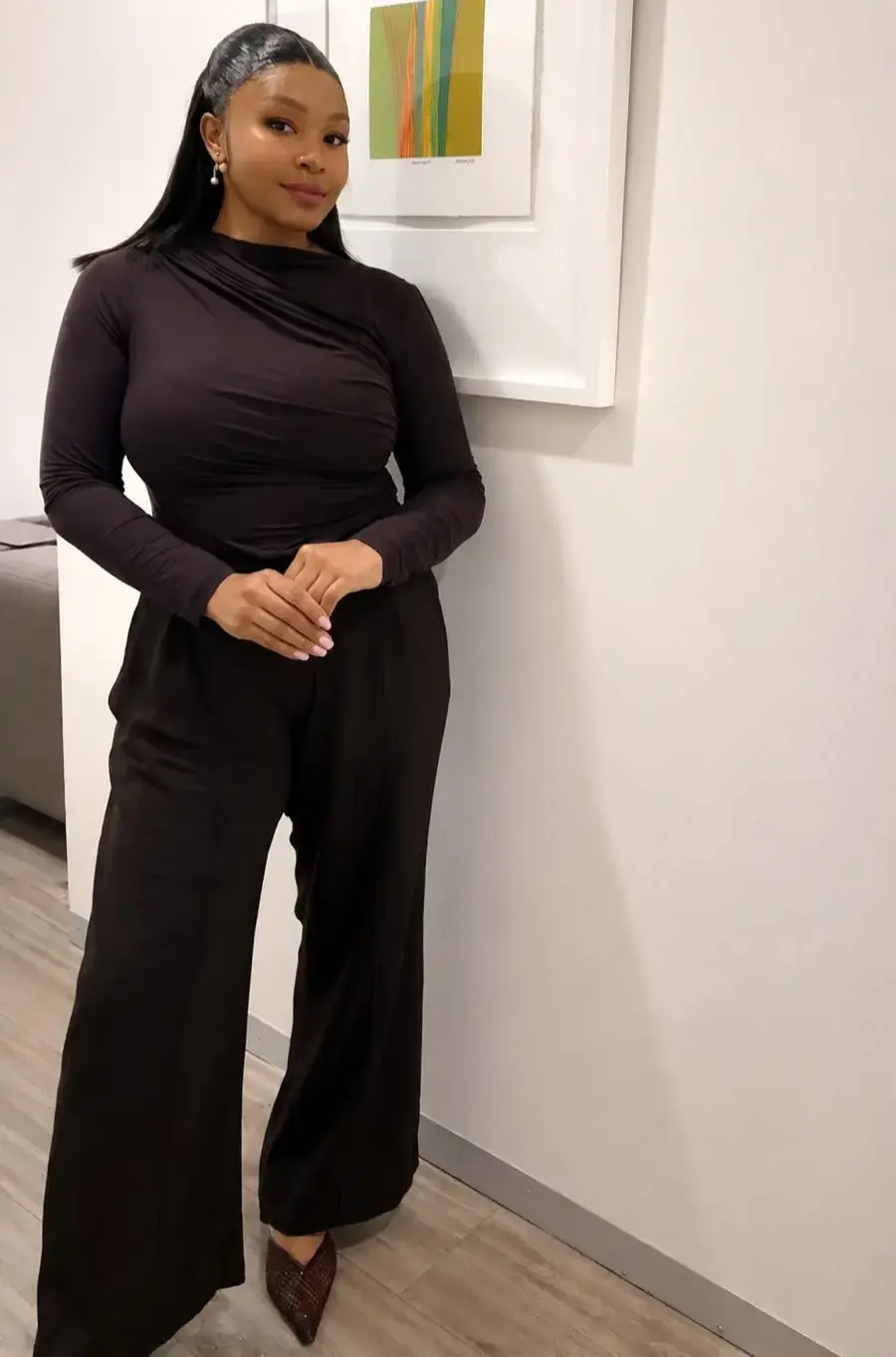
Beauty has always reflected the societies that define it. It shifts across generations, cultures and continents, shaped as much by history as by aesthetics.
Yet for decades, the global beauty industry has largely measured beauty against Eurocentric ideals, leaving little room for African faces to be understood on their own terms.
Dr Nontuthuko Mvundla wants to change that.
The Joburg-based aesthetic medical doctor has built an award-winning practice around a philosophy that sits comfortably between science and art. While medicine gave her the technical knowledge to understand the face, creativity taught her to see it differently.
Her work is not simply about cosmetic enhancement; it is about identity, proportion and the cultural significance of African beauty.
At the heart of her practice is Sacred African Geometry™, a philosophy of African facial aesthetics that she developed after years of research, observation and clinical practice. Rather than applying universal beauty standards, it seeks to understand African faces through an African lens.
Her journey into medicine was, in many ways, conventional. Science came naturally at school, making medicine an obvious choice.
What she could not have predicted was that she would eventually find herself in a discipline where anatomy, creativity and human connection would exist side by side.
“I was initially drawn to medicine because the sciences came naturally to me academically,” she says. “What I didn’t know at the time was that I would eventually find my true calling within medicine.”
That moment arrived when she discovered aesthetic medicine.
“It brought together science, artistry, creativity and human connection in a way that was completely aligned with who I am. For the first time, I wasn’t simply practising medicine — I was practising it in a way that felt truly authentic.”
That idea of authenticity has become the thread running through her career. Looking back, Mvundla says the biggest lesson she has learnt is that success cannot be sustained through imitation.
Like many young professionals, she believed she had to fit an existing model of success. Over time, however, she realised that her greatest contribution would come not from blending in but from embracing her own perspective.
“The moment I stopped trying to fit into someone else’s mould was the moment my career truly began to flourish,” she says.
Despite graduating cum laude and earning recognition for her work, Mvundla speaks most passionately about the philosophy she created. Sacred African Geometry™ was never conceived as a brand or marketing concept. Instead, it emerged from a desire to understand African beauty on its own terms.
“It wasn’t born out of a desire for recognition or external validation,” she says. “It began as a personal pursuit to better understand and celebrate the beauty of African faces in a way that felt authentic to me.”
For years, she refined the concept behind closed doors, developing assessment methods, treatment protocols and practical applications before introducing it publicly.
The real reward, she says, came not from awards but from watching patients rediscover themselves.
“Seeing the confidence it has restored in the women it was created to serve has been the greatest validation of all.”
Her philosophy also reframes the purpose of aesthetic medicine. In a world saturated with filters, cosmetic trends and identical faces, Mvundla argues that beauty should never erase identity.
Instead, it should restore it.
“Today, I believe beauty is about recognition,” she says.
“When a patient looks in the mirror, I don’t want them to see a different person. I want them to recognise themselves — only healthier, more rested and more confident.”
It is a subtle but powerful distinction. Rather than creating a new face, she seeks to reveal what already exists, preserving character while enhancing confidence.
It is a philosophy that feels closer to portraiture than cosmetic alteration, asking practitioners to understand the individuality of every face before making any intervention.
That approach continues to evolve because Mvundla sees herself as a lifelong student. Learning, she says, extends well beyond textbooks and conferences.
“I don’t believe learning only happens in lecture halls. I learn from science but I also learn from my patients, from observing different cultures and from understanding how beauty is perceived across different communities.”
That curiosity has become one of the defining qualities of her practice. Beauty is not fixed, she believes. It changes across cultures and generations and remaining curious allows her to respond thoughtfully rather than simply following trends.
Like many entrepreneurs, Mvundla has also experienced periods when the vision seemed larger than the evidence in front of her. Creating something without an established blueprint inevitably brings uncertainty.
Instead of allowing doubt to dictate her decisions, she has learnt to rely on perspective.
Whenever uncertainty creeps in, she consciously reflects on the challenges she has already overcome, the projects she has completed and the goals she has achieved. Remembering those moments, she says, reminds her that difficult problems can be solved, giving her the confidence to keep moving forward.
That resilience has deep roots.
The women who have shaped her most were not industry leaders or public figures but the women in her own family. She credits her mother and maternal grandmother with teaching her to think differently, to approach problems from unexpected angles and to recognise that wisdom is not measured only by academic qualifications.
Those lessons continue to shape both her personal philosophy and her professional practice, reminding her that knowledge often exists beyond institutions and that some of life’s most valuable insights are passed down through generations.
As South Africa celebrates Women’s Day, Mvundla hopes more women will reject inherited definitions of success and instead create careers that reflect who they truly are.
“I’d love to see more women feel empowered to define success on their own terms and to build careers that are aligned with their own natural rhythm,” she says.
“Healthcare and aesthetics become stronger when women are free to lead, innovate and care in ways that are authentic to them.”
Her advice to young women entering medicine or entrepreneurship reflects the same belief. Rather than trying to replicate someone else’s path, she encourages them to embrace the perspective that only they can offer.
“Don’t underestimate the value of the perspective you bring as a woman. It may be the very thing that sets you apart.”
It is a fitting conclusion from someone whose career has been built on looking differently.
Her final message is one of confidence.
“Your intuition is not the opposite of intelligence. Sometimes it’s wisdom that simply hasn’t found its language yet. Learn to trust it.”
In Mvundla’s hands, aesthetic medicine becomes more than a clinical discipline. It becomes an artistic practice rooted in culture, identity and care.
At a time when conversations around beauty are increasingly questioning who gets to define it, she offers a compelling alternative: that the most powerful transformation is not becoming someone else but recognising yourself more clearly