


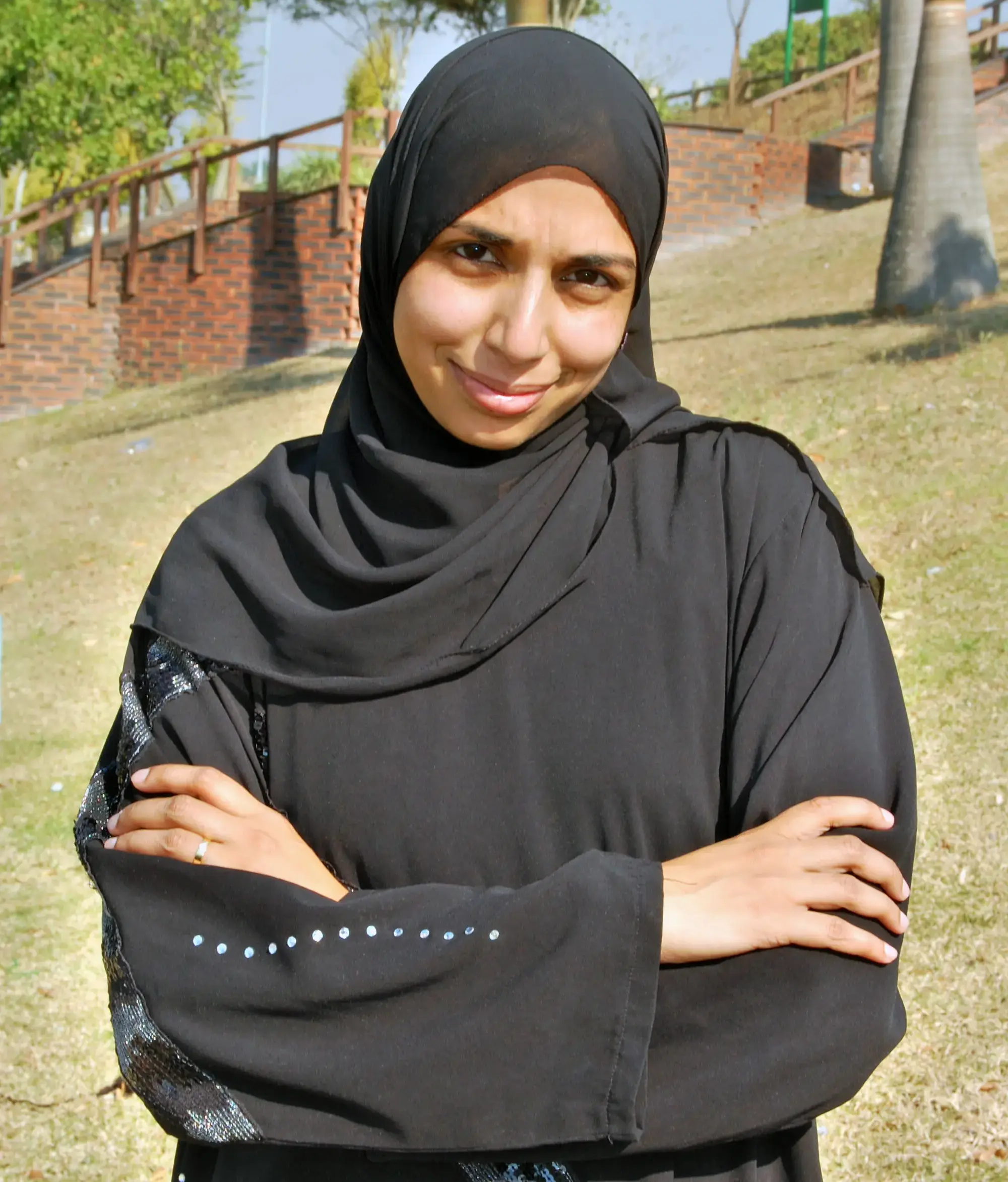
For Suraya Dadoo, the war in Gaza did more than reignite global solidarity with Palestine. It exposed what she believes Africa has lost.
Over the past three decades, she argues, a tradition of internationalism that once linked African liberation movements to struggles from Palestine to Namibia, Algeria and beyond has steadily eroded, replaced by trade relationships, security partnerships and diplomatic pragmatism.
The argument sits at the heart of Rising for Palestine: Africans in Solidarity for Decolonisation and Liberation, a new anthology co-edited by Dadoo and Algerian researcher Raouf Farrah.
Bringing together scholars, activists, diplomats and movement leaders from across Africa and Palestine, the collection asks a question that reaches far beyond Gaza: What remains of Africa’s anti-colonial political imagination?
“The genocide in Gaza reignited mobilisation across the continent,” Dadoo says. “It was both a response to the ongoing genocide and a recovery of a suppressed legacy of African internationalism.”
The anthology emerged from a desire to recover histories that are often overlooked in discussions about Palestine. While South Africa’s anti-apartheid struggle has long provided the dominant frame through which many Africans understand Palestine, Dadoo and Farrah wanted to widen the lens.
The book foregrounds experiences from Kenya, Ghana, Senegal, Namibia, Tunisia and Nigeria, among others, alongside Palestinian contributors. It seeks to document a tradition of solidarity that extends far beyond South Africa and place Africa at the centre, rather than the margins, of the story.
The anthology’s most significant contribution is not the familiar comparison between apartheid South Africa and Israel. It is the attempt to place Palestine in a broader African history of dispossession, extraction and resistance.
Contributors connect Palestine with some of Africa’s deepest wounds: the genocide of the Herero and Nama in Namibia, the unresolved question of Western Sahara, decades of violence in the Democratic Republic of Congo and the ongoing catastrophe in Sudan. The editors are careful not to argue that the experiences are identical. Rather, they suggest that they reveal recurring patterns of occupation, racial domination, resource extraction and international indifference.
“What connects Palestine to Africa is a shared present shaped by borders drawn to divide, militaries trained to suppress and lives treated as expendable,” Dadoo says. “To view Palestine through an African lens is not to appropriate suffering but to clarify its coordinates.”
The phrase is central to the book’s thesis.
For Dadoo and her contributors, Palestine is neither an isolated Middle Eastern conflict nor a singular moral crisis. It is part of a wider story about colonial power and its enduring legacies. The anthology argues that the forces shaping Palestinian life today cannot be separated from histories that have also shaped African societies.
Whether readers agree with that argument, it gives the collection its intellectual coherence.
The book’s explanation for the weakening of African solidarity is equally ambitious.
Dadoo locates the shift in the political and economic changes that followed the end of the Cold War. The radical internationalism that animated many liberation movements gradually gave way to a foreign policy shaped by economic partnerships, security cooperation and diplomatic pragmatism.
“The neoliberal turn of the 1990s and the global retreat from radical politics, along with the Oslo Accords and the formation of the Palestinian Authority shifted African foreign policy,” she says. “Many states began to de-emphasise international solidarity in favour of bilateral trade, security partnerships and development aid.”
In the anthology, several contributors examine how Israel expanded its influence across parts of Africa through military cooperation, surveillance technologies, development partnerships and religious diplomacy.
One of the collection’s most striking sections focuses on the growing influence of Christian Zionism.
Dadoo argues that Pentecostal and evangelical churches have become an increasingly important element of Israel’s engagement with Africa. The rapid growth of the movements has created large constituencies that view support for Israel through a theological lens, while influential church leaders have become significant actors in public life.

“The Israeli government has made church leaders a key component of its diplomacy network in Africa,” she says.
Yet the picture is more complex than a straightforward story of religious influence translating into political support. Dadoo points out that while Christian Zionism has shaped diplomatic behaviour in some countries, strong evangelical support for Israel in places such as Uganda, Nigeria and Ghana has not always been reflected in voting patterns at the United Nations or African Union.
The chapter stands out because it explores a dimension of Africa-Israel relations that is rarely examined in public debate. It suggests that understanding contemporary diplomacy requires looking beyond governments and considering the growing political influence of religious networks.
The anthology is equally concerned with Africa’s contradictions.
One of its most compelling chapters examines South Africa’s position. Pretoria has emerged as one of Israel’s most prominent critics on the international stage, earning widespread recognition for bringing a genocide case against Israel before the International Court of Justice (ICJ).
Yet the book argues that diplomatic leadership alone is insufficient.
“Simply put: No,” Dadoo says when asked whether South Africa is doing enough. “In the same week that South Africa filed its historic, morally driven ICJ case in December 2023, it deployed a coal-laden ship from its shores to power an Israeli power grid.”
The criticism extends beyond South Africa. The anthology also points to Nigeria’s continued oil exports to Israel and explores Kenya’s evolving relationship with Israel as examples of the tension between public solidarity and economic interests.
Running through the collection is a challenge to a question that frequently surfaces in discussions about Palestine. Why, critics ask, does Palestine receive such sustained attention when conflicts in Sudan and eastern Congo continue to devastate millions of lives?
For Dadoo, the question “is based on a flawed premise: that solidarity is a finite resource, and that attention to Palestine diverts concern from Africa’s own suffering”.
The anthology argues instead that the struggles should be understood together rather than in competition with one another. Palestine, Congo, Sudan and Western Sahara are presented not as rival claims on global attention but as interconnected sites of struggle shaped by many of the same political and economic forces.
Not everyone will find that argument persuasive. Rising for Palestine is unapologetically political.