


The ironic quest of a prison gang fighting for human rights, corrupt officials and fractured families are some of the themes explored in the new Netflix series, Umthetho. An adaptation of Netflix Brazilian series Brotherhood, Umthetho is a tale of blood, bullets and brotherhood.
Adaptations, however, raise the question of whether stories developed elsewhere can resonate with local audiences. The connection between the two series is not particularly difficult to establish.
In the first episode of Brotherhood, South Africa’s historic 1994 democratic elections are referenced, which saw Nelson Mandela become the country’s first black president. Yet, the nod does little to address the broader concern that South Africa has a wealth of talented writers capable of developing original stories rather than relying on foreign adaptations.
Nonetheless, the universal themes of family, justice and survival are what attracted the production company, Black Brain Pictures, to the project. Taking two years of extensive development and writing followed by a demanding shoot, the team produced a series reimagined through a South African lens.
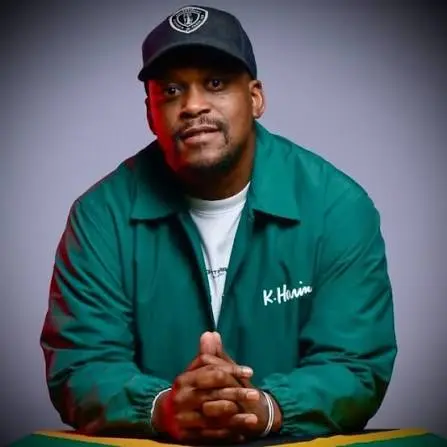
Speaking to me during the week of the premiere, co-producer and co-director Mandla N said he and his team believed in telling local stories that could travel globally without losing their identity.
“Netflix gave us the platform but we had to ensure the soul of the story remained authentically South African,” said the filmmaker whose real name is Mandla Ngcongwane.
The seven-episode drama follows public prosecutor Mbali Dlamini, played by Nqobile Nunu Khumalo, on a collision course with prison gang iGazlam’ (The Brotherhood). The ruthless prison syndicate is run by her brother, Moses, portrayed by Tony Kgoroge, whom she was told had died 14 years ago.
Caught in the underworld of prison gangs and corrupt correctional officials, Mbali is asked to legally assist her long-lost brother and his fellow gang members. What follows is a high-stakes, gun-drawn surge of violence that exposes how far the Brotherhood is willing to go — and how far Mbali might have to go with them.

Tone, casting and adapting to local tastes
The award-winning production company, which has two decades of experience crafting African stories, is no stranger to shows with prison settings. The gritty drama, Lockdown, which ran for five seasons on Mzansi Magic, gave Mandla N lessons he used in the new project.
“Lockdown taught me how powerful confined storytelling can be. A prison setting naturally heightens emotion, tension and consequence.
“With Umthetho, I wanted to go deeper into the systems of power inside that environment — how control, loyalty and survival really work behind those walls. The prison setting was carefully designed to feel authentically South African, rather than simply replicating the original Brazilian world,” the Soweto-born filmmaker said.
Orange prison overalls, white and blue Zion apostolic church uniforms and an emotive soundtrack added to the distinct atmospheric mood of the series.
As with any production, casting was critical. The show features some of South Africa’s greatest actors, among them Given Stuurman, Sthembiso SK Khoza, Lorcia Cooper-Khumalo and Obed Baloyi.
Sindi Dlathu portrays Agnes Khoza, the prison’s head of centre and is becoming a recognisable face in the Netflix universe. With notable roles in productions such as The River, Queendom and All Four of Us, which is available on Netflix, Dlathu has, however, faced criticism for being repeatedly typecast, particularly in villainous roles.
Criticism aside, in Umthetho she brings some heat to the screen along with her co-conspirer Molefi Monaisa who plays Detective Bennet Tau.
In the original series, the head of prison’s character was male. I asked Mandla N why they cast a female instead.
“Changing the gender wasn’t for novelty. It was about allowing the adaptation to develop its own identity.”
He said that if the story was to work and resonate with viewers, they needed to believe in every character.
“With Sindi Dlathu, we weren’t just replicating the original character; we were rethinking what authority looks like in a South African prison context. She brings strength, intelligence and unpredictability to Agnes Khoza, which makes the character compelling and layered.”
Mandla N and his team also carried forward the idea that no character is purely good or bad.
“Everyone is shaped by circumstance and survival. Across the cast, we focused on actors who could bring emotional depth to morally complex roles and elevate the material beyond the page.”
Khumalo’s character, Mbali is forced to choose between justice and family, law and survival. The moral conflict makes her sharp decision-making compelling, prompting audiences to reflect on where they would draw the line between right and wrong.
Moses, leader of the prison gang iGazlam’, is also another character trying to survive. Frustrated and reshaped by the system that swallowed him, Moses is a hardened survivor.
Kgoroge has some great moments in the series including a court scene in the first episode and another when he comes out of solitary confinement after being tortured. Like a revolutionary on a podium, the one-eyed-bruised soldier commands and sways with ease, inspiring dozens of fists to punch the prison sky.
The camera slows to brilliantly capture his descent from the stairs to pierce through the congregation of prisoners. “We are bound by blood! We are bound by service!” — a portentous chant for justice for ill-treated prisoners.

Prison gangs and human rights
But the thought of prison gangs fighting for human rights and justice might be odd to some, especially when heists, bribes and violence are methods used to sustain a premium lifestyle in prison.
South Africa’s Bill of Rights, however, does protect the dignity of all detained persons against inhumane conditions such as cramped cells, poor sanitation and strained healthcare systems. Though there are advocacy groups, like the South African Prisoners’ Organisation for Human Rights, fighting against prisoners’ severe human rights violations, there are some gangs who claim to do the same.
South African prison gangs, particularly the Numbers Gang, the 26s, 27s and 28s, have claimed to fight for basic prisoner’s rights against corrupt wardens, yet operate as criminal syndicates.
Led by head writer José Domingos, the paradoxical theme being part of the Brazilian original was something the writers needed to align with local context.
Mandla N said the research had gone beyond prisons in order to understand the social conditions that shaped people’s choices, giving Umthetho its emotional and cultural depth.
“This was one of the most important parts of the adaptation. We didn’t want a direct translation of the Brazilian story. South Africa has its own history, its own justice system and its own complex relationship with crime and rehabilitation.”
“The key question for the writers was: What does justice mean in this context and what are these characters really fighting for?”
Overall, Umthetho is quite a step up from Black Brain’s previous shows on the global streamer such as Mabaso Family Reunion: The Funeral, Mr Easy Loo and Piano Love, the latter being the weakest of the shows produced by the production company.
Towards the end of our conversation, I asked the veteran filmmaker if there were any new challenges and lessons learnt.
“Each Netflix project raises the bar in terms of scale and expectation but the most important lesson remains the same: the story is everything!”
With Umthetho, Mandla N added that the challenge had been to stand alongside global crime dramas “while remaining unmistakably South African in tone, performance and detail”.
“Every project demands more precision and discipline but it also reinforces a key belief: we don’t need to dilute our identity to be global. In fact, the more honest we are about who we are, the more universal the story becomes,” Mandla N said.
Although the series could arguably have concluded by the fifth episode, as there is little new to anticipate by episode seven, it remains an engaging and thrilling watch.
Umthetho essentially explores a familiar dilemma for South African families who have been let down by the justice system: When the law demands one thing while family loyalty demands another, which side do you choose?