


South African viewers are not new to book adaptations, with the likes of Deon Meyer and Athol Fugard having penned books that went on to garner international acclaim on the small and big screens.
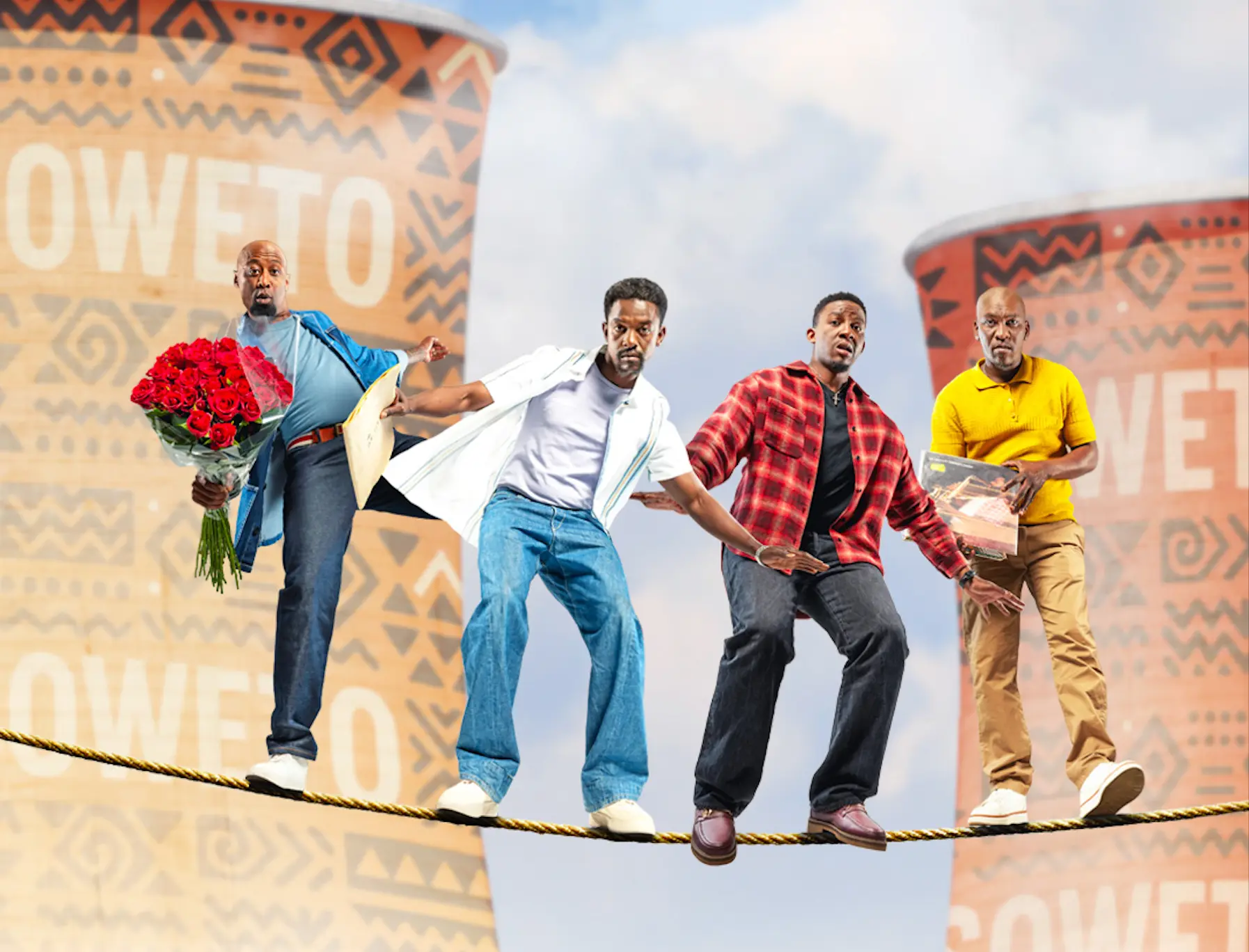
However, the resurgence we're experiencing marks a shift in local storytelling. The recent release of Critical But Stable on Mzansi Magic, produced by Barkers Media, the independent production powerhouse behind How to Manifest a Man, The Balas and Killer Front Page, is a testament to how rich South African literature is reshaping prime-time television.
Stained Glass's The Polygamist trended online for months after its Netflix debut, dominating viewership charts even longer. It continues to be a conversation starter at social gatherings and among friends. Bookshops restocked the books in droves amid growing interest in the world Sue Nyathi created, inspiring conversations about the role adaptations play in reviving our reading culture.
But there is more to bringing a book to life on screen than just reading it and transferring dialogue from page to script. It requires a set of intricate steps, among them securing rights and picking the book apart to reshape narrative structures to ensure that it translates well into a televisual format.
Barkers Media producers Reneilwe Sema and Mpho Lengane shared how they navigated bringing Angela Makholwa's beloved novel into the living rooms of millions.
Lengane says their entry into the conversation came when Makholwa was looking for producers to partner with and, after going through recommendations, picked Barkers Media. It was the versatility of their portfolio that Makholwa liked, something Lengane, the multi-award-winning mind behind chart-topping shows like Isencane Lengane and Umndeni, prides herself on.
From there, the producers got their hands on the book and sat down to devour it, an endeavour that was easy and fruitful because they found the material to be a page-turner, the characters "simple to follow and a world eloquently explained in the narrative".
Although Barkers Media seamlessly passed through the hurdle of securing the rights to Makholwa's work, the hard work was yet to come.

Lengane explains that in any other case, "if a producer approaches an author for the rights to their work, a fee and period are negotiated around the selling of the book, meaning that for a certain period the author cannot sell the book to any other production company while they're shopping it around".
Through more detailed conversations on content and development with the author, it is imperative that all parties are made aware and agree that what is in the book has the potential to undergo rigorous changes during the process, something that will not work if the writer is "married to honouring every minute detail in the book". Authors need to understand that the book is the foundation and they must be prepared, if need be, to kill their darlings.
"As producers and storytellers, we are usually looking for inspiration from as many sources as possible," says Sema, explaining that a book that is successful and comes with an engaged fanbase is always a winning formula.
However, the book needs to cater to a channel's audience profile. "The characters, the world of story and storyline need to align with the broadcaster you are pitching to." Lengane adds that different broadcasters and platforms have their own rules, content strategies and target markets, so identifying the suitable platform for a book is imperative.
Unlike traditional television pitches where original concepts need to undergo an intricate process of sourcing researched data to gauge story resonance, cultural viability and potential audiences, all the while expected to build a fanbase upon release, the world of adaptations provides commissioning bodies with a different model. Published books arrive with pre-built worlds, established characters and audiences in their readers.
Sema, a former commissioning editor, understands this. He says: "Broadcasters are drawn to adaptations because they are bringing new and sometimes unexplored ideas and stories." He also understands that authors are not constrained by the medium of television and can explore characters, story and add depth in ways mass television cannot. This eliminates the broadcasters' questions of whether a certain topic will land with a particular group, inspiring them to take a chance.
"The trust in literary IP [intellectual property] comes from the fact that the story and its world are already shaped and lived-in and come with built-in audiences that can be leveraged in the marketing of the series or film."
Speaking of built-in audiences, one can't help but question the sustainability of the model and what the future of commissioning original ideas looks like. I am wary of seeing shows like Fatal Seduction, uBettina Wethu and the latest Netflix release, Umthetho, all prominent international shows, being repackaged for a South African market.
The trend highlights a reliance on the belief that established IP guarantees success. Even when a show falls short, broadcasters benefit by holding rights to the original and adapted material — a double payout for network executives.
What does this say to the creators whose concepts don't see the light of day or the audience fatigued with seeing local faces pasted onto stories that can be traced back to worlds that do not resonate with them?

"From a broadcasting perspective," says Lengane, "an existing international format or book comes with a proven premise and audience data and a clearer sense of risk. In a market under commercial pressure, that makes the decision easier to defend."
Adaptations, Sema and Lengane say, can be a sustainable model but should not become the default answer to commissioning.
"Simply repackaging an international show with South African casting, language or setting is not necessarily cultural relevance," Lengane says, adding that the adaptation has to be transformed by local realities, humour, class dynamics, family structures, aspirations and social tension; "otherwise audiences eventually recognise that they are being sold a local skin over someone else's idea".
Sema adds: "The challenge for creatives is to turn these adapted shows/formats into shows that targeted audiences will feel are original. This is what sits at the heart of the adaptation." He believes that, if anything, the two can sit at the same table and add value to the broadcasters' repertoire instead of proving a threat to original stories.
This does not mean that original ideas aren't there but that commissioners are risk-averse. With the development time and patience that goes into original IP, there's the added willingness needed to invest in something before there's proof of audience. To this, the Barkers Media founders suggest that the healthiest model is a portfolio.
Adaptations can be used where there is a genuine case for localisation "but ring-fence meaningful development and commissioning budgets for original South African IP. Broadcasters should be asking: What story could only be told here? Those are the shows that can travel because they are specific — not because they imitate what has already worked elsewhere."
That is the kind of thinking that went into bringing Critical But Stable to the small screen. Before the book was commissioned, the producers needed to unpack it and develop it anew to ensure it would work on television. That meant a three-day writing getaway to Magaliesburg where the only breathing room they gave themselves was between meal breaks and bathroom runs.
When they discovered that there was another project that had used the book as key inspiration, Barkers Media had to act swiftly to differentiate their work while preserving the story's emotional core. "As a result, we had to pivot the point of view of the series from the female-driven to the men's perspective."
There was a consensus throughout development that the men had more stakes, exploring the nuances and textures that would resonate with men and women. Sema describes the shift, how they had to "introduce new themes, such as the brotherhood and the pressure that men are under to be providers, while keeping all the emotional core from the book as our guiding light."

To pull this off, Sema and Lengane note how active collaboration was key. Makholwa was involved throughout the journey as an executive producer, screenwriter and producer. Lengane adds: "Angela Makholwa worked on the story adaptation with us, the pitching process and eventually getting commissioned. She was involved in the look and feel of the series, casting and selecting crew. Angela was a partner throughout the whole process of producing this series."
Beyond the immediate success of Critical But Stable, the wave of literary adaptations speaks to a larger evolution in the South African television landscape. Books offer rich, culturally specific worlds that challenge formulaic TV storytelling, giving nuanced representation to South African lives and class structures.
"African literature can be particularly useful because its specificity is often its strength. When an adaptation preserves the author's point of view, cultural texture and moral complexity, it can challenge the idea that South African stories must be simplified to be accessible," Lengane says about the power of grounded and authentic stories.
Ultimately, the process of bringing Critical But Stable to the screen reveals that adapting books is far more than a trend in broadcasting strategy. The success of productions such as The Wife, Red Ink and The Polygamist are proof of this.
By trusting local literature and giving filmmakers the space and freedom to reimagine stories for television, producers like Barkers Media and Stained Glass are ensuring that South African narratives are told with the nuance, emotional weight and cultural resonance they deserve.