


Song is more than sound. It is memory, inheritance and instruction — a way for one generation to leave a blueprint for the next, offering guidance on who we are, where we come from and the impact we are meant to have.
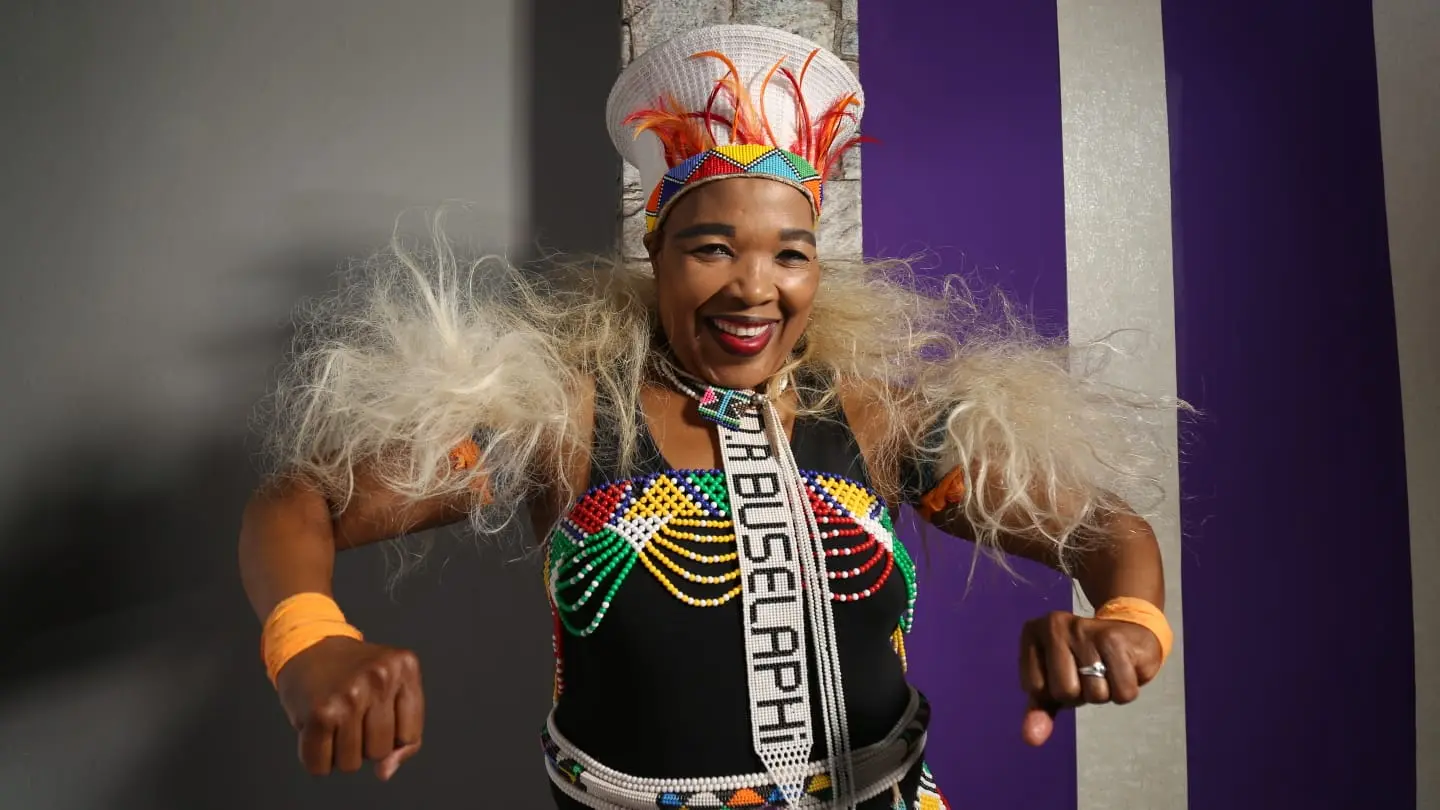
For Dr Buselaphi Gxowa, this understanding of music has shaped a remarkable career in Maskandi. Across 29 years, 14 albums and 21 awards, she has built a body of work that is rooted in tradition while continuing to speak to generations far removed from the circumstances in which many of her songs were first created.
Gxowa describes the songs she inherited and performs as amahubo, which means chants, songs or hymns. Her relationship with them began in Ngolotshe in Nongoma, KwaZulu-Natal, where she was born at the homestead of the Buthelezi family.
"I am from a place called Ngolotshe in Nongoma, KwaZulu-Natal. I was born in the homestead of the Buthelezi family. That is where we were taught amahubo," she says. "Yes, we learnt the songs but we also learnt where they came from, which was the most important part."
That distinction is central to understanding Gxowa's music. For her, learning a song was never simply about memorising words or melodies. It was about understanding the history contained in it and the people who had carried it before her.
Listen to her music, particularly Umendo and the lineage is audible. The chants and hymnal qualities sit at the heart of the song, giving it a quality that feels larger than the lyrics. Gxowa is not merely telling a story; she is reaching backwards and forwards through generations.
Her ability to hear music this way was developed over a lifetime of participating in different musical groups. Among them was Imithente, known for the song Simqonda Ngqo. The song has the force of a chant or declaration, repeatedly asserting a fearless identity while referencing different parts of KwaZulu-Natal.
At first listen, its language and energy could easily be interpreted through the familiar masculine imagery associated with Maskandi — confrontation, bravado and the language of men preparing to face one another.
But this is precisely the misconception Gxowa wants to challenge.
Maskandi, she says, has never belonged exclusively to men.
"Maskandi music is not only for men. For example, whenever there is a ceremony like umemulo (coming of age ceremony) or any ceremony that is significant for Zulu people, there is a moment where women gather and sing," she says. "We sing songs that will awaken and make the whole valley come alive and celebrate. Just us as women."
Her understanding of Maskandi is therefore not one of separation but of relationship. She speaks about synergy and the idea that some songs achieve their full meaning only when two voices or two sides of a relationship meet.
"In the same breath, some songs need the both of us to truly hold meaning and have an impact," she explains. "For example, when a man courts a woman, he will ask about her and when he finally finds where he's from, he will arrive in song. Should she agree to the courtship, she will respond in song."
In this exchange, song becomes conversation. It becomes courtship, communication and consent. One voice calls and another answers.
"Song has no gender; it belongs to no one," Gxowa says. "Maskandi music does not belong to just men and tradition has shown this time and time again."
Her own life is perhaps the most compelling evidence of this.

Had she accepted the idea that Maskandi was a man's world, Gxowa says, she would not have been able to build the career that has sustained her and her family.
"Also, had I looked at it from a place of Maskandi music being about men, I would not be here today. This music has helped me take my children to school and have a really good life," she says.
Her career spans nearly three decades. Twenty-nine years, 14 albums and 21 awards represent not only longevity but an ability to remain relevant while remaining connected to the tradition from which she emerged.
This week, Gxowa's contribution will be recognised at a tribute to her at the University of KwaZulu-Natal's Howard College Campus. For an artist whose work has looked backwards to understand where people come from, the tribute offers an opportunity for the present generation to stop and acknowledge the path she has helped create.
Importantly, she will be there to witness it.
"I am happy that I get to be celebrated while I am alive," she says. "Many of my peers never get to see themselves being honoured, so I am grateful to be thought of in this manner."
For Gxowa, longevity has never been only about remaining visible. It has been about how one conducts oneself along the way.
"The one thing that has kept me here for so long is the respect I have for people," she says. "Respect people and one day they will remind you of your good deeds. Do not tire."
Her music's ability to travel across generations is perhaps the clearest manifestation of her philosophy.
In recent years, Umendo has found a new life on social media, appearing as the soundtrack to videos of young women leaving their childhood homes for marriage. It is a striking example of how an old song can acquire new meaning without losing the emotional truth at its centre.
Gxowa understands why the song continues to resonate.
"That song resonates till today because it hurts to leave your father's house for another man's house," she says. "It is painful to follow the heart sometimes. These songs are passed down from generation to generation to remind women that they are not the only ones who have gone through this."
There is something profound in the way Umendo has travelled. A song rooted in an older social and cultural reality has found a home in the digital lives of young women. Technology has changed. The way people share music has changed. The ceremonies might look different. But the emotional experience remains recognisable.
That is the power of the blueprint Gxowa speaks about.
Songs preserve the feelings, warnings, celebrations and wisdom of those who came before us. They allow people to recognise themselves in experiences that happened decades, even centuries, before they were born.
Gxowa's contribution has been to carry the songs forward without severing them from their origins. She has shown that tradition is not necessarily something that belongs in the past. It can move, adapt and find new listeners while retaining its essential meaning.
Her career is therefore about more than the number of albums released or awards received. It is about the lives her music has entered, the traditions it has preserved and the generations it continues to reach.
Perhaps that is why, after 29 years, she remains a student and teacher of song.
"To all people who have interacted with my music, I want to say thank you," she says. "I am glad I have taught people through the music and I am grateful to have been taught."