


This past weekend, Sebata: The Beast won the Outstanding Film Fiction Award at the 2026 National Arts and Culture Awards. The supernatural crime-thriller, set in the streets of inner city Johannesburg, follows two detectives investigating a mysterious murder that soon takes on otherworldly implications.
I first saw the film when it premiered at the Johannesburg Film Festival in 2025 and it was one of my standout films of the programme. It's an indie film that uses its limited budget with precision, turning the alleys and dark corners of Braamfontein into the perfect backdrop for a movie that maintains a consistently unnerving tone and atmosphere over the course of its 80-minute runtime.
It's by no means a perfect film but there's enough style and substance in it to make for a compelling watch that crawls under your skin and stays even after the credits roll.
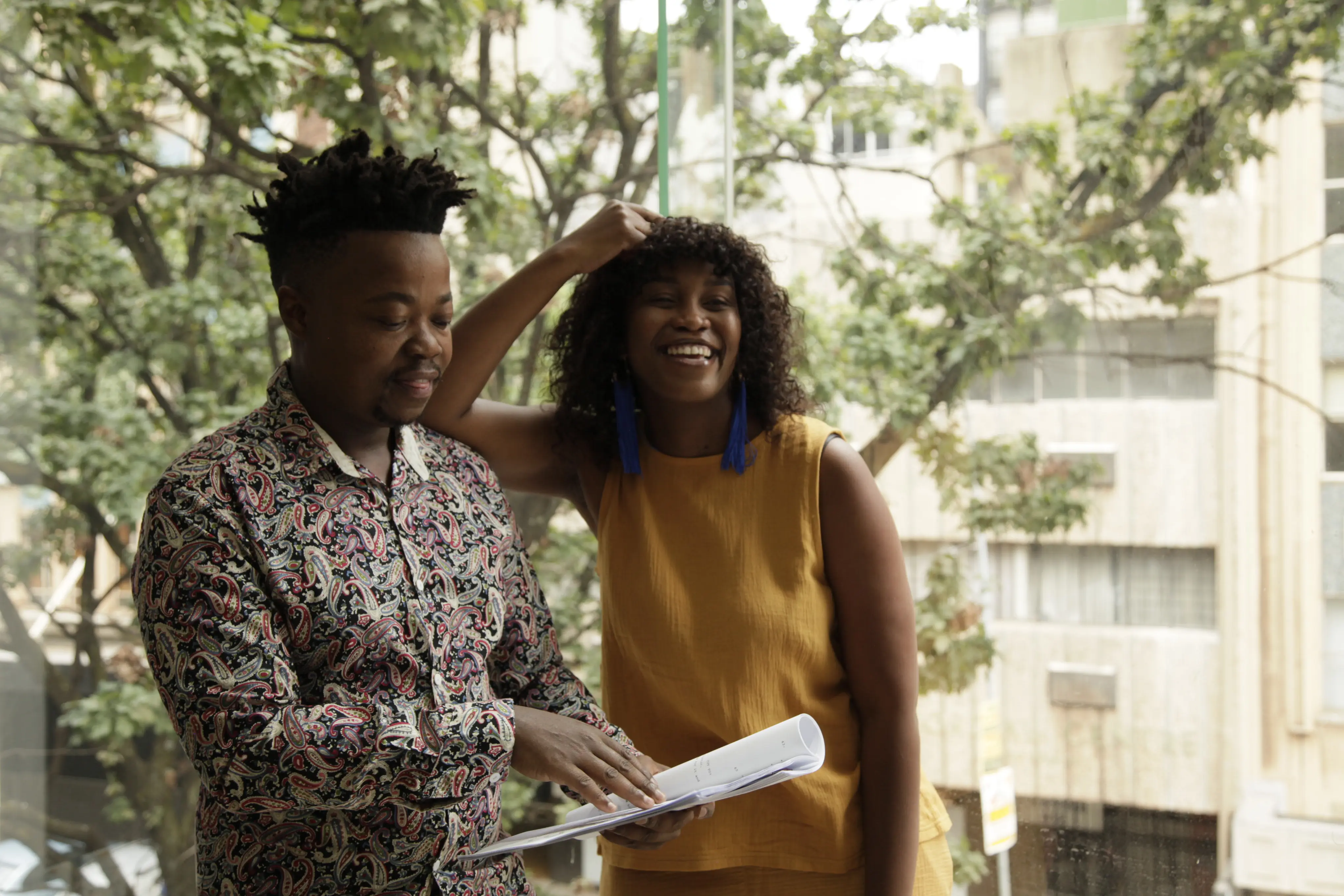
The team behind it were led by the husband and wife duo of writer-director Norman Maake and producer Princess Zinzi Mhlongo. The project started life in 2013, sparked by SA's muti murders and Maake's determination not to let the subject be told solely through a foreign lens.
"How do we kind of tell an authentic story from an African point of view?" he asks. "I've seen so many of these stories but they're starring American actors. They're not really personal stories. You can feel that they're just exploiting the subject matter."
That personal thread runs back to his own childhood, split between Alexandra and his grandmother's home in the village. "My grandmother really had reverence for the supernatural," he says. "That world that is sort of parallel to this world but we can never quite understand what it is. That was then my interest in the project."
Over the more than decade-long process of bringing the story to life, there were many team changes, including in the producer role, which Mhlongo stepped into later. Her background is in theatre directing.
Sebata wasn't her first project with Maake. She'd produced Inkabi, the 2024 Netflix action drama about a former contract killer, before taking on this one.

"It was easier for me to engage with producing on Norman's work because he'd obviously work very closely with me to enable me to jump into this huge leap," she says. "Sebata was obviously that psychological thriller that required a lot with a very tight budget. When I came in, we definitely wanted to take it slow, build the team but also balance it with new and up-and-coming creatives."
It's interesting to consider the dynamic of a married couple working together on the production of films like filmmaker Christopher Nolan and his wife Emma Thomas who has produced all 13 of his films.
For Mhlongo, the arrangement works only because the relationship comes first.
"You obviously can't do it if you don't firstly love each other and love the work," she says. "I believe in this guy. And if it means I have to be the one who delivers the work, I'm gonna do whatever it takes."
Maake also sees the value in their dynamic. "A lot of the time films lose relationships because you cannot finance it through pre-production," he says. "But it's such a breath of fresh air when you've got somebody next to you who's willing to pick up those pieces with you."
The couple tell me that production on Sebata: The Beast had an efficient shoot of 18 days primarily in the Joburg neighbourhood of Braamfontein as well as outside the city in Muldersdrift.
Maake tells me as a boy born and raised in the township of Alexandra he always wanted to make films in his home city. Mhlongo adds that much of the location list came down to relationships built on Inkabi: "people we've worked with on the previous film giving us deals and discounts."
The work of director of photography Jiten Ramlal also needs to be highlighted for how the film maintains the dark palette that matches its tone even with scenes shot in the daytime. Maake is candid that they knew that working on an indie budge meant they weren't going to be able to shoot many of the film's scenes at night.
"How do you make a horror-type film surreal but make it in daytime?" asks Maake. "I thought Jiten did a great job. Instead of just making that darkness, that subduedness, it just feels creepy."
Mhlongo also shouts out editor Tongai Furusa for his work on the film, crediting the pairing of Furusa and Maake with the film's slow-burn dread. "How Norman and Tongai work together also contributed a lot to just how a person experiences the film," she says. "They really gave it time."
Music composer Seoli Mashaba also deserves a mention. The score, cinematography and editing work together to make Maake's supernatural crime-thriller super.
In the film, young hotshot Detective Kgoro (Lilitha Mzizi) joins the investigation of a string of murders targeting children, teaming up with the older world-weary Detective Mzi (Sello Sebotsane). Their dynamic is tense from the start as Mzi believes that there's a supernatural element to the murders while Kgoro dismisses this as pure superstition. All the while, Kgoro is haunted by nightmares of his mother's mysterious death.
Maake was adamant the film wouldn't lean on Hollywood-style jump scares.
"I wanted there to be something cerebral about it, that's just cooking under the surface, which is more psychological than a jump-scare horror," he says.
Deciding how much of the beast to show was one of the hardest calls in the edit. "In the first edits it was left ambiguous but eventually we had to cave in and make it physical, make it real," he says. "It was the imagination or the fear becoming real."
As the case deepens, mutilated bodies and missing organs lead the detectives to the suspicious traditional healer Dr Banda (Nkosinathi Keswa), the spiritually gifted woman Morongwa (Mirriam "Mimi" Mamabolo) and the desperate husband Philemon (Mfanukhona Sithole) who turns to witchcraft in the hope of saving his terminally ill wife.
Casting wasn't easy, Mhlongo says, particularly finding an actress willing to play the character of an albino girl at the centre of the ritual plot. "That needed a lot of discussion. We had to go through quite a few actors and have those conversations with parents to give them an opportunity to share their reality," she says.
In true South African fashion, the film is a multilingual production with a script employing a mixture of Sesotho, Sepedi and IsiZulu. Maake says the mixture of different cultures was also a deliberate choice to avoid the film being seen as targeting any particular group as solely responsible for witchcraft and ritual practices.
"I had to play a very thin line," he says. "I have to take creative licence over that, so someone who's Zulu doesn't watch it and go: 'Hey, that's our ritual, this is what we do.'"
Nonetheless, he explains, he did get some complaints about how the supernatural is presented in the film.
The last question I ask the filmmaking couple is when the film will get a wide release so more people can see it. They tell me about the interest they've got from international distributors and streamers as well as the strategy behind how they want to release it.
"It's had great interest, just from distributors internationally, Germany and the US, which for us is like, wow!" Mhlongo says. "We really want to have a clear vision of the direction and how it gets rolled out."
Maake is wary of a rushed cinema run. "We have to be very intentional with how we release a film like this because it has a very specific tone that wouldn't sit right next to a Spider-Man movie for instance," he says. "So we're just busy with that plan of how we curate it so it doesn't get lost. So that it can find that audience it was made for."
Sebata: The Beast doesn't offer a neat resolution to its storyline. Its ending raises more questions than answers about what or who is the beast at the centre of its narrative. Depending on where you sit, that is either its greatest strength or its most gaping weakness. Either way, the film's thought-provoking themes are ripe to keep audiences discussing and debating it long after they see it. Whenever they finally get the chance.