


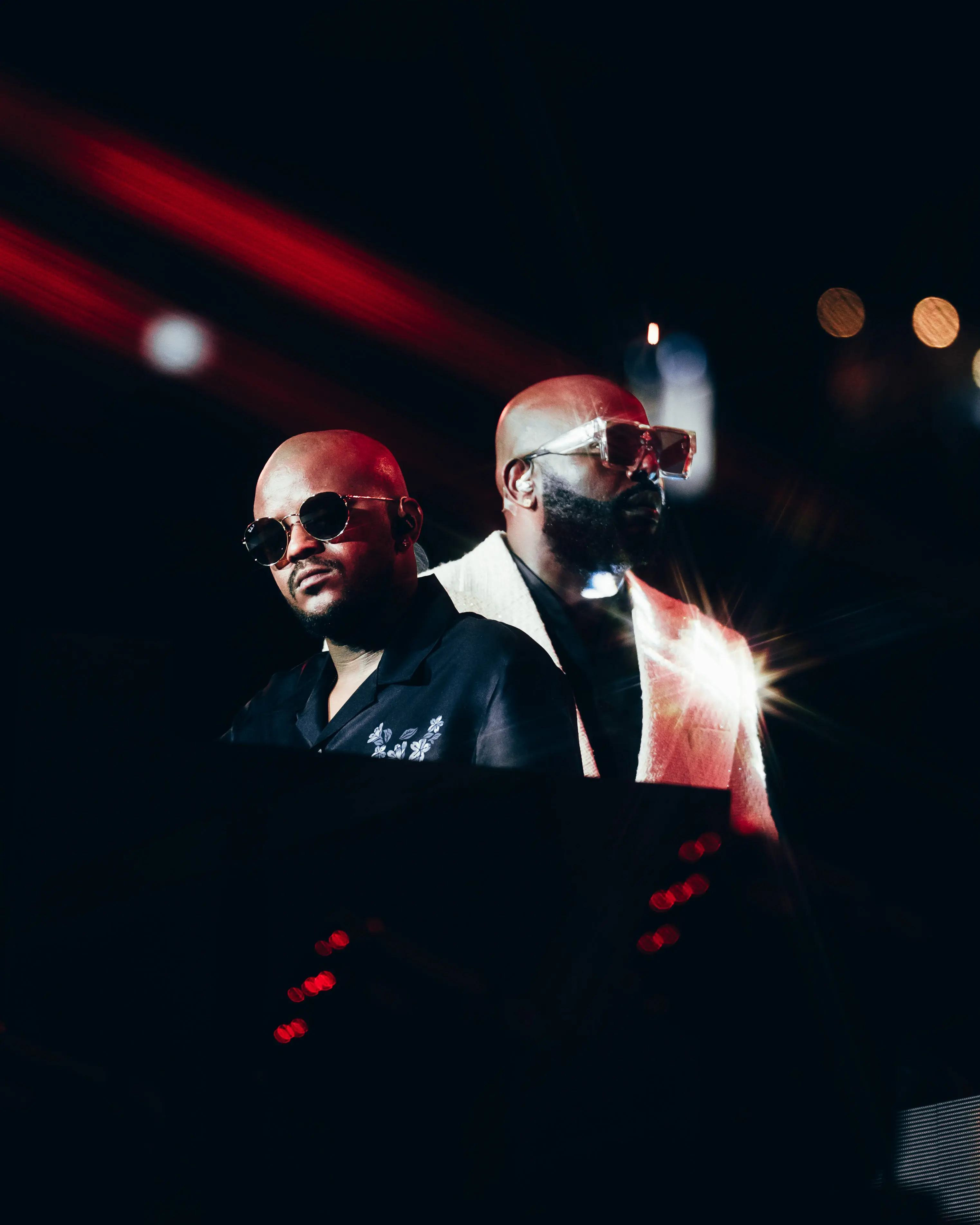
After their sold-out show at Loftus Versfeld Stadium last August, Amapiano pioneering duo Scorpion Kings, consisting of Kabza De Small and DJ Maphorisa, are set to make history again. This weekend, the duo return to the stage for Scorpion Kings Live, taking over Johannesburg's iconic FNB Stadium.
Expected to draw a crowd of more than 70 000 fans, the event marks a monumental milestone for the DJs.
The duo have unveiled a star-studded line-up featuring more than 50 of South Africa's biggest music icons, among them Nasty C, MaWhoo, Young Stunna, Focalistic, Kamo Mphela, Msaki, Ami Faku and Blxckie, promising one of the defining live music experiences of 2026.
The Mail & Guardian spoke to Scorpion Kings before this weekend's landmark event.
Q: Amapiano was forged in intimate spaces, township taverns, home studios and WhatsApp groups. How do you scale that intimate, bass-heavy "log-drum" experience to resonate in a 70 000-capacity arena like FNB Stadium without losing the soul of the movement?
Kabza de Small: The most important thing is that you don't try to change the soul of the music just because the venue is bigger.
Amapiano came from people, from communities, from small spaces where the music was felt before it was even properly heard. That feeling has to remain the same whether you're playing for 500 people or 70 000 people. The log drum must hit the same way. The melodies must feel like they're part of something, not like they're just watching a performance. FNB Stadium is massive but the energy we're bringing comes from the intimate spaces where Amapiano was born.
DJ Maphorisa: Amapiano has always been about energy and connection. You can put that sound in any space and people understand it.
The technology, the production and the staging can get bigger but the DNA can't completely change. That's what makes it Amapiano. At FNB, we're not trying to make Amapiano fit the stadium. We're making the stadium fit the Amapiano experience.
Q: Branded "A Family Affair", the event highlights the broader ecosystem behind Amapiano. What does a stadium-scale show mean for the back end economy of South African music, the session musicians, producers, vocalists, lighting techs, and crew who helped build this sound?
DJ Maphorisa: Amapiano is not just the artists you see on the poster. There's a whole economy behind the sound — producers, songwriters, vocalists, dancers, DJs, engineers, photographers, videographers, stage crews, lighting people, security, promoters and so many other people. When you do a show of this scale, you're creating opportunities for a lot of people. That's what we mean when we call it a family affair. It's bigger than the two of us. We come from a culture where people build together.
Kabza De Small: Even in the studio, it's always been a collective thing. You make a beat, somebody adds a vocal, somebody adds a melody, somebody plays something. There are so many people involved in creating the sound. When thousands of people come into a stadium, they're also supporting that entire ecosystem. For us, that's one of the most important things about reaching this level.

Q: We see global labels mining African electronic music for talent. As two artists who have fiercely protected your independence and catalogue ownership, how are you navigating the balance between global distribution and local creative sovereignty?
DJ Maphorisa: We've always understood that ownership is important. You can work with the world without giving away who you are. Global distribution can help you reach more people but the creative control and the value of the music must remain with the people who created it. Africa has spent too much time creating things that other people later commercialise.
We don't want to repeat that story with Amapiano. The sound was built here, by our people. The credit needs to go to Africa first before it goes to global platforms. For us, the goal isn't to reject international partnerships. It's to enter the partnerships from a position of strength. We want the world to come to Amapiano but we also want South Africans to remain owners and decision-makers in the culture we're exporting.
Kabza De Small: The music must remain ours. You can collaborate with anyone but you must know what you're bringing to the table and protect that.
Q: Kabza, you've explored symphonic arrangements, while Maphorisa, you've blended dancehall, hip-hop and Afrobeats into the mix. Musically, where is Amapiano heading next? Are we starting to see sub-genres emerge?
Kabza De Small: Amapiano is always changing. That's one of its strengths. You can hear different influences coming through and you can hear different producers creating their own sound in the movement. I don't think we should put a limit on where Amapiano can go.
We've seen different styles develop — deeper piano, more soulful sounds, more vocal-driven records, more experimental production. That's how a genre grows. I enjoy experimenting with arrangements and sounds. As long as the emotion is there.
DJ Maphorisa: We're going to see more sub-genres. That's normal when a sound becomes this big. Hip-hop did it, house music did it, Afrobeats has done it. Amapiano is young compared to some of those genres. The next generation is going to take it somewhere we haven't imagined. Our job is not to control that — it's to keep pushing the boundaries.
Q: Filling out FNB Stadium — historically a space for major political rallies, World Cups, and international pop superstars — is a profound sociocultural milestone. What message does it send when working-class South African youth culture claims "The Calabash" on its own terms?
DJ Maphorisa: It's a big statement. FNB Stadium is a place where some of the biggest moments in South African history have happened. To have a sound that came from townships and everyday South African life filling that space is powerful. It shows what young South Africans can build when they believe in their culture. Amapiano wasn't created in a boardroom. It came from communities, from young people making music with whatever they had. So when we stand on that stage, we're carrying those people with us. We're saying that this culture belongs in every space.
Kabza De Small: For me, it's emotional. You remember where you come from. You remember the small rooms, the studios, the places where you were making music before anyone knew your name. Now you're taking that sound into FNB Stadium. That's a big moment, not just for us but for everyone who grew up with this music.
Q: When you perform across London, Europe or the Americas, audiences consume Amapiano primarily as a global dance trend. How do you ensure the cultural origins, township stories, South African languages, and lived realities, aren't sanitised or lost?
DJ Maphorisa: We don't need to explain ourselves by changing who we are. The language, the slang, the rhythms, the log drum, the stories — that's what makes Amapiano interesting to the rest of the world.
When people overseas dance to the music, that's great. But we also want them to understand that this isn't just a dance trend. There's a history behind it. There's a culture behind it. There are South African communities and young people behind it. That's why we continue to make music in our languages and work with South African artists. We don't need to remove the identity to make the music global.
Kabza De Small: If anything, the more authentic we are, the more people connect with it. People can feel when something is real.
Q: Once you've conquered Loftus Versfeld and FNB Stadium, what represents the next frontier for Scorpion Kings?
DJ Maphorisa: The next frontier isn't necessarily about finding a bigger stadium. It's about building something that can continue when we're not on stage. We want to see more infrastructure for African music. More studios. More labels. More opportunities for young producers. More businesses owned by people from here. More artists understanding their publishing and their rights. If we can help create that, then that's a bigger achievement than just saying we sold out a stadium.
Kabza De Small: We want to make music. That's always going to be there. But legacy is about what you leave. Hopefully the next generation can look at what we've done and say: 'They opened the door for us.'
Q: Do you feel pressure from overseas promoters to adapt your sets to fit global house music standards? Or do you view switching genres as an act of artistic freedom rather than cultural compromise?
DJ Maphorisa: That's artistic freedom. I'm an African artist but I'm also a musician. I listen to different kinds of music and I make different kinds of music. If I'm playing in Europe and I want to play Afro House, Afro Tech or something else, that's part of my creativity. The problem is when people think that changing your set means you've abandoned Amapiano. That's not how music works. We can represent South Africa and experiment. We understand why people back home are protective of the sound. They don't want to see it diluted. We respect that.
Kabza De Small: The music speaks for itself. Wherever we go, we're still Kabza and we're still from South Africa. If I play something different in my set, it doesn't change where I come from. For me, it's about reading the room and enjoying the music.