


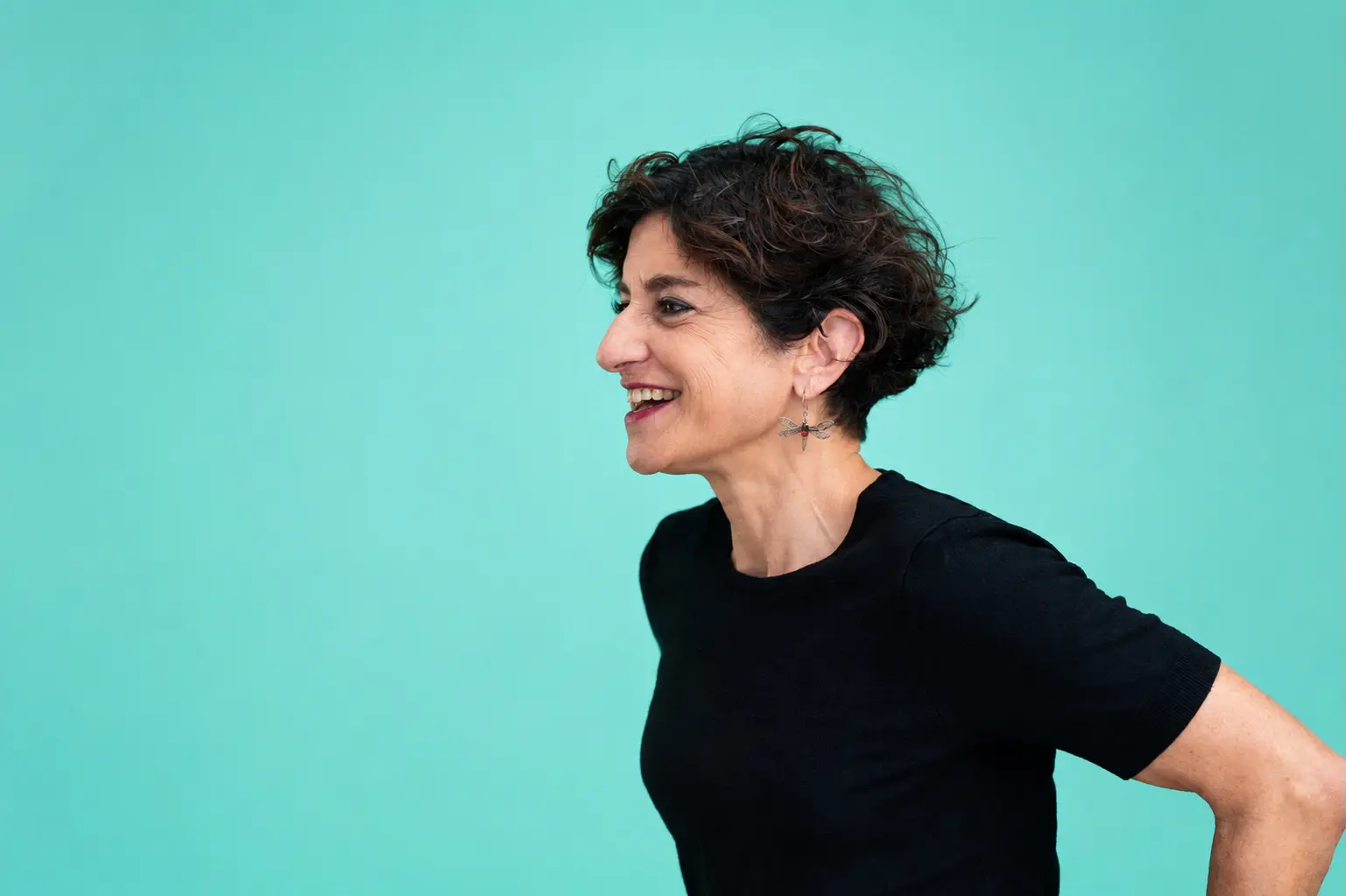
When the name Miriam Altman is mentioned in a room, people sit on the edge of their seats because of the work she has done in her capacity as an economist, activist and strategist.
She is known for structure and making things work, such as when she helped turn around Telkom and for her work advising entrepreneurs in the digital space.
The strangest place to put her name is next to jazz. A form that requires improvisation because it is spiritual.
We are introduced to Altman in her debut album The Butterfly Project which dropped on 18 September. A body of work that marks an unexpected return to a part of herself she thought she had left decades ago.
See, music is not new to Altman. She has been here before.
She started her musical life in classical music, opera and musical theatre while growing up in Montreal, Canada.
But at around age 21, she stopped. Cold turkey.
“There were a number of reasons why I stopped at the time. The thing that really got me to shift was that my teacher died. I had an amazing teacher in Montreal who founded the conservatory.”
The loss created a shift and there was also an interest in doing different things.
“In opera, if you're not really doing it full time, you may as well not be doing it.”
Altman chose another path.
She became involved in activism, including running Amnesty International at McGill University and eventually built a career around development economics, human rights and organisational leadership. Music remained somewhere in the background, nagging at her.
It was after the loss of her parents, the end of her marriage and making a big move from Johannesburg to Cape Town that she decided to heed the call of the music.
“How do I want to live the rest of my life?” she says. “What is this last third of my life going to be?”
Music became part of the answer.
The eight-track album starts with The Train, a song with a distinctly South African baseline. It is composed by Sello Ernest Twala, affectionately known as Chicco Twala, who produced Brenda Fassie’s timeless album Memeza; his discography speaks for itself. Princess of Africa Yvonne Machaka and Seredeal “Shaggy" Scheepers who worked with Freshlyground are also credited as composers.
You are able to hear the touch of each of these powerhouses without it sounding too overdone. If anything, they all ensure that the music carries the life Altman narrates so well.
We see the hand of Luyanda Madope on the second track, Butterfly. Madope is an award-winning pro-ducer, pianist and singer whose credits appear throughout the album as co-producer. The story of how Butterfly came about was serendipitous. “I was originally going to call the album Finding My Voice because in a way, even at this later stage of life, I'm literally finding my voice. I do public speaking, I've led organisations and yet I don't know what my voice sounds like.”
At least not until she found black caterpillars all over the wall of her new house in Cape Town.
“They were so exposed,” she says.
“I've learnt that they attach themselves to the wall as opposed to a tree. They're not eating anymore.They're forming a chrysalis and they're turning to mush inside. The butterfly wings, apparently, are already microscopically present. They make it through. Apparently that process is very painful.
“The butterfly is beautiful but it's the caterpillar that's extraordinary,” she says.
And that is the running theme of this body of work, until the last song, Do I Move.
The album moves through darkness towards renewal and transformation. The metaphor is familiar but in Altman’s hands it becomes less about a neat before-and-after story and more about the uncomfortable process of becoming.
“The Butterfly Project became a butterfly project because I wanted it to feel like it's a project, like I'm working with people and not just finding my voice.”
Altman has upcoming performances in Johannesburg and Cape Town. The one in Johannesburg will take place at Wits Theatre Complex on Saturday, 10 October.
She has no desire to play and chat about the album; instead, she wants to create an experience with its own emotional arc, using transitions, lighting, sound and audience participation to move people through the story.
Experience as a coloratura soprano has taught her that music is physical and spiritual. You cannot fool the audience with a mediocre offering.
“Music can create a physical reaction in the person who's performing it but also in the person who's listening. I used to have that in opera — that if something was happening to me and I could feel it in my spine, I would know the audience could feel that too. That's a very profound thing.”
Altman says she and her team will make sure that the performances feel like a story rather than a collection of songs.
As you listen to The Butterfly Project, you quickly learn that it is not about abandoning the parts of yourself you spend years building; it is about allowing those parts of yourself to sit alongside something less controllable.
The Butterfly Project is ultimately not about an accomplished professional discovering that she can also sing.
It is about what happens when someone who has spent decades building institutions, solving problems and leading others decides that there is a part of herself she has not met.
Jazz gives her permission to meet that person without having all the answers.
At this stage of her life, perhaps that is the most radical thing she could have done.
To become a beginner again.