


There is a guy we grew up with, Sbusiso, who was rather pompous. He was one of the first guys to leave the township. When he returned, he would bring a bottle of something he assumed the rest of us would not know. He would wave it in our faces, telling us where it came from and reciting its supposed history. We never knew whether he was telling the truth.
On one occasion, he showed up with a bottle of Inverroche and convinced us it was from Italy. Imagine my surprise when a press release landed in my inbox announcing that Inverroche was, in fact, a South African brand.
It turns out that the story behind the bottle begins in Stilbaai, a coastal town in the Western Cape, where founder Lorna Scott saw an opportunity to turn the region's distinctive fynbos into something that could travel far beyond its borders.
Today, Inverroche reaches 25 countries. Its story, however, is not simply about a South African gin finding its way into international markets. It is about the value of local knowledge, the richness of our natural heritage and the tendency to overlook what is already ours until someone else recognises its worth.
For Scott, the idea began with a question about what could be created from the natural and cultural resources of the place she called home.
Before founding Inverroche, her career had taken her from working as an air hostess to the corporate world and local government, where she served as deputy mayor of the Hessequa municipality. After settling in Stilbaai, she became inter-ested in sustainable development and how communities could use their resources to create economic opportunities.
The fynbos surrounding the town caught her attention. Despite the extraordinary botanical diversity of the Cape Floral Kingdom, she wondered how much potential lay in plants that people encountered every day but rarely considered in this way.
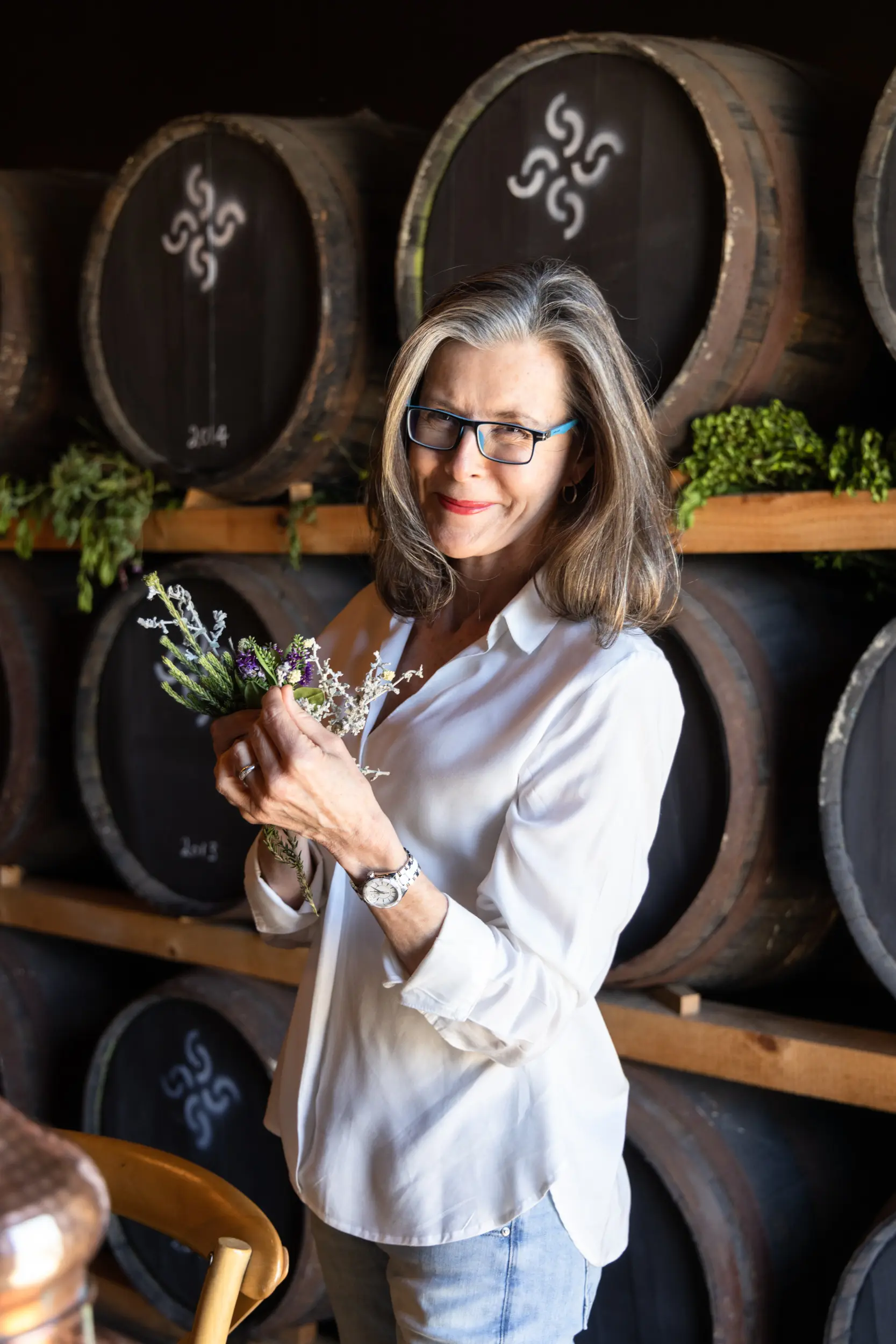
Scott and her son, Rohan, began experimenting around their kitchen table, guided by botanists Dr Tol Pienaar and his wife, Annette.
The idea was to create a gin whose flavour could not be separated from the landscape in which it originated.
“I did not want to create a South African interpretation of a European gin. I wanted to make something that could only have originated here,” Scott says.
There was no guarantee that the idea would succeed. Fynbos gin was unfamiliar to many consumers and the spirits market was crowded with established brands. Convincing people to embrace something new meant taking a chance on ingredients and flavours that had not yet found a mainstream audience.
Scott admits there were moments of uncertainty. She never believed that the answer was to imitate what was working elsewhere.
“Our strength was always our difference,” she says.
“There may be many spirits in the world but there is only one Stilbaai, one Cape Floral Kingdom and one Inverroche story.”
That difference has become central to the brand's identity. Rather than dilute its origins to appeal to a broader market, Inverroche has built its identity around the landscape that inspired it.
Scott believes the brand's international reach demonstrates that local identity need not be sacrificed for global success. “Inverroche’s inter-national journey has not happened despite its South African identity; it has happened because of it,” she says. There is something worth considering here, particularly in a country where products and ideas are sometimes treated as more valuable once they have received international recognition. How often do we assume that something is foreign simply because we do not recognise its name? And how much of our own heritage remains overlooked because we have not learnt to see it as something worth celebrating?
Inverroche's story offers one answer. What makes the brand distinctive is not an attempt to recreate an experience from elsewhere but its willingness to draw from what is here.
For Scott, the relationship between a business and its place of origin must extend beyond the product.
More than 70% of Inverroche's team are women from the surrounding community, many of whom are breadwinners in their households. Creating employment for locals was not an afterthought or a separate social initiative. It was part of the business's original purpose.
“If a business draws its identity and value from a place, it should also create value within that place,” she says. “Inverroche could not claim to be rooted in Stilbaai if the community were excluded from its growth.”
The people behind the product have helped shape its success through their knowledge, craftsmanship and commitment. For Scott, a business that draws its value from a community should also create opportunities within it.
This principle extends to the company's relationship with the natural environment.
The phrase “Mindful From The Start” reflects an approach that considers the impact of decisions throughout the production process, including how botanicals are sourced and how the surrounding ecosystem is protected.
“Our relationship with fynbos is not simply about taking an ingredient from the landscape,” Scott says. “It requires careful and responsible sourcing, supporting regeneration and treating the biome as something we are responsible for, not something we own.”
It is an important distinction. A business built around the natural environment cannot afford to treat that environment as an endless supply of ingredients. Its long-term success depends on preserving the resource that gives it value.
Scott applies a similar philosophy to production. In an economy that often celebrates automation and efficiency, she believes the hands-on nature of making Inverroche should not automatically be considered a limitation.
“In our case, the hands-on process is not an inefficiency we have failed to remove. It is a deliberate commitment to safeguard the knowledge, care and craftsmanship contained in every bottle,” she says.
Technology and improved systems have a role to play but not at the expense of the human judgement and skill that make the product distinctive.
“Growth should make the craft more sustainable and resilient; it should not make it anonymous.”
As Inverroche expands into international markets, preserving its connection to Stilbaai becomes increasingly important. Scott sees growth as a way to introduce more people to the place that inspired the brand, not as a reason to distance the product from its origins.
“Scale has value only if what you are scaling remains recognisable, authentic and connected to the place that inspired it,” she says.
The journey has also taught Scott that building a business requires more than a compelling idea. It demands patience, adaptability and a willingness to learn.
She did not enter the industry with a conventional background in distilling. Instead, she relied on curiosity and a belief that Stilbaai had a story worth telling differently.
“You need people,” she says. “A clear vision starts with a dream shared with a small group of people who have the skills, knowledge and time to walk beside you.”
It is a reminder that entrepreneurship is rarely a solitary pursuit. Behind a brand that reaches 25 countries are the people whose work sustains it, the knowledge that informs it and the community that continues to give it meaning.
As spring returns to the south-ern Cape, the fynbos offers Scott a reminder of how she hopes the business will continue to grow.
“Renewal is not the same as starting again. It is growth from roots that are already there,” she says.
Twenty years from now, she hopes Inverroche will be remembered as proof that something created in a small South African coastal town can remain true to its origins while earning a place in the world.
More importantly, she wants the story to recognise the people who built the business and the landscape that made it possible.
“I would like it to show that heritage can remain alive when we draw responsibly on what we inherit to create opportunity, value and something meaningful for the next generation,” she says.
I keep thinking about Sbusiso and that bottle of Inverroche he once presented to us as an Italian import. Perhaps the funniest part of the story is not that he got its origins wrong, but that we were so ready to believe him. Maybe it says something about how easily we associate quality with foreignness, as though something made here needs an international passport to become interesting.
Inverroche's story suggests otherwise. Sometimes the things we assume have come from somewhere far away are products of our own landscapes, shaped by people who recognised the value of what was in front of them.