


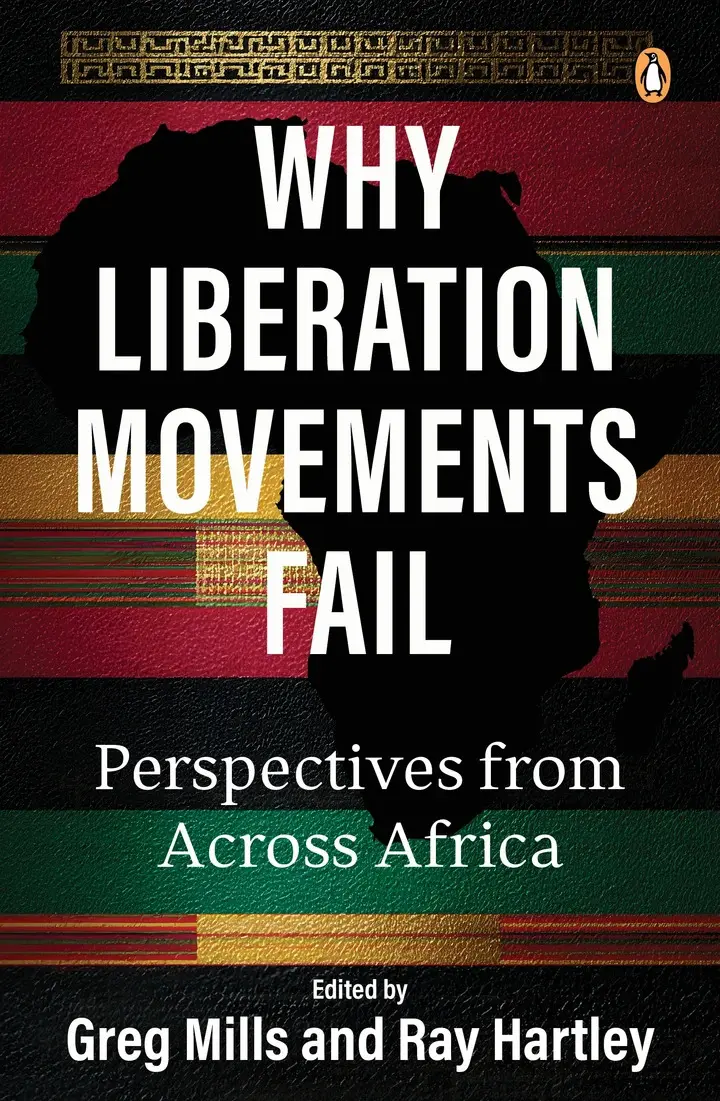
Turning the pages of Why Liberation Movements Fail, I was transported back to one of the most profound warnings ever issued by Nelson Mandela on the eve of South Africa's democratic transition.
In the run-up to the country's first democratic election, he said: ‘‘You must support the African National Congress only so far as it delivers the goods; if the ANC government does not deliver the goods, you must do to it what you have done to the apartheid regime."
Published in the 1993 edition of the African Communist, Mandela's message was a celebration of liberation and a warning against complacency. The struggle for freedom, he implied, was never a blank cheque for those who inherited power.
More than three decades later and on the eve of South Africa's sixth local government election, those words resonate with renewed urgency. They also form an appropriate lens through which to read this compelling and provocative new volume.
Produced under the auspices of the Platform for African Democrats, with support from Germany's Konrad- Adenauer-Stiftung, the 276-page book confronts one of the most uncomfortable questions in contemporary African politics: Why have so many liberation movements, once revered as symbols of sacrifice, justice and national renewal, struggled to govern effectively after achieving power?
To address the question, Greg Mills and Ray Hartley assemble an impressive cohort of political commentators, scholars, policymakers and researchers from across the continent. Their collective effort produces a rich and often sobering examination of post-liberation Africa, stretching from South Africa, Namibia, Mozambique and Angola to Nigeria, Kenya, Rwanda and South Sudan.
The book explores an enduring paradox. The very attributes that enable liberation movements to triumph over oppression — namely discipline, unity, loyalty, ideological certainty and moral authority — frequently become impediments once those movements enter government. What served as strengths in a struggle often evolve into rigidity in power. Across the case studies, contributors demonstrate how liberation movements have repeatedly transformed themselves from vehicles of change into guardians of entrenched interests. Systems of accountability weaken. Political competition becomes suspect. Leadership cults emerge. State institutions become vulnerable to patronage networks and elite capture.
Particularly compelling is the argument that many liberation movements have reproduced extractive political economies rather than dismantled them. The promised dividends of freedom often fail to reach the communities that made the greatest sacrifices during the struggle years. Instead, political and economic power can become concentrated among a new elite, while poverty, unemployment and inequality persist among the constituencies that secured liberation.
The book does not merely offer academic analysis. It bears witness to contemporary realities. Significantly, two of the contributors faced imprisonment on controversial treason-related charges while the manuscript was taking shape, underscoring the extent to which democratic dissent remains under pressure in parts of the continent. Throughout the volume, readers encounter a recurring theme: liberation credentials alone can no longer sustain political legitimacy. A younger generation of Africans is increasingly focused on performance rather than history, governance rather than ideology and delivery rather than liberation slogans. The ‘‘liberation dividend" that once guaranteed electoral loyalty is steadily diminishing. This reality is particularly relevant to South Africa. The ANC remains one of the world's most-celebrated liberation movements, supported during the anti-apartheid struggle by nations such as India, Cuba, Russia and numerous African states. Yet it now confronts many of the same challenges identified throughout the book: declining public confidence, governance failures, internal factionalism and growing demands for accountability.
The editors deserve credit for producing a work that is intellectually rigorous and highly accessible. Rather than preaching ideological certainties, the book encourages critical reflection on whether political systems forged in liberation struggles can successfully reinvent themselves for an era defined by transparency, inclusion, economic growth and accountable governance.
If there is one criticism, it is that the volume could have devoted more attention to Zimbabwe, Uganda and the Democratic Republic of Congo. Their experiences would have strengthened an impressive continental survey and offered further insights into the complexities of post-liberation governance.
Nevertheless, Why Liberation Movements Fail arrives at a pivotal moment in African political history. As voters across the continent become increasingly impatient with unfulfilled promises, the questions raised by this book move beyond academia and into the electoral arena, parliament, civil society and everyday life. Mills and Hartley have assembled far more than a collection of essays. They have produced a thoughtful, courageous and timely examination of Africa's political journey since independence and liberation. The result is a work that challenges readers to confront difficult truths while asking perhaps the most important question of all: Can liberation movements reinvent themselves before voters decide to move on?
For scholars, policymakers, journalists and citizens alike, the book is essential reading. It offers valuable insights into Africa's past, sharp analysis of its present and critical perspectives on its future. Most importantly, it reminds us that liberation is not an end in itself. The ultimate test of political movements lies not in how they win power but in how they use it.
A timely, incisive and thoughtprovoking exploration of why some of Africa's most celebrated liberation movements have struggled to convert political victory into democratic and developmental success. A must-read for anyone seeking to understand the continent's evolving political landscape. Rating: 4.5/5 Why Liberation Movements Fail: Perspectives from Across Africa, edited by Greg Mills and Ray Hartley, is published by Penguin Random House.