


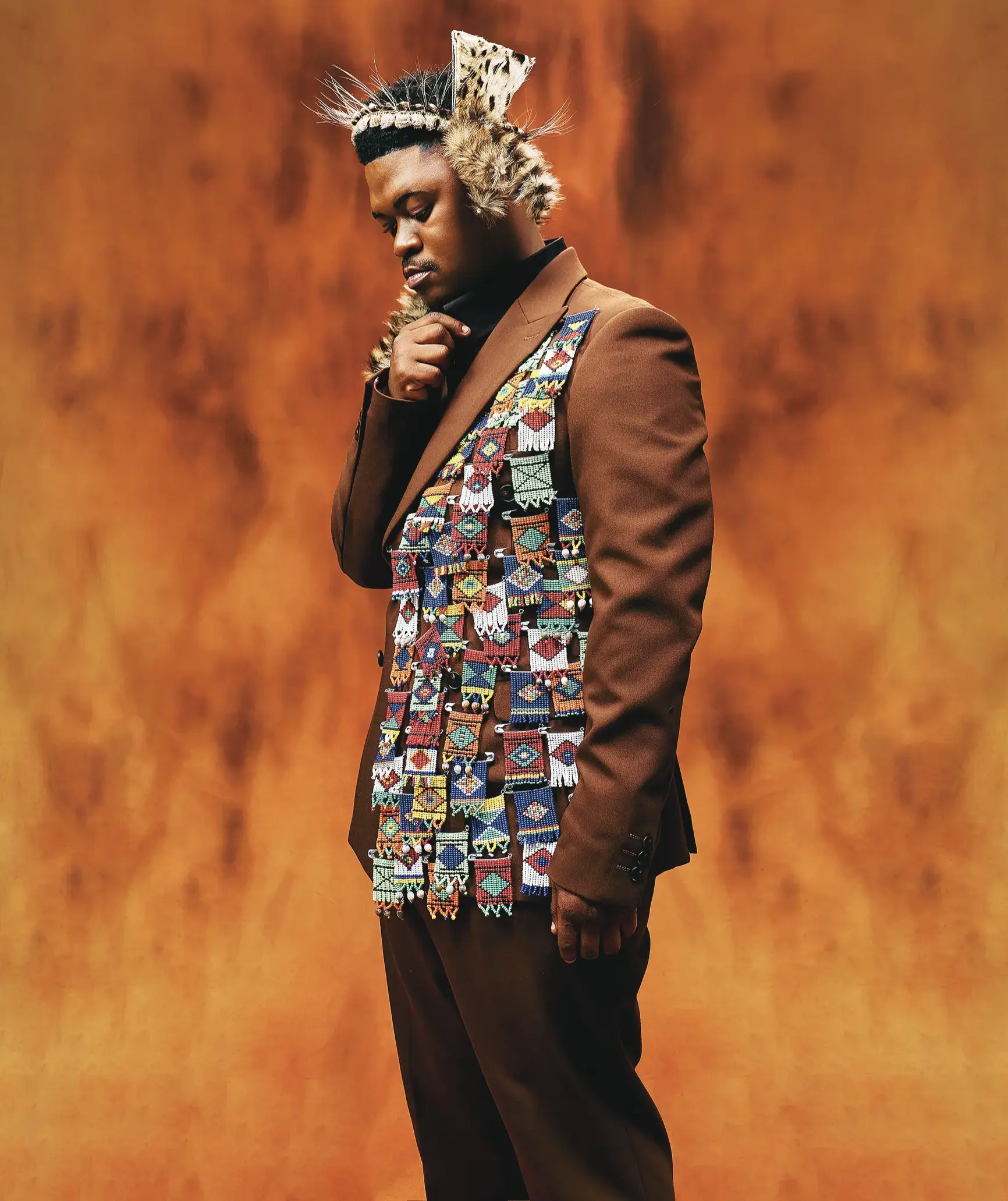
Lindokuhle Mgedezi, better known as Mlindo The Vocalist, has had an upand-down relationship with the media. Since the release of his breakthrough single Amablesser in 2018, his life has unfolded in the headlines, from the heights of a career that seemed destined for greatness to reports of financial difficulties and personal struggles that threatened to overshadow his music.
For an artist whose career began with a song that captured the imagination of listeners across the country, the years since have not always been easy. But Mlindo appears to be entering a new chapter, one that is more focused on what he has learnt along the way.
His latest single, Ndembathe Nkosi, featuring Duduza Serenade, offers a glimpse into that journey.
The song is a departure from the familiar sound that made him a household name, drawing instead on gospel and the kind of spiritual expression that comes from having to confront life when things do not go according to plan.
The title, Ndembathe Nkosi, suggests a spiritual surrender, a desire to be clothed in God’s presence and protected by something greater than oneself. It is a prayer and a reflection on the things that have happened in his life and the faith that has carried him through them.
“With everything that has been happening in my life and career — I have been through so many things that could have ended moving my career. So it was just that thing of reminding God that with whatever He’s doing in the heavens, may He not forget to protect me.”
Mlindo says his wish has been to have a gospel song. One day, as he was scrolling through the internet, he came across a video of Duduza Serenade. This was after he had recorded the song but was struggling with how incomplete it sounded.
“There was something missing, a holy spirit of some sort. So I reached out to them to help me with backing vocals. We then went to Duduza to record the song,” he shares.
The transition from his usual Afro-pop music infused with soul, traditional Zulu folk elements and contemporary Afro-house sound, required a certain level of presence. Understandable, because gospel and spiritual music often require a different kind of emotional vulnerability from the artist. It is interesting to know whether that was something he thought about when approaching this song. Did he think hard about the way his voice would need to take a different shape and whether his songwriting and performance would need something new from him?
“The choir has about 60 people and working with all those different people since I am a bit shy was a bit challenging. But then the discipline that I actually got from working with them and the way they behave, was something that was very inspiring for me. “Things like keeping time and pre-paring for rehearsals. I am glad that I will be working with them for a long time since we have rehearsals for a show at Carnival City. So I am going to be with them for a long time”.
Later this month, Mlindo will be releasing an album titled Inhlawulo. In Nguni cultures, inhlawulo is often understood as something that is owed, a payment made to address an issue and restore peace. It can be a way of acknowledging what has happened and allowing people to move forward. It is a loaded title for an artist whose personal and pro-fessional life has been the subject of public discussion. When asked what it is that he is paying a debt for, Mlindo says the album is an opportunity to explore his spirituality while remaining faithful to the kind of music that has always connected him to his listeners. “With this album I really tried to actually tap into my spirituality. There are love songs.” He says the message remains the same in terms of how he writes his music and songs.
“I am still motivating people and actually helping people who are going through tough situations and life as a whole.”
Even though his first single is a gospel song, it is not necessarily about making every song a prayer but about understanding the responsibility that comes with making music for people who have their own struggles. Mlindo says that the launch of the album, on 6 November, is where he will be candid about some of the things he has gone through.
Picture this: he will be sitting and chatting to the audience, explaining how each track came about and what inspired it.
It is an opportunity to offer a more personal account of the music, particularly for listeners who have followed his career through its different stages. The album, he says, is an opportunity to give something back to the people who have continued to listen to his music.
I ask him what he hopes people will understand about him after listening to this new body of work.
“This is life, there’s no formula and we all make mistakes. When they listen to the songs, I want them to actually see the growth in me as a person and not as just an artist.”
It is a statement that does not attempt to erase the past or suggest that the difficult moments did not happen. Instead, he speaks about growth as something that comes from living through those experiences and learning from them.
“I just want to make music that actually inspires people. Music that helps them with things that they’re actually going through in life. I just want to make songs that make you feel like you are not alone in the situation that you’re facing.”
That desire to make people feel less alone has been a recurring thread in his explanation of the album. It is also what connects Ndembathe Nkosi to the broader project.
The single is a reminder of the protection he has sought through the difficult moments of his career. The album appears to be an attempt to understand those moments and the person who has emerged from them. Whether listeners hear Inhlawulo as a spiritual reckoning, a personal reflection or simply another chapter in Mlindo’s music, he hopes they will recognise the intention behind it. He is not asking them to see a perfect person. He is asking them to listen to someone who has made mistakes, experienced difficult circumstances and is trying to find his way.