


We have just come out of the local government elections, in which dissatisfaction with service delivery emerged as one of the concerns repeatedly raised by communities across the country.
On the ground, the Mail & Guardian team found communities living alongside sewage, others that have gone without water for almost a year and residents who wake up every morning to uncollected waste. These are not isolated inconveniences but conditions that have become part of everyday life for people who live, work and raise their families in these environments.
Conversations with the municipality point to many challenges, including overcrowding in townships and communication barriers between residents and local government. But beyond the explanations and promises of intervention is the reality of those who have to live with these conditions long after the officials have left.
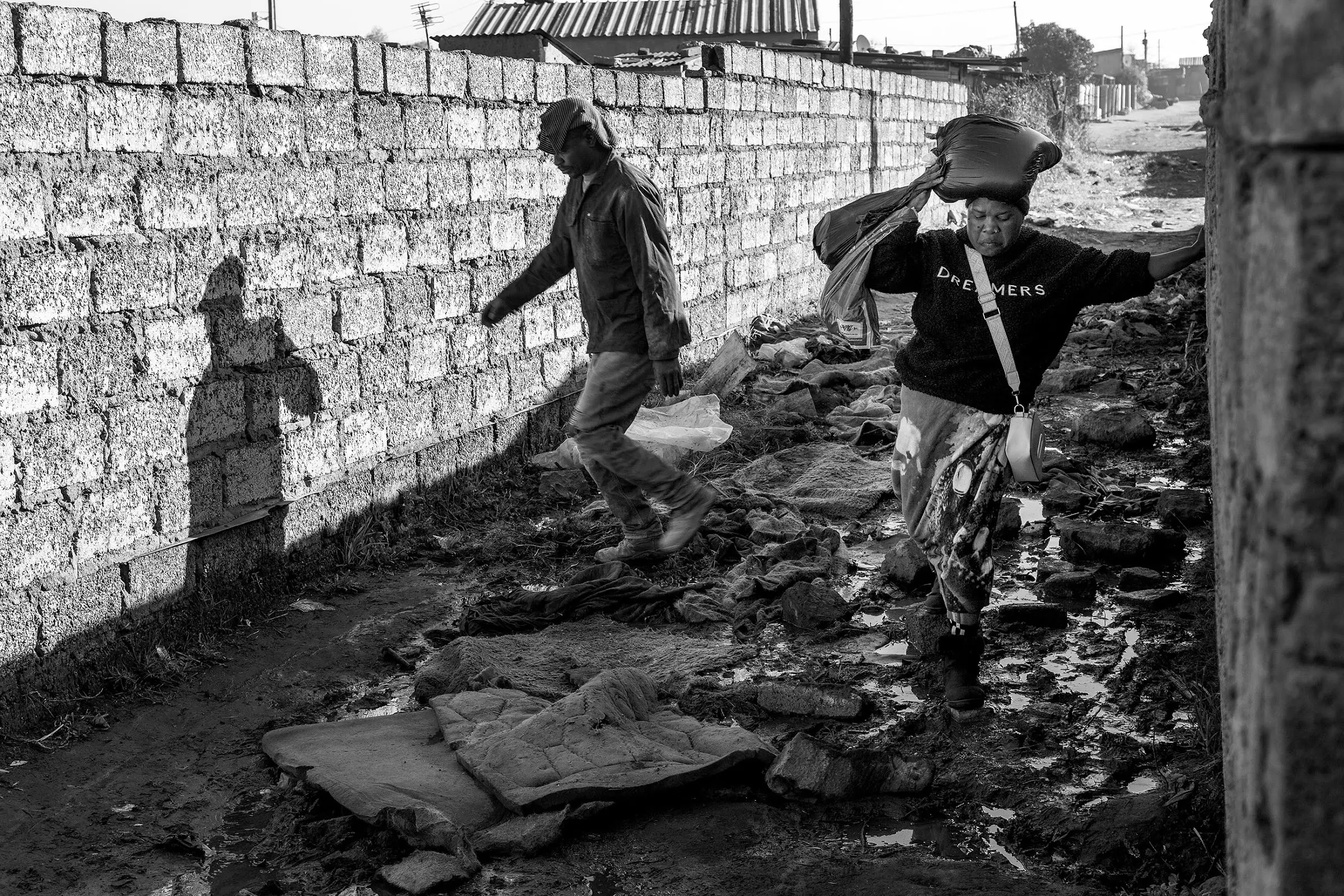
The Smell That Greets Me is a photographic investigation by documentary and narrative photographer Simphiwe Fuwe Molefe into the everyday reality of living with recurring sewage in Katlehong. Through an ongoing body of work, Molefe turns his lens towards a problem that has become so familiar in his community that its persistence risks being accepted as ordinary.
“In my community, blocked sewage has become a recurring part of daily life. The problem is repeatedly addressed, yet returns again, becoming part of the environment in which people live, move and raise their families. At my own home, a corner house surrounded by affected streets, the presence of sewage is not confined to the public road. Its smell enters through the windows and becomes part of the experience of home,” he says.
How unsettling is the idea of a home no longer offering refuge from the conditions outside it. The smell of sewage, usually associated with public spaces and failing infrastructure, crosses the threshold into private life. It enters people's homes, their routines and their memories, becoming an unwelcome presence in places where they should feel most comfortable.
This is the reality for many South Africans living in townships, where residents are often left to condition themselves to the presence of a stench that should never have become familiar in the first place.
“Through black-and-white photography, I document this environment as an everyday landscape rather than as a single incident. Water flowing through residential spaces, people navigating affected areas, domestic surroundings and animals interacting with contaminated water become fragments of a larger story about infrastructure and lived experience,” Molefe says.
He says his photographs move beyond documenting blocked drains and overflowing sewage.
“The work asks what happens when the failure of a basic public service becomes so persistent that it is absorbed into ordinary life. It considers how infrastructure is experienced not only through physical conditions but through smell, discomfort, movement, memory and the feeling of one's own home being affected by something beyond one's control”.
In this way, the project asks us to look beyond the sewage and towards the people whose lives have been shaped by its continued presence. What does it mean to grow accustomed to something that should never have been part of your everyday environment? And at what point does the persistence of a problem begin to change what people believe they are entitled to?
“The Smell That Greets Me is therefore both a document of a specific place and an observation of a wider condition, the ways in which people adapt to environments shaped by systems that are meant to serve them.”