


We often think of a calling as something frightening, perhaps because answering it can be life-altering. To heed a calling means accepting that some of the things we have come to know, the lives we have grown accustomed to and even the people we have held on to may have to be left behind.
It requires a certain kind of surrender: an ability to trust something within us, even when we cannot explain it and allow it to guide us into the unfamiliar.
Perhaps a calling is about finding the courage to move forward and the humility to accept that the life we are being led towards might look nothing like the one we had planned.
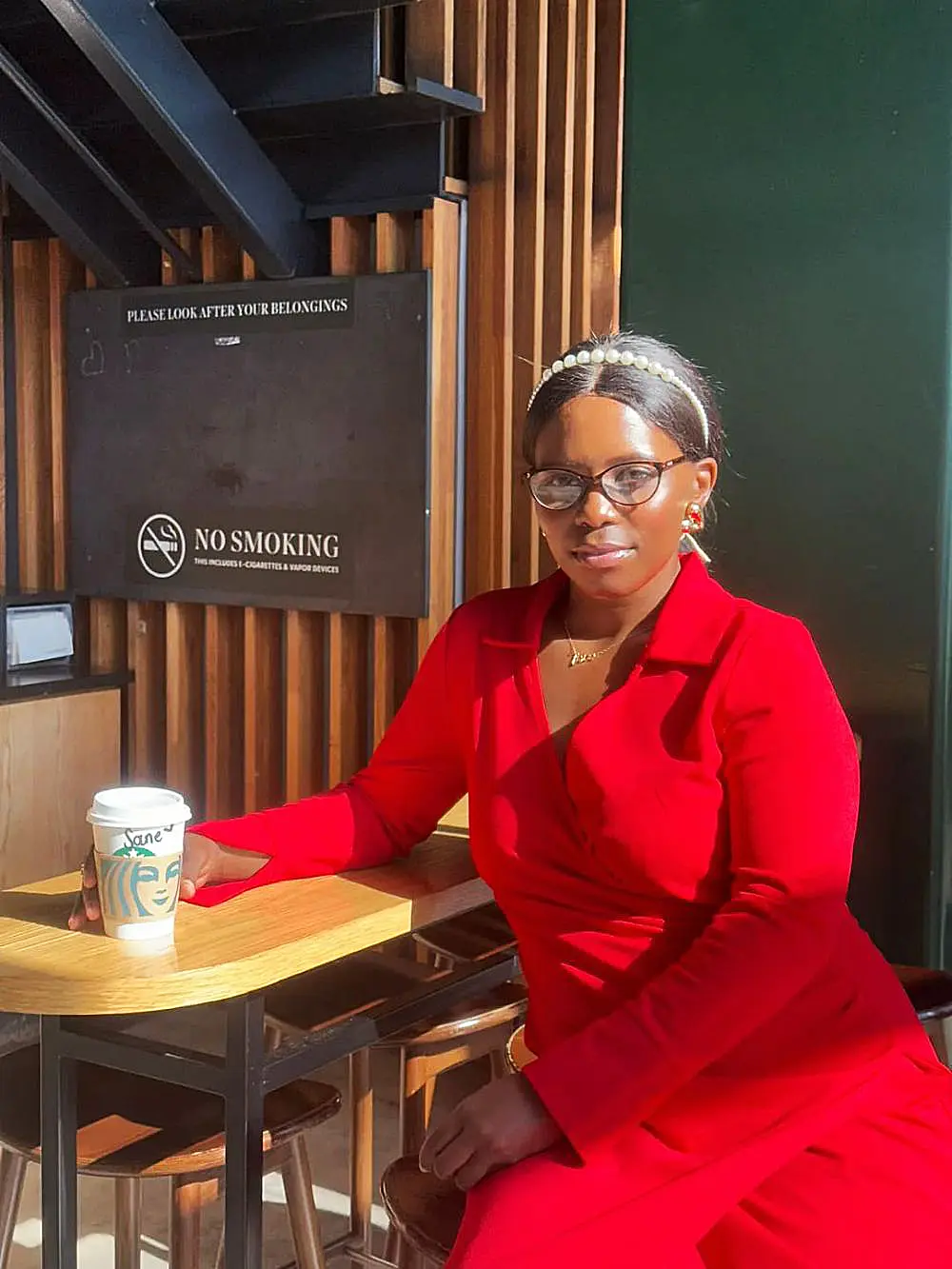
For Sanelisiwe Mthembu, a speech therapist, art has been a part of who she is. She has always acknowledged this part of herself and made room for it but, like many of us who have grown up in communities where success is often defined by the security of an office job and a monthly salary, she pursued a career in therapy.
In 2023, during her pregnancy, art began calling out to her in a way she could no longer ignore. While pregnancy is often spoken about as a beautiful and transformative experience, the physical and emotional toll it takes on women is not always given the attention it deserves. Creating art became a form of therapy, a way of processing an experience that can often be isolating.
“I started drawing heads. I would draw about 10 heads. I just started seeing visions. I saw myself painting a lot of drawings,” she says.
What began as a way of working through her pregnancy soon became something bigger. The visions continued and the desire to create became difficult to separate from the rest of her life. Last year Mthembu eventually made the decision to leave her job and commit herself to her art.
“I realised that I could not live without art anymore. When I was at work, I felt like I was blocked. I became very sick. Sometimes I felt like I was mentally ill. So I stopped being a speech therapist and focused completely on my art,” she says.
“I felt so guided,” she says. “At no point did I feel like what I was being called for would leave me lacking.”
Portrait requests would come in, allowing her to earn an income while putting money towards the supplies she needed to continue creating.
There were also instances when she would receive a vision telling her to paint someone’s portrait without charging them. In those moments, she says, she trusted that there would be provision elsewhere. “I would get a vision that I need to paint someone for free but that person’s guides would assure me that they would provide and sort of pay me back. All I needed to do was listen and deliver and they will take care of the rest.”
Of course, answering a calling does not mean that everything immediately falls into place. There is the process of figuring things out, making mistakes and learning what works. Sometimes, the calling comes with an instruction to create but the how, the medium and the process are things one discovers along the way.
For Mthembu, this meant experimenting with different materials. She initially worked with acrylic paints and similar mediums. She soon realised the process was becoming more of a hindrance than an expression of what she wanted to communicate.
“There would be times when I would constantly find myself having to clean brushes. It really felt like a blockage to me,” she says.
She eventually moved to charcoal, a medium she found easier to manipulate and blend. She began studying it independently and discovered that she could work at a much faster pace.
“I then moved to charcoal, which blends so well and a canvas was easy to manipulate. I started studying it and realised that I could get through my work quicker. I could complete two very big drawings in a day.”
The change allowed her to find a rhythm in her work.
Her exploration of mediums did not end with charcoal. “In one of my visions, I was shown that I need to work with imbomvu (red clay). I just started playing around with it and trusting that my guides will tell me what to do with it. Remember, no one teaches me how to handle these mediums. Also, with charcoal, no one taught me how to use it,” she says.
Mthembu now works with imbomvu, umcako (a white chalk-like powder) and charcoal. Each material serves a different purpose in her work, allowing her to build texture, contrast and depth.
“I use umcako for highlights, just to add that contrast in my work, and I use charcoal to add depth.”
Working with these materials has also shaped the abstract foundation of her pieces. She begins by building the foundation before introducing faces and the figures that emerge from her visions.
There is no formal instruction guiding her hand, no prescribed way of approaching the materials. Instead, she experiments, observes and allows herself to be led by what she sees and feels.
It is also a reminder that sometimes the process of answering a calling requires us to abandon the idea that we must have everything figured out before we begin.
Spiritual work, or any work that requires one to search the deeper parts of themselves, can be exhausting.
Mthembu says some of the work can become physically and emotionally demanding. When people appear in her visions or when she is approached to paint portraits of deceased family members she sometimes finds herself experiencing the pain associated with their stories.
“I sometimes fall into a deep depression when working on a certain painting but I am able to reassure myself that I will be okay and this will all pass,” she says.
It is perhaps this acceptance of the weight of her assignment that has allowed her to continue. She does not pretend that the work is always easy, nor does she suggest that following her calling has removed the difficult parts of life.
Mthembu wants her work to reach the people it is meant to reach. There is no grand ambition to make it something it is not, nor does she seem particularly interested in dressing up her practice to make it more palatable to others. She wants to fulfil her calling and allow the work to find its way to the people who need to encounter it.