


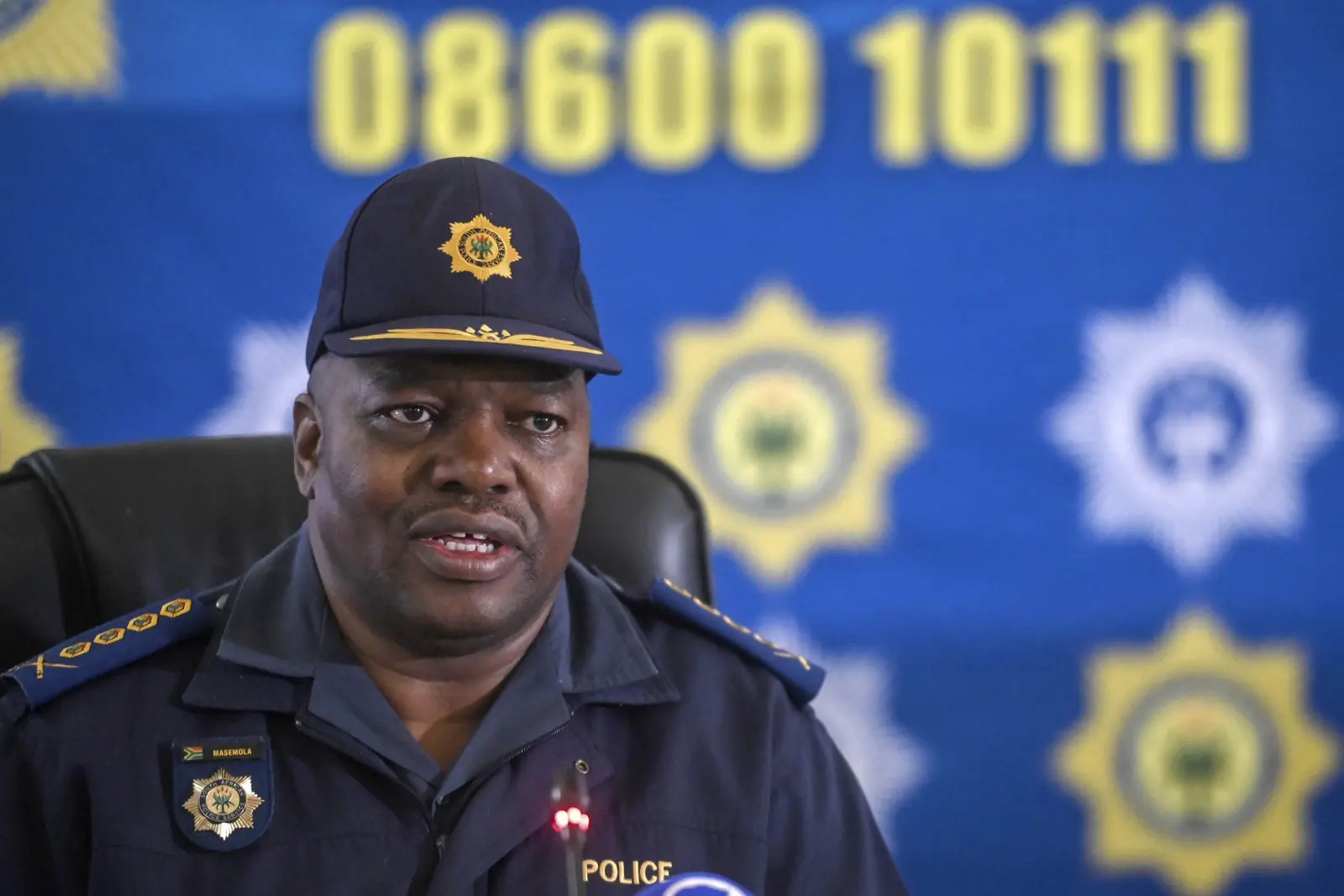
National police commissioner Fannie Masemola has allegedly continued to “shield” Mpumalanga head of police Semakaleng Manamela, who has been implicated in a damning voice recording detailing laundering of police donations for her personal gain.
According to documents, recordings and highly placed sources, Masemola is aware that a money-laundering racket is allegedly being run by senior Mpumalanga police officers but has not acted.
In one recording of a phone call to which the Mail & Guardian has listened, Middelburg police station commander Thandi Jiyane is heard telling an officer working in Manamela’s office — whose name is known to the M&G but will be withheld — that she had received R230 000 from a Mpumalanga businessman and forwarded the money to Manamela’s “private people”.
Sources who are aware of the recording told the M&G the call was made sometime during the second half of last year.
So brazen is Jiyane on the call that she can be heard bragging about how she is the best person in the Mpumalanga police service at raising donations from the province’s business sector and channelling the money to people who have been nominated by Manamela.
“These are my money-raising schemes; the other officers do not have the same grace that I have in raising funds.
“I work to the point where I am able to launder the money to [Manamela’s] private people,” claimed Jiyane, speaking to the official in Manamela’s office.
Mpumalanga police spokesperson Brigadier Selvy Mohlala did not respond to detailed questions relating to the voice recordings implicating Jiyane and Manamela in the alleged laundering of donated funds.
However, Mohlala said: “The police commissioner is not involved in any money laundering. If there is any form of money laundering, relevant authorities must be involved to investigate.”
The recorded call forms part of evidence against the Mpumalanga head of police, which has been submitted to Masemola.
In addition, a forensic investigation probing claims of corruption and abuse of power found that Manamela allegedly showered herself with gifts worth more than R2.1 million at welcoming parties after her appointment in July 2021.
The investigation was conducted after whistleblower disclosures to now retired Mpumalanga police commissioner Thulani Ntobela. He now works for private company The iFirm, which compiled a report dated May 2022, and handed it over to Masemola.

The report found that Manamela “demanded” that Mpumalanga’s three police districts organise welcoming parties for her after her appointment and that funds from different station “tea clubs” be used for the events.
Individual stations get “tea club” budgets, primarily for providing food and beverages for arrested suspects at police holding cells.
“The welcoming party was to be disguised under a recognised special event whereby [Manamela] would be invited as a guest and gifts were to be given to her,” the report stated, adding that R1.7 million was collected for a gala dinner in Manamela’s honour in March last year.
The report also recommended that Masemola initiate a wide-ranging probe into Manamela, led by the national police service.
In February, almost a year after the report was completed, Masemola suspended Manamela, pending an investigation that Lieutenant General Sello Kwena was assigned to conduct.
However, it emerged in the March Pretoria high court judgment overturning Manamela’s suspension that Kwena had not compiled a report of his investigations and that the notice to suspend that Masemola gave to Manamela was “vague” and did not “follow procedural fairness”.
“[Masemola’s] notice [to suspend] was so devoid of any detail that it was impossible for [Manamela] to provide any substantive response.
“The notice failed to give any particularity, save to say that the applicant [Manamela] had received gifts, and that she will be furnished with more particulars in future,” reads the court judgment.
“One further contention by the first respondent [Masemola] requires attention; and that is once he had received the Kwena report, he lost confidence in [Manamela].
“I digress to emphasise again that [Manamela] was never provided with the Kwena report.”
Ntobela, who conducted the initial probe into Manamela, said Masemola was “covering up” Manamela’s corruption. He said the fact that no report was compiled from the national commissioner’s probe into Manamela’s conduct was proof that the latter was being “protected”.
Masemola was aware of the voice recordings which seem to reveal a money-laundering racket within the Mpumalanga police force but had ignored it.
“I don’t think that Kwena has done any investigation in his life.
“I was the second-last person to be interviewed by him, while the logic tells that I was supposed to be his first witness as the author of the report,” Ntobela said.
“I am told that this voice clip was not investigated at all, yet there are paper trails of these transactions to Manamela,” he said.
In the recording, Middelburg station commander Jiyane is further heard berating the officer working for Manamela, accusing them of telling junior officers to collect proof of payments from Mpumalanga business people donating to the province’s tea clubs.
Jiyane, after confirming that she had received a R230 000 donation from a businessman and “sent the money to the provincial commissioner’s handler”, kicks up a fuss about why junior officers should receive the proof of payment from the private donors.
“You are in the picture [in these transactions] because I use the tea club of our police station. Now, who gave the instruction to involve juniors?” Jiyane shouts.
The officer in Manamela’s office responds that she did not know who had given the instruction to involve other officers in these transactions, however, Jiyane does not accept that answer.
“I get very upset when I work with people who do not trust me. I detest the fact that I have to be monitored by junior officials,” an angry-sounding Jiyane says.
“I can leave this scheme now, if this continues, and tell the PC [provincial commissioner] that her people should handle these transactions without me.
“I will burn all these donation registers and leave all of this.”
Police officers need to fill in registers to record donations or gifts
they receive from members of the public.
Some of the gifts Manamela was given at her “welcoming parties” — according to registers seen by the M&G — included a R78 410 television stand, couches which cost R60 000, R82 332 worth of household appliances, as well as a R150 000 gift voucher.