


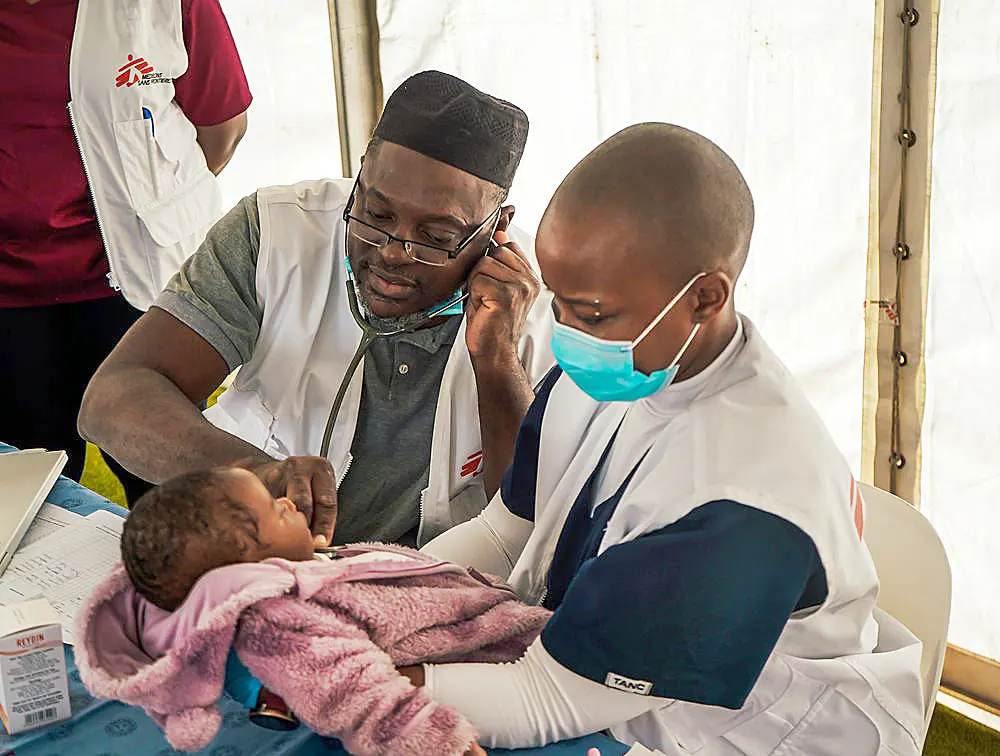
Migrants in South Africa are afraid to seek medical treatment even where anti-migrant groups have stopped blocking the gates, Doctors Without Borders said on Wednesday. Patients told medical teams at displacement sites that they feared being turned away or attacked. Some had gone without healthcare for up to a year.
Claire Waterhouse, the director of advocacy and analysis for Doctors Without Borders in Southern Africa, said fewer blockades had done little to restore patients’ confidence that they could enter a clinic safely. The organisation, also known as Médecins Sans Frontières (MSF), was receiving reports of threats and intimidation.
Speaking at a briefing on 18 November on the health consequences of anti-migrant hostility in South Africa and the UK, Waterhouse described what her teams saw in July and August, when they treated hundreds of patients a week at displacement sites. Some had been injured in attacks or on the journey. Others needed treatment for respiratory infections, stomach illnesses, diabetes or high blood pressure.
Among them were mothers travelling with babies less than a week old. On three occasions, Waterhouse said, staff met women who had undergone Caesarean sections three or four days earlier and were making the journey in severe pain. For people on long-term medication, leaving home could mean losing access to the drugs that kept them well. MSF teams encountered patients who had missed HIV or TB treatment and others who were running out of medicine.
Waterhouse warned that interruptions could worsen illness and increase the risk of drug resistance.
In Johannesburg, a woman who fled violence lost access to her psychiatric medication. By the time an MSF psychologist saw her, she was hallucinating and at risk of harming herself. A doctor helped her restart treatment that day.
In Cape Town, a mother whose son needed urgent chemotherapy told the team her landlord had evicted her because she was undocumented. The boy was admitted to hospital but the family faced uncertainty over whether they could remain in South Africa while he received care.
Khanyisa Mapipa, the head of the health rights programme at public interest law centre SECTION27, said district health offices and aid organisations had built a parallel health service so patients could collect chronic medication. She warned that the consequences of interrupting treatment extended to public health across the country.
MSF had documented how patients were being screened at clinic gates in August 2025. After receiving complaints, its teams visited 15 hospitals and clinics in Gauteng. At more than half of them, staff saw groups in civilian clothing demanding identification and turning away people they believed were foreign.
In December 2025, the Johannesburg high court ordered authorities to ensure patients could enter the Yeoville and Rosettenville clinics safely. SECTION27 represented MSF, the Treatment Action Campaign and Kopanang Africa Against Xenophobia in the case. Mapipa said the second part of the application was pending.
Mapipa said about 100 000 people had been repatriated from South Africa between July and November, after anti-migrant groups imposed a 30 June deadline for undocumented migrants to leave. Waterhouse described emotional distress among people waiting to leave. At many of the sites where they gathered, there was no mental health support.
Ghita Benjelloun, MSF UK’s migration programme manager, described how hostility in Britain had also reached those helping migrants. She said 69 anti-immigrant protests had been recorded since February 2025 and cited figures showing that 47% of staff surveyed at organisations supporting migrants had experienced threats or harassment.
Benjelloun described the distress clinicians saw at Wethersfield, a former military base in Essex housing men seeking asylum. MSF and Doctors of the World treated 301 patients outside the gates between November 2023 and December 2024. Sixty-two percent showed severe symptoms and 20% reported suicidal thoughts.
For patients leaving South Africa, MSF began assisting people arriving at Beitbridge in Zimbabwe. It extended its work to Nyamapanda, where Malawians crossed into Mozambique on their way home. By early October, MSF said more than 80 000 Malawians had passed through the reception centre there.
Aid groups called on South African health services to give patients enough medication for the journey and on health authorities in their home countries to connect them with a clinic when they arrived.