


In 1968, Walt Disney released The Love Bug, starring Herbie, a sentient, pearl-white 1963 Volkswagen Beetle.
The film became a massive global box-office success, transforming the vehicle into an international symbol of pure joy, innocence and care-free fun.
Fueled by the Hollywood exposure, the Beetle became a western symbol of “flower power” in the years that followed as audiences associated the car with comedy, peace signs and Disney magic.
However, in South Africa, the white Beetle on the ground in Soweto was operating in a real violent, national crisis.
On 16 June 1976, photo journalist Sam Nzima and reporter Sophie Tema were working in Soweto using a VW Beetle — a press vehicle — that belonged to their employer, The World newspaper.
When Hector Pieterson was shot, Mbuyisa Makhubo carried him to this specific car. Tema opened the door, Hector Pieterson was placed in the back seat and Tom Khoza drove them to the Orlando West Clinic. When they arrived at the clinic, he was pronounced dead.
The Beetle played a far more pivotal role than just taking Hector Pieterson to the hospital.
It also smuggled the iconic photographs taken by Nzima of Makhubo carrying Pieterson to the car back to The World’s offices in downtown Johannesburg.
The photo made the front page of the next edition of the paper and became a pillar of change in the apartheid regime.
In a 2015 interview with Forbes Africa, Nzima recalled that the police came back for him and he knew that would happen, so he wound the film and stashed it in his sock and then loaded another film.
“As I anticipated, the police came back and grabbed me after they ran away for a few minutes. They took my three cameras and exposed my films. When they thought they had destroyed the evidence, our driver Thomas Khoza rushed the film to The World office. The picture was published the next day.”
The Beetle acted as a vessel of mercy on a day of massacre.
However, VWSA takes no credit for the heroic getaway that the Beetle produced on that day. VWSA head of communications Andile Dlamini told the Mail & Guardian that vehicle was a background player in this defining moment in South Africa’s journey to liberation, but the brand has never claimed ownership of this moment.
"The tragedy of the 16 June 1976 uprisings is a key moment in the national struggle for human rights, and the focus should be on the true heroes who fought this battle at great cost," he said.
75 years of heritage
Besides being an influential car in South Africa’s history, the Beetle is also a vehicle that began VW’s heritage in the country.
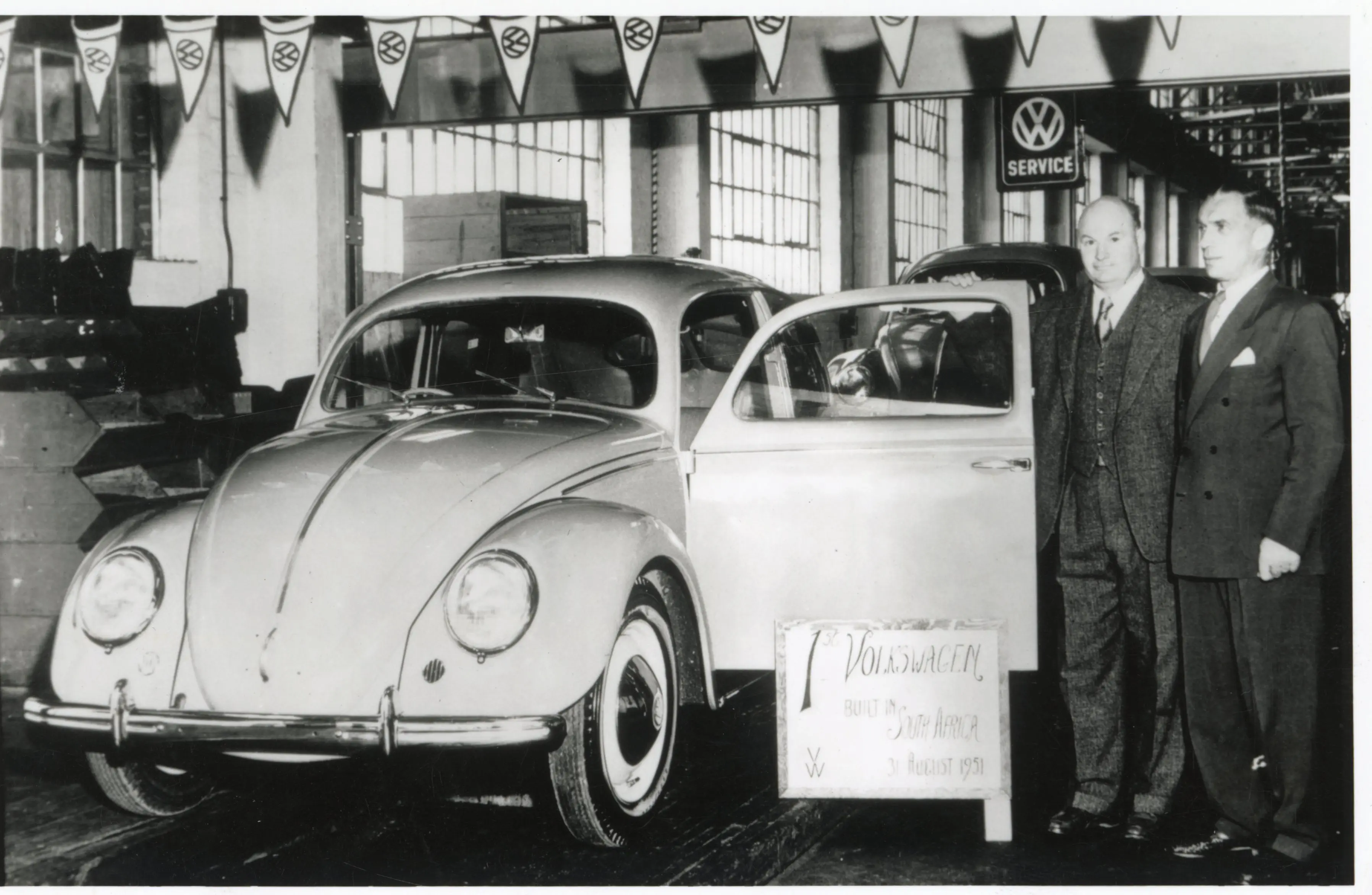
The first VW to be produced in South Africa was the Beetle on 31 August 1951 at the Kariega plant (then Uithagen) in the Eastern Cape.
The Beetle became South Africa’s best-selling vehicle for 11 consecutive years, which helped VW establish a footprint in the country.
It also became affectionately known by South Africans as the Volla across deeply divided communities because it was cheap, easy to maintain and could handle rough township roads without much fuss, therefore making it accessible to many South Africans.
According to VWSA's own archival exhibition records, the vehicle was a social equaliser. It was a machine that drove the “democratisation of personal mobility," allowing thousands of South Africans to afford their very first vehicle.
Dlamini said that the Beetle truly was a people's car, not just in South Africa, but globally as well.
Local production of the Beetle ran from 1951 to 1979 selling 288 353 units in that period.
"Our plant in Kariega, which is celebrating its 75th anniversary this year, is the oldest Volkswagen factory outside of Germany – which also means we were the first plant outside of Germany to build the Beetle. Our 75-year history, our impact in the community and the economy of the Eastern Cape and South Africa, were all built on the foundation of our early success, and the Beetle was a critical part of that," Dlamini added.
The last Beetle, nicknamed “Matti” rolled off the Kariega floor on 18 January 1979. He left an emotional set of workers who gave him a bit of pizazz to send him off.
According to AutoPavilion, the official Volkswagen automotive museum, Matti left the production line a “bronze adonis” with all sorts of special accessories fitted by VW employees.
Matti also left with a bouquet of flowers, while VW brought the Golf onto the manufacturing floor at Kariega. Matti was maintained by the company for the next 27 years but suffered an accident in 2006 when a truck carrying the lovely Beetle overturned.
In 2017 however, a specialist Volkswagen Product Engineering Team in Kariega, together with expert body work and paint specialists in Gqeberha completely restored the Beetle, which now sits at the AutoPavilion museum.
The resurrection of Matti emphasises the history shared between the bug and South Africa.

However, the production of the Beetle at Kariega was not discontinued because the car became unpopular. Limited space on the manufacturing floor meant that it just had to make way for the new Golf MK1.
It was also just a process of evolution. The rear-engine blueprint simply could not compete with the fuel efficiency, safety metrics and interior layout of the incoming front-wheel-drive hatchbacks.
The Beetle did not truly leave South Africa, it just continued in other forms. When the Golf MK2 became an unaffordable vehicle in 1984, VW pivoted and brought a resprayed MK1 back as the Citi Golf, which immediately filled the shoes of the Beetle as it was also a “people’s car” that inherited the Volla's youthful, ubiquitous spirit.
Today, that same presence exists in the VW Polo Vivo, which is also VW’s best-selling vehicle and sold over 26 000 units in 2025.
“The Beetle was the first ‘People’s Car’, and this philosophy is still alive today, in more ways than one. The Volkswagen brand still aims to deliver high-quality mobility that is accessible to all, in a highly competitive industry.”
“At the same time, the company has rooted itself in South African communities not only through vehicles, but through consistent investment in empowerment and community development. The brand is respected for its economic contribution, but it is loved for being entrenched in the daily lives of South African communities,” Dlamini said.
The Beetle did encounter massive change in the 21st century as Volkswagen tried to move it to a more modern chassis and design but eventually it was discontinued in 2019 as people started to move from small cars towards SUVs.
However, till today, the influence of the Beetle on VW’s design language is still recognisable.
Both the mechanical and aesthetic layout of the Beetle remains prevalent in VW’s electrified range of vehicles.
Because electric cars do not require a front engine radiator, designers brought back the smooth, grille-less front facade.
Furthermore, modern VW electric cars place the electric motor directly on the rear axle to drive the rear wheels, which mirrors the original Beetle’s rear-engine, rear-wheel-drive blueprint.
While the original, heroic press car of ‘The World' was lost to history after the apartheid regime banned the publication in October 1977, its spirit remains preserved.
Dlamini concluded that even 40 years after production of the Beetle, almost 40 years after VW stopped building the Beetle, it’s not an uncommon sight on South African roads. He argued that not many vehicles outlast their production run by nearly four decades.
For South Africans looking back every Youth Day, the Beetle stands as a physical monument — a reminder that sometimes history wasn't made by grand political orations but by ordinary journalists and citizens, navigating the volatile streets of Soweto in an ordinary family car, trying desperately to save a child.
At VWSA's Auto Pavilion museum in Kariega, the very first and very last Beetles sit on display. They serve as a reminder to younger generations that history isn't just found in textbooks — sometimes, it was carried on four wheels