


South Africa is hurtling towards a precipice pushed by a toxic mix of economic despair, populist political posturing and systemic state failure that threatens to ignite widespread social instability, while a government caught unaware implements a “microwave solution” to its decades-long porous borders problem.
This is the warning from political analysts who note the humanitarian crisis which began as sporadic, localised vigilante violence against foreign nationals, has now spiralled into organised, leadership-driven movements vying to dictate terms to the state.
With the “March and March” movement setting a June 30 deadline for undocumented migrants to leave – threatening a national shutdown – the government has been jolted into an enforcement crackdown.
The sudden regulatory zeal, however, looks less like a policy shift and more like a reactionary scramble by an ANC leadership and its Government of National Unity partners, desperate to reclaim eroding authority and appease a restless electorate ahead of local government elections.
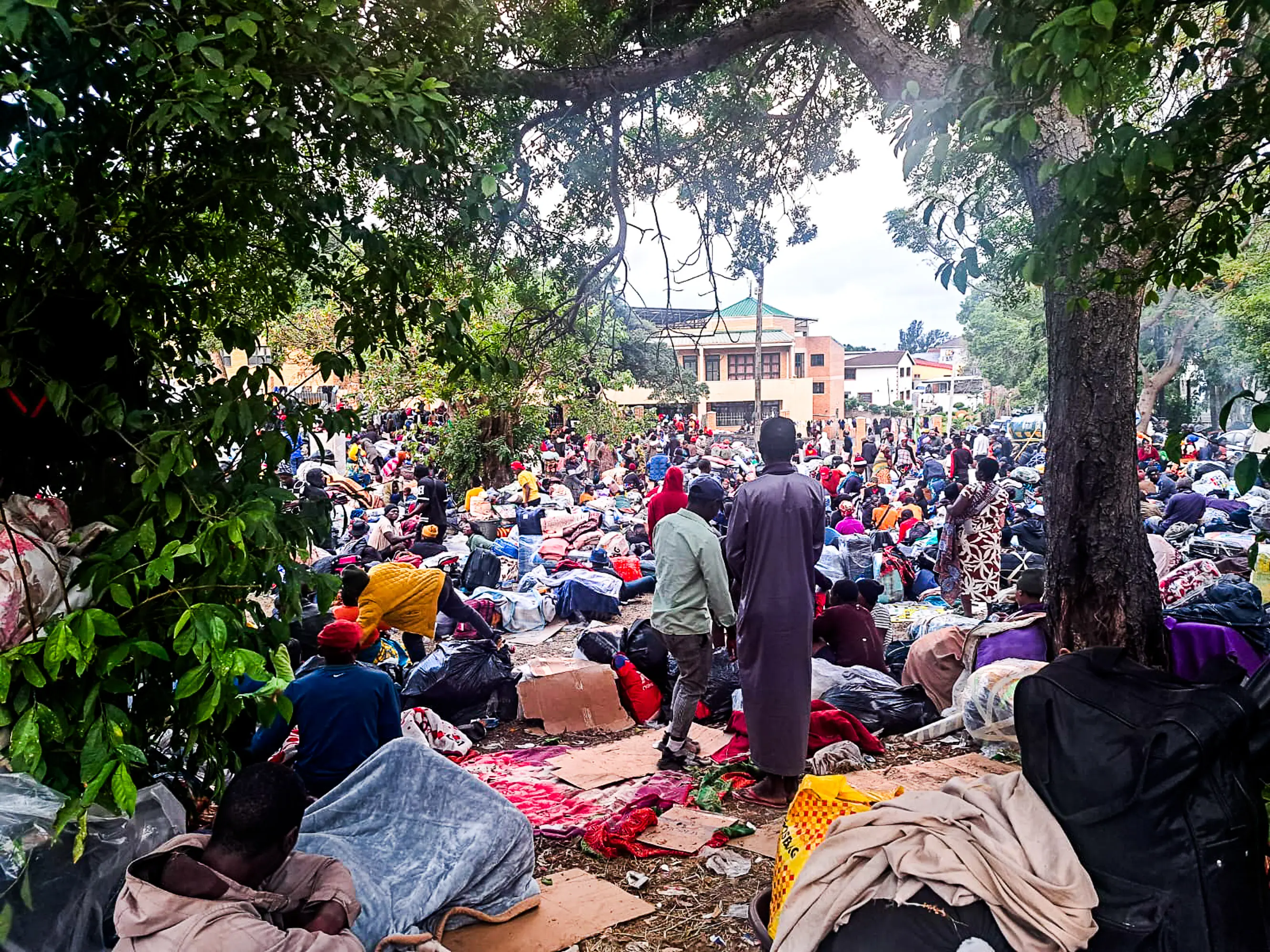
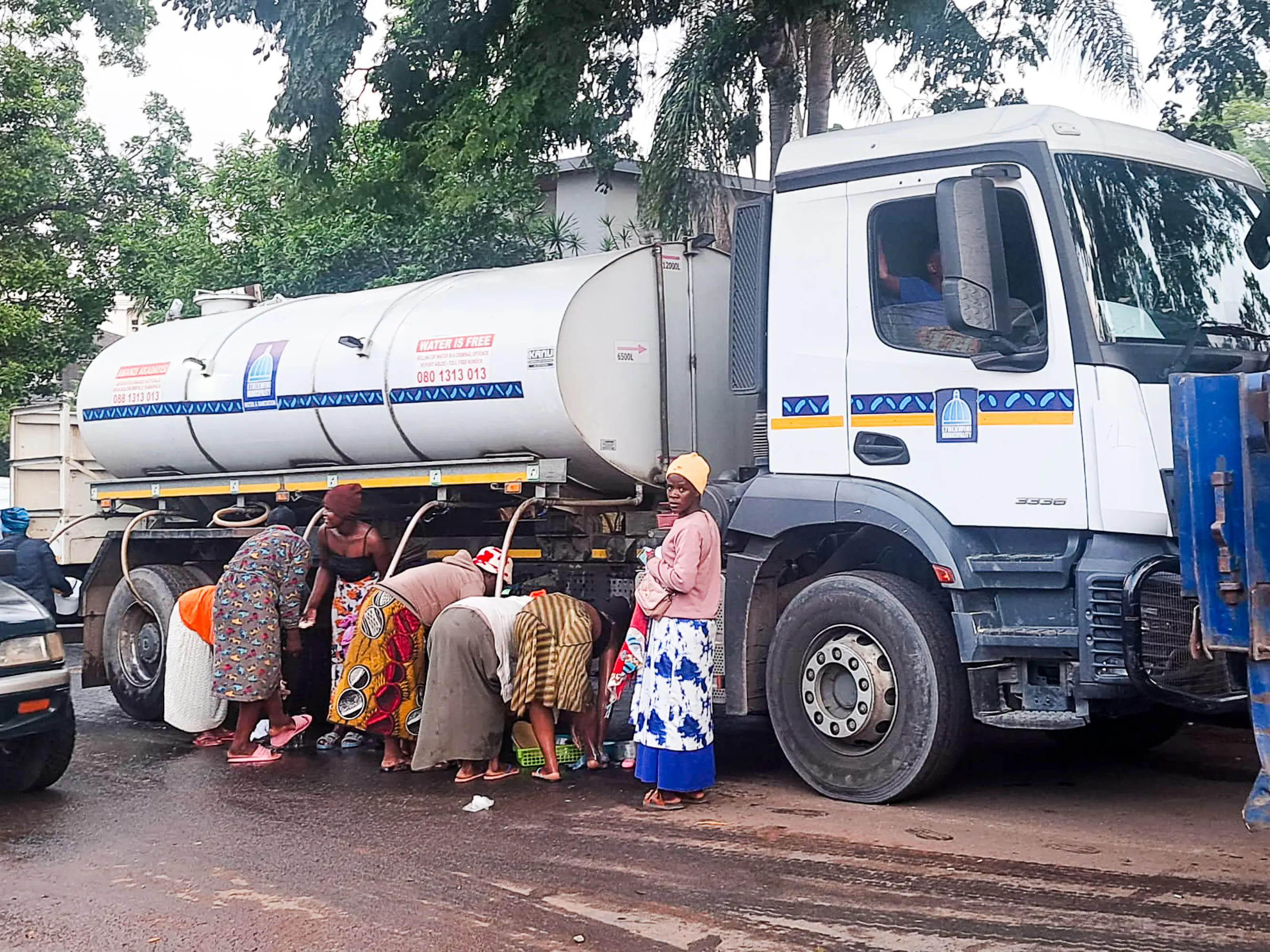
In eThekwini Metro, the epicentre of the crisis, Mayor Cyril Xaba announced a 72-hour intervention plan on Wednesday, to deal with the estimated 10 000 Malawian nationals, who facing xenophobia have elected to be repatriated and gathered at a migration transit camp in Sherwood, Durban since last Sunday.
To alleviate pressure and public health risks, the municipality has activated a secondary staging site at the former Durban Drive-In, deploying buses to transfer people between the camps.
According to Xaba, enforcement is moving rapidly; so by Wednesday 1,458 people had been deported and were on 19 buses enroute to Malawi.
This comes after the state shifted its strategy from merely voluntary repatriation mechanisms in favour of mandatory deportation procedures.
Because immigration law requires each undocumented national to be processed individually to safeguard constitutional rights, the Department of Justice has established a virtual court at the Sherwood site, linked to the Durban Regional Court.
Xaba said plans are underway to establish six additional dedicated courts to expedite cases.
However, critics, including political analyst Ralph Mathekga view this as a “microwave justice system” born out of panic rather than due process, attempting to fix two decades of border mismanagement in a month.
Mathekga argues the state’s sudden, heavy-handed actions are driven entirely by institutional fear.
“We are where we are because the state has lost control and ability to do its basic job,” Mathekga said, pointing out that by allowing street movements to dictate law enforcement, the ANC has placed its own legitimacy on the line. He warned if the state yields its authority to popular mobs who “taste victory” on the streets, the consequences could be catastrophic.
“If you are the ANC and you are in a position such as this, you have to fear … Are you blindly walking into an Arab Spring because you can easily walk into that without realising?” Mathekga asked.
He added while most political parties at grassroots – especially the MKP, ANC and Action SA – are exploiting anti-immigrant sentiment for political mileage, the Economic Freedom Fighters (EFF) have remained the odd, highly principled exception in formal politics.
Led by Julius Malema, the EFF has consistently maintained a pan-Africanist stance, choosing to absorb a severe electoral knock among frustrated youth rather than compromise its core ideology.
For Mathekga, the long-term solution requires urgent community de-escalation, direct engagement with local organising groups and robust regional diplomacy.
International relations analyst Oscar van Heerden described the status quo as “extremely tenuous” and highly explosive, fuelled by emotional public narratives rather than structural economic data.
Van Heerden cautioned that while public perception blames undocumented migrants for the youth unemployment crisis and crippling social services, these claims are myths.
Drawing on international best practices, Van Heerden said countries that successfully manage migration crises rely on:
Structured dialogue: Bringing citizens and migrants together to share narratives and build mutual understanding.
Robust legal frameworks: Enforcing anti-discrimination laws so aggrieved citizens do not burn down shops and take the law into their own hands.
Dedicated institutions: Using specialised courts equipped to handle migrant affairs lawfully and efficiently.
Mathekga and Van Heerden argue South Africa cannot deport its way out of what is fundamentally a regional crisis.
The massive influx of migrants is a direct symptom of political and economic collapse in neighboring states – most notably Zimbabwe. According to Stats SA’s Migration Statistics Report (released in February 2026), the total number of international immigrants is 3 million (representing 5.1% of the population) of which 83.7% are from the SADC region.
Mathekga said democratic mismanagement and corruption under Zanu-PF and Emmerson Mnangagwa have exported Zimbabwe’s economic failure into South Africa. Until the South African government tackles this regional reality head-on, domestic enforcement will remain a band-aid.
Centre for Risk Analysis executive director, Chris Hattingh, warned a national shutdown on June 30 would severely disrupt the informal trade networks that sustain low-income townships, compounding existing energy and logistics crises.
Politically, it threatens to fracture the policy coherence of the GNU, while reputationally, continued violence risks turning South Africa into an international pariah, damaging investor confidence and souring relations within SADC.
“Reputationally, the UN and international rights bodies have already flagged South Africa’s response as inadequate,” he said.
President Cyril Ramaphosa, addressing faith-based leaders this week, attempted to lower the national temperature. He validated anxieties around poverty and crime and defended constitutional principles.
“Illegal immigration is not the cause of our social and economic difficulties,” Ramaphosa said, reiterating that poverty, unemployment and inequality require inclusive economic growth, not scapegoating.
He said law enforcement remains the sole preserve of the state and there is “no place for racism, sexism, xenophobia, Afrophobia or any other form of intolerance.”
But as the deportation buses depart Durban for the borders, the chasm between Ramaphosa’s constitutional rhetoric and the messy reality on the ground remains stark.
As Mathekga warned, the consequences of this reactive approach are profound: “We are where we are because the state has lost control and ability to do its basic job... If those that are marching start tasting victory, where do you stop them? What is next?”