

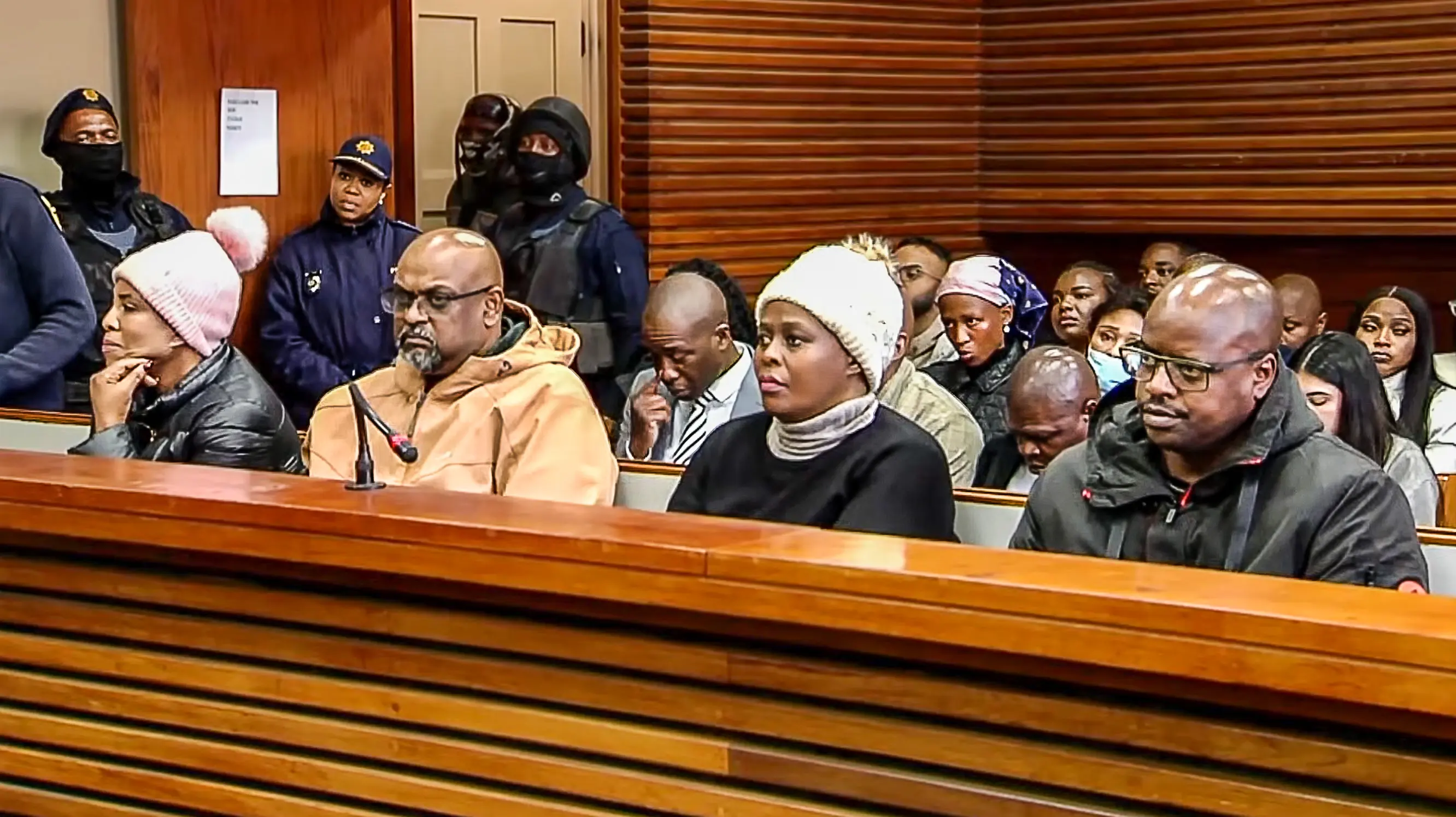
Former Ekurhuleni city manager Imogen Mashazi has become the latest high-profile official to face arrest since evidence on the blue-light scandal was presented to the Madlanga Commission.
Mashazi was arrested with Ekurhuleni Metropolitan Police Department deputy chief Julius Mkhwanazi, head of legal Kemi Buhari and head of human resources Linda Gxasheka. The latter three have been suspended.
"The SAPS confirms that four suspects were arrested overnight by the Commission's Recommendations Task Team (CRTT) during a takedown operation conducted in various parts of Johannesburg," the police said in a statement. "Those arrested include current and former employees of the Ekurhuleni Metropolitan Municipality."
They appeared in the Germiston Magistrate's Court on Thursday. Behari and Mkwanazi were released on R50 000 bail each, while Mashazi and Gxasheka have been remanded in custody. They are due back in court on 10 July.
The arrests emanate from the CRTT, which found the group had protected Mkhwanazi from facing disciplinary processes when the blue-lights scandal broke in 2023.
Mkhwanazi allegedly illegally fitted municipal blue lights and provided official vehicles to Vusimuzi "Cat" Matlala, a businessman and alleged cartel figure.
The Independent Police Investigative Directorate recommended disciplinary proceedings against Mkhwanazi for fraud and corruption; however, Mashazi, Behari and Gxasheka absolved him of any crime. Mashazi conceded at the commission that she had not taken appropriate action against Mkhwanazi and described her actions as an oversight.
The commission slammed Mkhwanazi during his appearance, for signing an illegal memorandum of understanding with Matlala's security company, Cat VIP Protection.
The memorandum led to the company's vehicles being fitted with blue lights reserved for law enforcement. Mkhwanazi described the relationship with Cat VIP Protection as "endless". It provided security during Ekurhuleni's State of the City address and there were plans to provide security to the mayor.
Former EMPD chief Jabulani Mapiyeye told the commission that Mashazi had threatened his life and aggressively defended Mkhwanazi when Mapiyeye attempted to pursue disciplinary charges against him.
Mkhwanazi faces multiple court cases, including falsifying a suspect in a speeding case and the theft of precious stones worth R14.9 million.
He was first arrested on 18 April on charges of fraud, corruption and defeating the ends of justice for allegedly orchestrating a scheme to pay an accomplice to stand in for Ekurhuleni city manager Kagiso Lerutla in court on a speeding case.
The pair allegedly paid Thabang Tsotetsi, who has since turned state witness, R400 000 to masquerade as Lerutla in the Boksburg Magistrate's Court for a speeding fine. Both men were granted R30 000 bail, after which Lerutla returned to work.
After the recent arrests, Democratic Alliance member of the Gauteng provincial legislature Khathutshelo Rasilingwane called for Lerutla's suspension and said remaining in office eroded public confidence, weakened accountability and raised legitimate concerns about the integrity of the city's administration.
"Mr Lerutla continues to occupy the highest administrative office in the city while his trustworthiness has been undermined. This is completely unacceptable."
After an appearance in the Boksburg Magistrate's Court, the case was postponed until 13 July 2026 for a pre-trial conference and to allow the state time to provide further particulars to the defence.
Mkhwanazi's latest arrest over the blue-light saga adds to recent charges of running a "rogue unit" that staged a search-and-seizure operation in 2023 when precious stones worth R14.9m were stolen at a Killarney residence.
EMPD officer Keisha-Leigh Stols handed herself over at Edenvale police station on 6 July as one of Mkhwanazi's accomplices. She is accused of sharing the proceeds from the theft with EMPD official Adrian Mackenzie and private security businessman Etienne van der Walt.
Mashazi, on the other hand, faces another corruption probe after allegations surfaced that she took a R3.3m luxury trip to London in July 2022 with her husband and two other individuals. The flight was allegedly bankrolled by businessman Ze Nxumalo through his company ZIG Revenue Management which held numerous contracts with the city during her tenure.
Suspened deputy head of crime intelligence Feroz Khan, who is unconscious in hospital after surviving an apparent assassination attempt, has been implicated in the luxury trip. Whatsapp texts show Khan was allegedly kept updated regarding the details of the trip. Evidence leader Adila Hassim said the trip payment constituted unlawful gratification.
"Because a payment of R3.3m for a weekend flight is so far outside ordinary hospitality or a gift that it invites the inference that the person who paid for it expected something in return.
"The question would be: If this was a gift or gratification, what influence or protection or access was expected from Mashazi in return in her capacity as city manager of Ekurhuleni?" Hassim said.
On Thursday the commission turned to reforms required in the SAPS in the asset disclosure regime.
The commission had tasked Albertus Schoeman, a World Bank anti-corruption specialist, with examining the disclosure requirements for senior SAPS officials and reforms needed to prevent criminal syndicates from infiltrating law enforcement structures.
"Testimony before the Madlanga Commission reveals systematic conflict between the duties of public officials and their personal interests, where beneficial relationships with criminal actors have taken precedence over official duties," he said.
Schoeman said gaps in the disclosure requirements allowed officials to conceal assets, financial interests and compromising relationships. He identified shortcomings in the collection and verification of disclosure information, saying they limited the state's ability to detect unexplained wealth or conflicts of interest.
"Where corruption is embedded in institutional culture, ethical appeals tend to fall flat because the system itself rewards corrupt behaviour and punches those who resist," he added.