

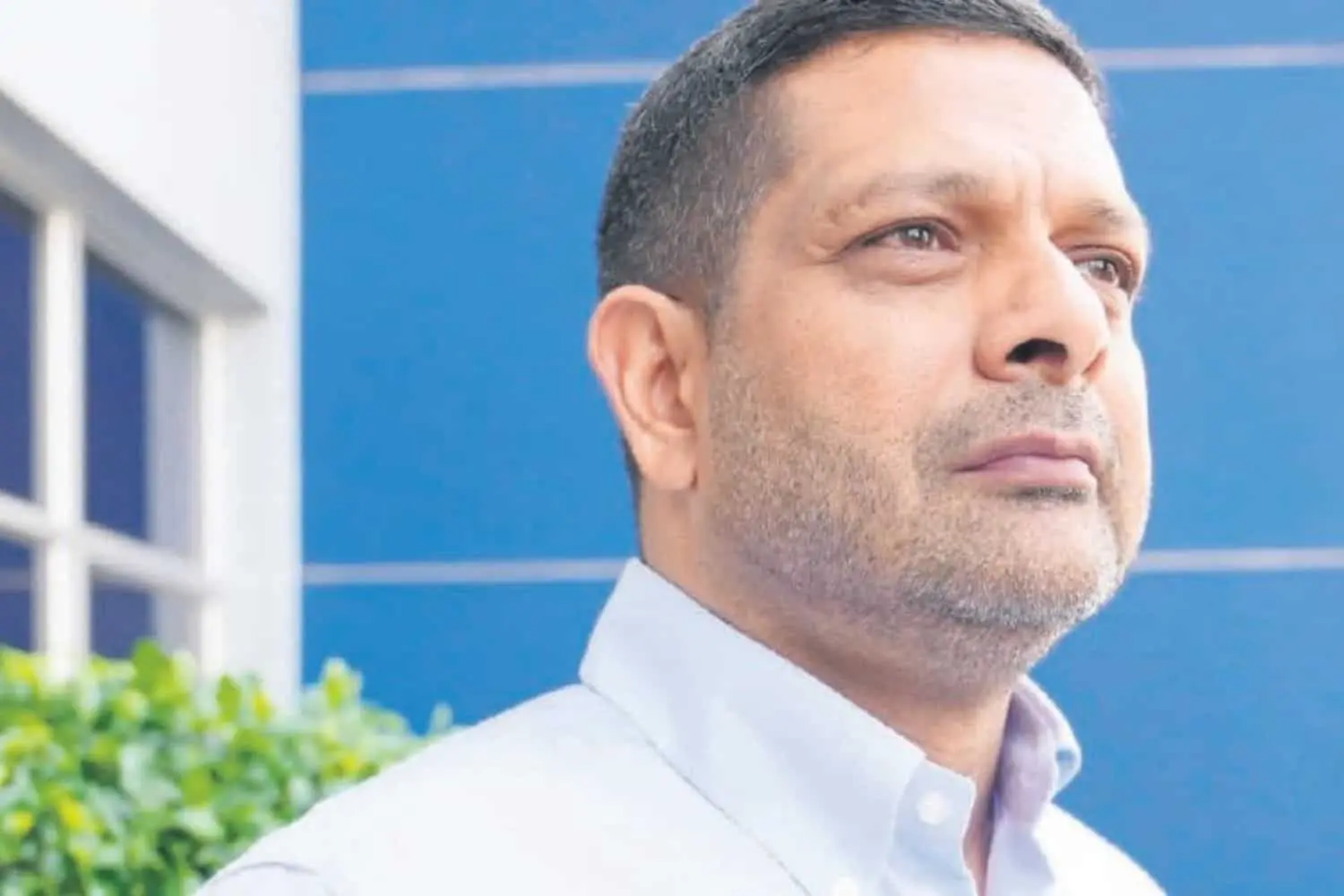
Head of the Independent Directorate Against Corruption (Idac) Andrea Johnson interfered in an assault investigation involving deputy head of Crime Intelligence Feroz Khan, retired Hawks officer Colonel Kobus Roelofse has told the Madlanga Commission.
Roelofse said Johnson improperly obtained information about a police docket and forwarded it to Khan who was a suspect in the assault case.
Khan has been a key figure at the commission. Numerous allegations have been made against him, including that he orchestrated the staged Aeroton drug bust involving 751kg of cocaine. He has also been implicated in former Ekurhuleni city manager Imogen Mashazi’s R33 million luxury trip to London.
Khan is reportedly unconscious in hospital after surviving an apparent assassination attempt. His lawyers appeared on his behalf at the commission when evidence leaders presented evidence that, together with businessmen Muhammad Sayed and EFF leader Julius Malema, he planned to oust former inspector-general of intelligence Setlhomamaru Dintwe.
Roelofse's evidence adds to a growing body of testimony against Khan linking him to Johnson.
The latest allegations stem from an assault complaint Brigadier Leonora Phetlhe opened against Khan in 2018 after he allegedly assaulted her with a pen.
Roelofse said Johnson had sent an email to Khan containing information from the assault case docket before Khan had submitted his version of events to investigators.
The email, contained docket material that had been obtained from former journalist and AfriForum private prosecutor Barry Bateman.
"General Khan was given the contents of the complaint when he was not entitled to the content of the dockets as the suspect," Roelofse told the commission.
He said Khan had not yet been charged when the email was sent and was therefore not legally entitled to access the contents of the investigation file.
"In other words, General Khan prepared his statement with the benefit of the evidence against him. This was particularly concerning as the suspect and the complainant were working at the same place," he said.
Roelofse said access to the docket gave Khan an opportunity to tailor his account to the available evidence and potentially approach witnesses before formally providing his version to investigators.
He argued that suspects were generally entitled to know the charges against them but not to receive access to the contents of an active police docket before being charged.
"To come to the investigating officer with a prepared warning statement, it seems to me you had to have prior knowledge of your version of events based on the evidence," Roelofse said.
Previous witnesses have alleged that Johnson protected Khan from prosecution and alleged that a quid pro quo relationship existed, in that Johnson's son was subsequently hired in Khan’s office.
Roelofse said concerns about Johnson's role in the assault matter had been so serious that he felt unable to approach her.
"At this time advocate Andrea Johnson was the head of Idac. Even though I was attached to the Hawks, I could not approach Andrea Johnson given the allegations of interference and defeating the ends of justice."
Roelofse said he had escalated the matter to Hawks head Lieutenant General Godfrey Lebeya and had told him about the allegations.
He testified that the National Prosecuting Authority would need to appoint a senior prosecutor to oversee the matter because of the sensitivity of the allegations.
Roelofse also raised concerns about how Johnson had become aware of the allegations against her.
He told the commission that on 7 September 2022, Johnson had summoned him to her office and informed him that she had been contacted by the then-national director of public prosecutions Shamila Batohi regarding an affidavit containing allegations against her.
He described the development as troubling, saying the disclosure of a witness's identity in an investigation could compromise the investigation and the witness's safety.
"I've led many investigations into corruption within SAPS and specifically within Crime Intelligence. I'm well aware of how important it is not to prematurely release the name of a witness," he said.
"It puts the investigation into jeopardy and, more importantly, it has the potential to put the life of the witness in danger."
Roelofse said the risks were heightened because Khan and Phetlhe worked in the same office.
"General Khan and the colonel were working in Crime Intelligence at the same office at the time," he said.
Roelofse said that when confronted with the allegations, Johnson had denied any wrongdoing.
He said he could only speculate about how Johnson had come to see the affidavit.
"Advocate Batohi is the only person I think of who would have shown or given the colonel's affidavit to advocate Johnson," he said.