


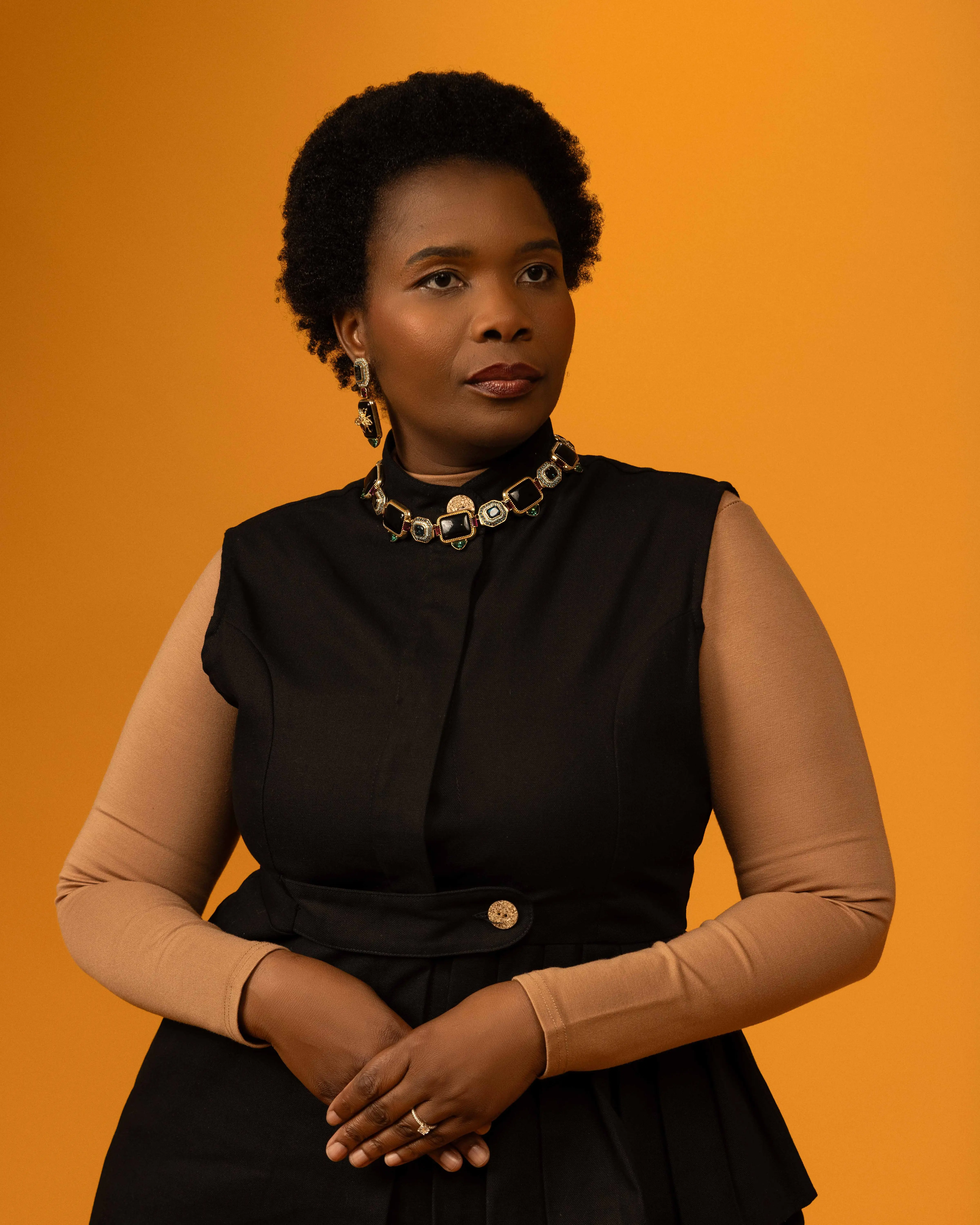
Years ago, Lindiwe Nkuna-Kgopa atten-ded a business event where someone made a passing observation: there were no women-owned sanitary pad manufacturing companies operating at industrial scale in South Africa. It was not meant as a challenge. It was simply accepted as fact and the discussion continued.
“The room moved on but I never did,” Nkuna-Kgopa said.
“That sentence has stayed with me every day since; it told me exactly what I needed to become.”
Today, the comment has become the unlikely starting point of one of Africa’s most ambitious women-led manufacturing businesses.
As founder and chief executive of Lindiwe Sanitary Pads (LSP), Nkuna-Kgopa has built what is recognised as Africa’s first large-scale sanitary pad manufacturing facility owned and operated entirely by women.
The journey earned her the 2026 Veuve Clicquot Bold Woman Award, recognising women who redefine leadership and entrepreneurship.
Yet for Nkuna-Kgopa, the award is not the culmination of her work. It is another reminder that industries can be rewritten by the people they were never designed to include.
“I started the business from my home kitchen,” she says. “Today, from our 4 000m2 facility in Cen-turion, we produce 800 SABS-compliant pads every minute.”
The company supplies retailers, wholesalers and South Africa’s National Sanitary Dignity Programme, helping provide menstrual products to women and girls.
Despite the scale of the operation, Nkuna-Kgopa resists allowing production figures to define her story.
“If you ask me who I am beyond the job title, I’m a woman from Limpopo who was told this industry wasn’t built for people like me and who decided to build it anyway.”
Her determination was tested repeatedly. Manufacturing remains one of South Africa’s most capital-intensive sectors, with women, particularly black women, often struggling to access funding, industrial infrastructure and procurement opportunities. Nkuna-Kgopa quickly discovered that many of the barriers placed before her had little to do with the quality of her business idea.
“What kept me going wasn’t stubbornness for its own sake,” she says. “It was knowing that every ‘no’ I received was really a ‘not by someone who looks like you yet’.”
Rather than seek validation, she learnt to trust the evidence of what she had built. “Today, when I sit across from investors or government officials, I don’t walk in hoping to be believed. I walk in already knowing what I’ve built.”
Confidence, however, did not shield the business from financial realities. Like many growing manufacturers, Lindiwe Sanitary Pads reached a point where cash flow threatened its survival.

Instead of relying on polished presentations, Nkuna-Kgopa made a decision many entrepreneurs might avoid — she invited executives from a leading bank and the Industrial Development Corporation onto her factory floor. “There was a point where the business was in a very tight corner.”
It meant exposing every challenge: the machinery, the pressure of keeping production running and the uncertainty of scaling a young manufacturing business.
“It was a vulnerable thing to do. To let people see the machinery, the pressure, the reality of what it takes to keep production running instead of a polished slide deck.”
The gamble paid off. The visit secured the working capital that kept the factory operating at one of its most vulnerable moments.
Looking back, Nkuna-Kgopa believes her most difficult leadership decisions were never about business strategy. “They were about having the courage to be seen exactly as I was and trusting that honesty would move people more than a performance would.”
Today, the factory’s impact stretches beyond manufacturing.
Lindiwe Sanitary Pads employs 36 permanent staff members and as many as 93 workers during peak production periods.
Most of them are women from historically disadvantaged communities, many entering formal employment for the first time.
For Nkuna-Kgopa, commercial success and social impact are not competing priorities requiring careful balance. They are inseparable.
“I don’t see it as a balance. I see it as one engine with two outputs.”
Every commercially sold product strengthens the company’s Buy-to-Donate initiative, while every new employee represents another woman gaining access to stable employment.
“Commercial success isn’t separate from our mission — it’s the fuel for it,” she says. “If the business isn’t profitable, the mission doesn’t survive either.”
The philosophy has shaped the company’s expansion beyond South Africa. Rather than simply exporting the Lindiwe Sanitary Pads brand into neighbouring countries, Nkuna-Kgopa chose a different approach.
Through a partnership with Young Women of Africa (YWoA), the company works with women entrepreneurs across 11 African countries to establish and own their own sanitary pad brands.The strategy shifts ownership rather than concentrating it.
“If I only grow my company, I’ve built one success story,” she says. “If I build a model that creates more women-owned brands, I’ve built an industry.”
For Nkuna-Kgopa, the distinction matters. The goal has never been to dominate the market. It has been to change who participates in it.
The ripple effects are visible.
In 2026 alone, more than 100 000 schoolgirls received a year’s supply of sanitary pads through government partnerships and the Buy-to-Donate initiative. The company also supports programmes that help rescue girls from child marriage and female genital mutilation, enabling them to return to school.
The interventions reflect Nkuna-Kgopa’s belief that menstrual dignity cannot exist in isolation from broader questions of safety, education and economic opportunity.
She has previously described her ambition as building “an empire” but she is quick to explain that the empire she imagines is not centred on one business carrying her name.
“It was never meant to be one company with my name on the door. It was always meant to be a movement of women-owned manufacturing across this continent.”
Today, the movement stretches across 11 African countries. She hopes it will reach 38 in three years.
Recognition through the Veuve Clicquot Bold Woman Award provides greater visibility but she views it primarily as a platform from which to advocate for structural change.
South Africa, she says, has the manufacturing capability to produce more sanitary products locally. What is missing is consistent support for women-led manufacturers.
Government procurement, shesays, should prioritise locally manufactured, women-owned products as standard policy. Investors need to stop treating women-led manufacturing as a risky social project.
“They need to fund manufacturing infrastructure for women-led businesses with the same seriousness they’d apply to any other industrial sector. Not as a charity case but as a commercially sound bet.”
Consumers also hold power.
“Every time someone chooses a locally made, women-owned product over an imported one, they are voting for jobs to exist in their own communities.”
It is an argument rooted in experience. Nkuna-Kgopa has demonstrated that women can build competitive manufacturing businesses capable of producing at industrial scale. The challenge now, she says,
is ensuring that the systems surrounding the businesses evolve just as quickly.
“We’ve proved the model works,” she says. “What we need now is for the systems around us to match the ambition we’ve shown.”
For the woman who refused to let a passing remark disappear, there is much work ahead.
“Bold isn’t a title you receive once,” Nkuna-Kgopa says. “It’s a decision you keep making, every single day, until the industry looks completely different from the one that once told me I didn’t fit.”