


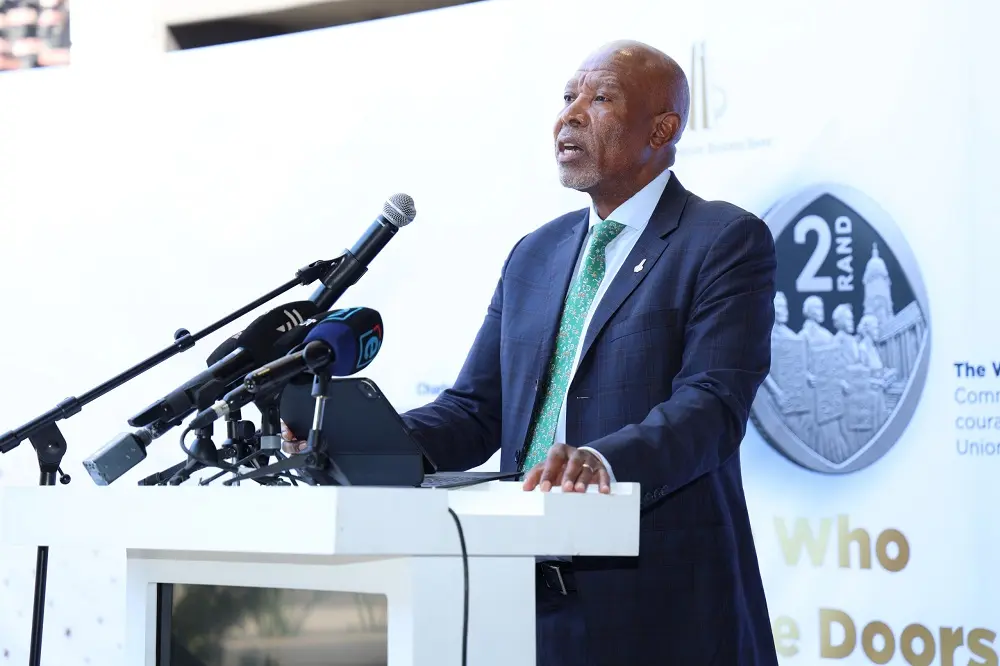
South Africans will soon see the faces of Charlotte Maxeke and the women of the historic 1956 Women’s March on two commemorative R2 circulation coins launched by the South African Reserve Bank.
The coins were recently launched at the SARB’s head office in Pretoria, with one marking 125 years since Maxeke became the first black South African woman to graduate with a university degree, while the other commemorates 70 years since more than 20 000 women marched to the Union Buildings to protest against apartheid pass laws.
The coins form part of the Milestones of Freedom programme launched by President Cyril Ramaphosa in June.
Importantly, they are the first South African commemorative circulation coins to feature women. Unlike collector coins, they are intended for everyday use and remain legal tender at their face value of R2.
SARB governor Lesetja Kganyago said currency could play a role in shaping how a country remembers its history.
“Currency also has public meaning. It is one of the ways in which a nation tells the world whom it represents, what it stands for and what it remembers,” he said.
He said the coins were intended to address the historical overlooking of women’s contributions.
“Too often, women’s leadership, sacrifice and achievements are overlooked. By placing Charlotte Maxeke and the women of 1956 on our circulation coins, we affirm that women’s contributions are central to the story of South Africa.”
The Maxeke coin commemorates her graduation from Wilberforce University in the US in 1901, when she earned a bachelor of science degree. The SARB described her achievement as particularly significant given the racial and gender barriers to higher education at the time.
Maxeke went on to become an organiser, educator and activist who worked to advance the position of African women. In 1918, she founded and became the first president of the Bantu Women’s League and mobilised African women against discriminatory laws.
The coin features a profile silhouette of Maxeke wearing an Edwardian collar, with elements of the design inspired by the beads she wore in her early years.
The second coin commemorates the 9 August 1956 Women’s March, when more than 20 000 women gathered in Pretoria and marched to the Union Buildings to protest against the extension of apartheid pass laws to black women.
The coin depicts four women from different cultural backgrounds holding placards and facing the Union Buildings, emphasising the collective nature of the protest.
Kganyago said the location of the launch was also significant. The 1956 march began at the State Theatre, directly across from the SARB’s head office, before the women proceeded towards the Union Buildings.
Minister in the Presidency responsible for Women, Youth and Persons with Disabilities Sindisiwe Chikunga said the launch was an opportunity to recognise the role women played in the country’s liberation struggle.
“For generations, women stood at the forefront of resistance, organised communities, sustained families during periods of oppression and made immeasurable contributions to the liberation struggle,” she said.
Kganyago urged South Africans not to treat the coins as collector items but to allow them to circulate. “However beautiful they may be, they belong in circulation, to be passed from one person to another,” he said.