


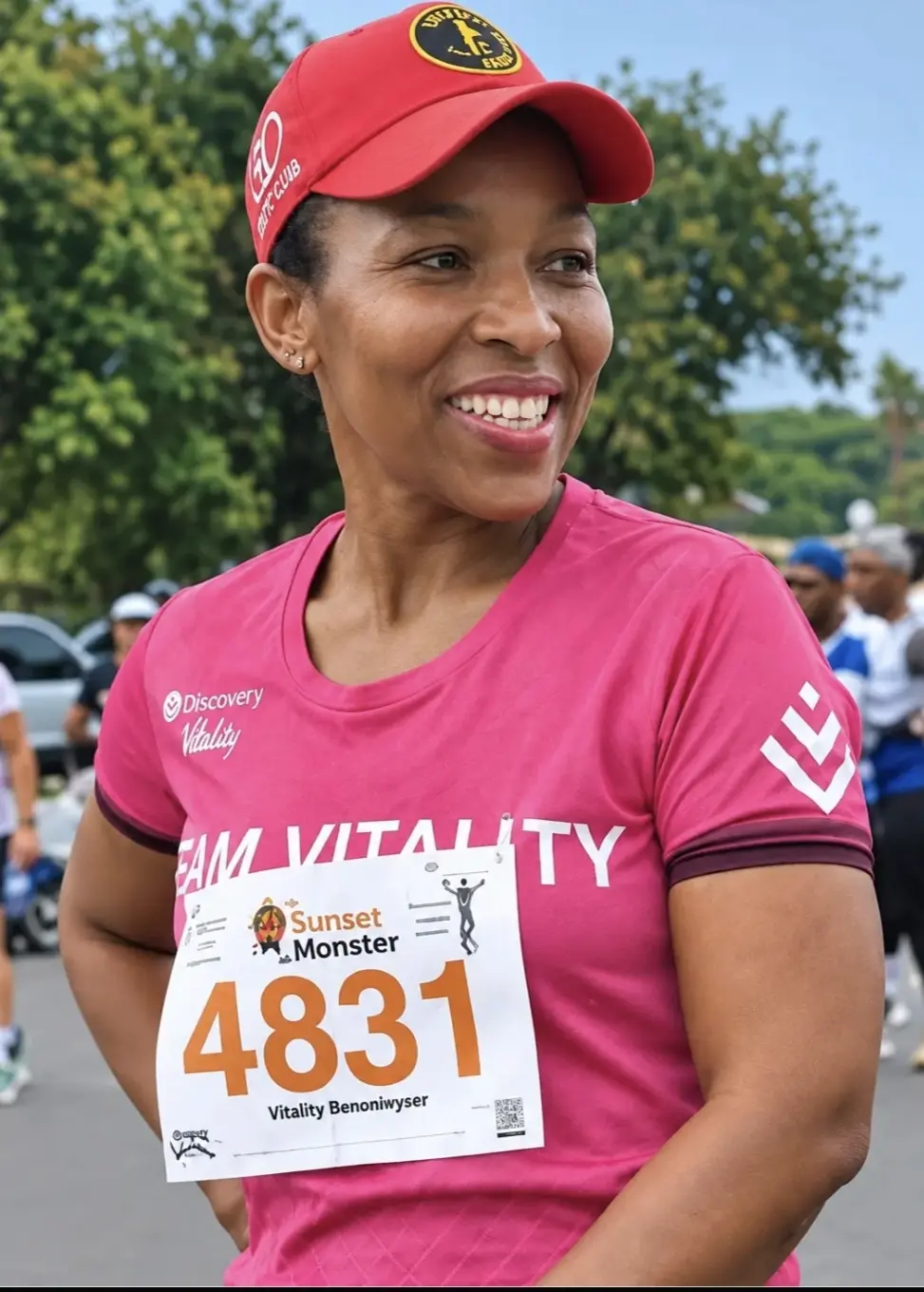
For an eight-year-old girl, it started with a question that should never have needed asking: "Where is my mother?"
Elizabeth "Tsontso" Moselakgomo, 38, had gone for a run after work and did not return home. By about 6.30pm, her daughter realised something was wrong and alerted the family. Days later, her family stood at the Germiston mortuary to identify her body.
To them, Tsontso was not simply another woman in a police investigation. She was a mother, daughter, sister, churchgoer and runner who worked as a centre manager at Festival Mall and sang in the ZCC choir. Her uncle, Lieutenant-Colonel Andries Matlaila, described her as "the glue of the family".
Now the family is waiting for the post-mortem and other investigative processes before she can be taken home to Mpumalanga.
Tsontso's death has become part of a wider investigation into nine women's deaths in and around Ekurhuleni, although police have not established that the cases are connected.
The first five women were found over two months in and around Kempton Park.
Nqobile Mahlangu is identified as the first woman to be found dead in Kempton Park.
The investigation widened this week after police confirmed that the body of a woman found in KwaThema, Springs, and identified as Dineo Motapane, has been included in the investigation, while the body of another woman found near Clayville on September 7 was brought into the wider probe.
Police are considering various possibilities, including one perpetrator, multiple perpetrators, copycat crimes or separate incidents and have urged the public not to treat speculation about a serial killer as established fact.
Among the women whose deaths form part of the investigation is 32-year-old Itumeleng Kekana, originally from Qwa Qwa. She disappeared in Kempton Park on July 17 and her family searched for her until her body was found near Great North Road in Pomona on August 3.
Police registered a murder case after she was found with multiple stab wounds. Her death has left a 14-year-old daughter who is now living with her grandparents.
On Wednesday, police confirmed that only four of the nine women had been positively identified, leaving five without names.
For their families, the investigation is therefore not only about finding out who killed them but establishing who they were and whether someone is waiting for them to come home.
For women living in the affected areas, the uncertainty has changed how they move through their own neighbourhoods.
Rhodesfield resident Siyamthanda Msomi described the situation as "nerve-wracking" and said she had stopped walking alone, trying instead to have someone accompany her to work and back.
The fear has also reached the running community. Runners in Johannesburg, Tshwane and Ekurhuleni have been wearing black and dedicating distances to women who have been killed. With Sole founder Tumi Sole said residents became aware of some of the earlier deaths only after Tsontso disappeared.
"At the very least, a warning should have been sent out," he said.
Police have brought together detectives, intelligence officers, forensic specialists, tracking teams, K9 units and search-and-rescue resources. The SAPS is also working with the Ekurhuleni Metropolitan Police Department to increase visibility in affected areas.
Deputy national police commissioner Lieutenant-General Tebello Mosikili said there would be "more boots on the ground" and warned whoever might be responsible that "your days are numbered. This is not a threat, it's a fact."
Police have also confirmed that they are pursuing a person of interest in connection with the investigation, although they have not disclosed the person's identity or which cases they may be linked to.
"Someone saw something," Kekana said in an appeal for information.
Police have encouraged women to avoid isolated areas, walk or run in groups, tell someone where they are going and keep their phones close.
But Women For Change founder Sabrina Walter said such advice could not become a substitute for preventing violence. "We are already vigilant," she said. "Women cannot be vigilant enough to compensate for institutional failure."
Walter said women should not have to wait until multiple bodies are found before authorities respond with urgency. "Women were already dying before the country started watching," she said.
South Africa declared gender-based violence and femicide a National Disaster in November 2025. Walter said that should translate into a response that begins before women are killed. "GBVF [Gender-based violence and femicide] is a National Disaster," she said. "That must mean immediate investigation, coordination, prevention and accountability, not urgency only after another woman is found dead."
For researcher and GBVF specialist Lisa Vetten, the problem is not simply a lack of laws, strategies and policies, but whether the state has the administrative capacity and resources to implement them. That includes properly functioning police services, social workers, shelters, courts and victim-support systems.
"The National Disaster declaration cannot protect a woman on its own," she said.
"Its value depends on whether the machinery of government can turn it into services that work before a situation becomes fatal."
Lawyers for Human Rights said survivors and families continued to face barriers when they encountered the criminal justice system, including police failures, legal delays, inadequate support services and poor coordination between police, medical services, courts and social services.
Palesa Maloisane, a human rights and public interest attorney at Lawyers for Human Rights, said the national strategic plan on GBV was designed as a comprehensive, multi-sectoral response but remained inadequately implemented, funded and resourced. "Laws and policies cannot exist in a vacuum and must be applied in a manner that reflects the lived reality of survivors," she said.
Maloisane said responsibility for addressing GBVF could not be shifted onto women or communities. "The responsibility for addressing GBVF cannot be delegated to women or outsourced to communities. It rests first and foremost with the state and its institutions," she said.
The Commission for Gender Equality has called for urgent safety audits in affected areas, including assessments of lighting, surveillance, pedestrian routes, public transport, neglected spaces, police visibility and access to emergency assistance.
CGE spokesperson Javu Baloyi said: "Women should not have to be killed before an area receives heightened attention."
For the Teddy Bear Foundation, the consequences of the killings extend beyond the crime scene.
Dr Shaheda Omar, the organisation's director, said that when a woman was violently killed, children and families could lose not only a mother but also a home, financial security, routine and the person who made them feel safe.
An eight-year-old child in that position might experience "fear, dread, anxiety, abandonment" at once, Omar said, and might even believe she had done something wrong.
"One cannot put a timeline on the intervention," she said.
Children who lost their mothers needed long-term psychosocial support, counselling and help at school, while families who suddenly became caregivers might also need support, Omar said.
She said violence against women and violence against children should not be treated as separate issues.
"A child who witnesses assault, lives around violence, loses a mother to femicide or learns violence is how power is exercised is also a victim," she said.