


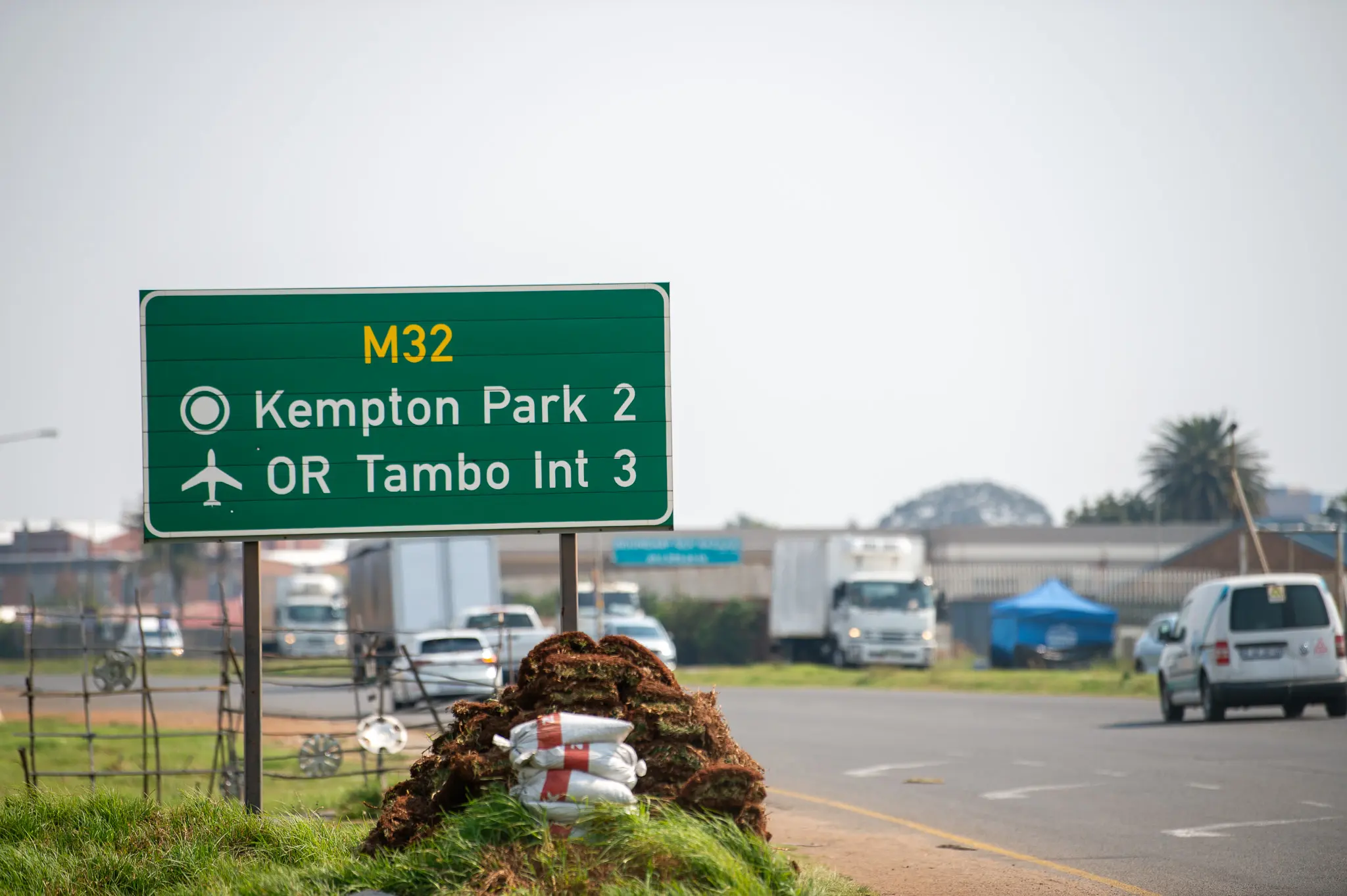
I won't forget the moment I saw Elizabeth "Tsontso" Moselakgomo's missing person poster circulating on social media. What caught my attention wasn't just the tragic fact that she was missing. Sadly, that has become an everyday reality in South Africa. It was the location: Kempton Park.
I live here. This is my hometown.
As the days went by, I learnt that she had left her eight-year-old daughter at home while she went for her regular jog.
My heart shattered for that girl. I thought of the agonising questions she must have asked herself, wondering if she would ever see her mother again. Putting myself in the shoes of an eight-year-old, I realised those are thoughts no child should ever have to process.
It took me back to the Kempton Park I grew up in as a child.
I remember a safer place. A neighbourhood where we could run to the park, play and just be free.
Seeing what Kempton Park has become over the past 20 years is heartbreaking. It is no longer the hometown I grew up in.
When I listen to my favourite song by Adele, Hometown Glory, I sadly cannot relate. There's no glory in being from Kempton Park, not with what's been happening.
My heart goes out to Tsontso's family. This hit home in a deeply painful way. Seeing the daily updates on the news, holding out hope while she was missing was agonising enough. Then came the darker news: the SAPS was aware of other women who had gone missing in the area before Tsontso vanished.
Within two months, four bodies of deceased women had been found in Kempton Park and the police were informing the public only after Tsontso's disappearance.
Had they informed the public after the first or second body, Tsontso might still be here with us.
A fifth body was found in Olifantsfontein, close to Kempton Park. Then another in Kwa-Thema, and another in Tembisa.
Across Ekurhuleni, nine women have now been found dead. It leaves me wondering: What is happening to my hometown? I think about the running community in Kempton Park and across South Africa and the fear everyone is carrying.
When I take walks around the block with my dog, Skye, I usually carry pepper spray, a small knife and a hockey stick so I can protect her from aggressive stray dogs. But now I realise I might need to be carrying all that for people. For men, who are alleged to be the ones committing these heinous crimes.
Seeing videos of Tsontso online shows just how full of life she was. She loved life. It is horrifying to know she died simply because she made a healthy choice to go for a run, get her steps in and better her lifestyle. The decision to take care of her health made her a victim of an unspeakable tragedy, alongside so many other women.
I can't even begin to imagine how terrified she must have been in her final moments. The fear she must have felt knowing her daughter was waiting for her at home and that she wouldn't be returning to her. Heartbreaking.
Our communities shouldn't have to live in fear and our women deserve to return home.
What is angering is seeing how unkept Kempton Park has become with the long grass, making it easy for criminals to act out their crimes without being seen. It is the same thing with cemeteries. When I go to my mom's grave site in Mooifontein, the grass is similarly unkept. It's scary going there because someone can murder you without being seen.
Only now is the grass being cut where Tsontso was found.
Why is our government reactive and not proactive? It's time we, as South Africans, make our voices and grievances heard at the polls this November.
We deserve better! Our women deserve better! Our children deserve to grow up with their moms alive!
The killings in Ekurhuleni have led to fear gripping South Africa.
With most of the bodies being found in Kempton Park and as a woman who lives in a suburban neighbourhood in the town, the past week has weighed heavily on my heart.
As investigators try to piece together information that could reveal if this is the hand of a serial killer or multiple killers, either way, it's scary to think there is a person or people on a killing spree and they have zero regard for human life.
What is even more terrifying is seeing some of the reactions from men online. If it's not a clip (which has gone viral) of podcast and chill hosts Sol Phenduka and MacG making jokes and laughing at Tsontso's disappearance, over which they have since received backlash, deservedly so, it's the large chunk of men online who are downright triggered each time awareness is raised on femicide.
As a multimedia journalist and social media manager, I spend a large amount of time on social media. What struck my attention on Wednesday, a week after Tsontso went missing, was a tweet on X (formerly Twitter).
A male social media user by the name of @KonotoMochitele tweeted: "Why is the mention of women being killed so triggering that you immediately feel the need to say 'but men are also being killed' as a counterargument?"
I clicked on it to read the comment section. And there it was. A reply from multiple angry men. One of them said it was his right as a man to bring up men being murdered because nobody speaks up for men.
I don't think people have a problem with him bringing up men being killed. The issue is the timing this is being brought up because the current topic is femicide.
I responded to this man, saying: "So by your logic, if someone is bringing awareness to how cancer kills, someone else must come and say: 'But people also die from HIV/Aids as well.' Do you see how dumb your argument is? Why must you bring it up only when people are bringing awareness to femicide? Smh!".
After a back-and-forth exchange of tweets between us, with another woman interjecting, the man proceeded to tell me and the woman who had responded to my tweet to "keep safe" because we wouldn't be safe for much longer "Mbokodos".
He said people would be saying "RIP" to me soon enough because I am a woman. I couldn't believe that he was salivating at the thought of the other woman and me being killed. After being called out by numerous social media users, he deleted his tweets.
What kind of men is South Africa raising? Is this what we have come to as a nation? Where men are using femicide as a clapback and wishing death upon women they disagree with? They are using it as a weapon when they are called out which then proves that, deep down, men in this country know they are somewhat safer than women if they have to brag about it online.
They don't have to worry about taking a jog and being sexually assaulted and murdered like Tsontso. They don't have to worry about going to the post office and being sexually assaulted and murdered like Uyinene Mrwetyana.
They don't have to go on a date and be sexually assaulted and murdered like Olorato Mongale. They don't have to be given all these safety measures that women are constantly given. And yet, for whatever reason, some of them are triggered when femicide awareness is raised.
There's a saying — "a hit dog will holler". If a man knows they are not a rapist or murderer, why are they triggered when rapists and murderers are addressed?
If you have to give a defensive response to femicide awareness, it simply means you are projecting.
It's high time that men hold real conversations with one another and call one another out on the hatred that some of them have towards women. We can no longer act like this is normal because it isn't.