


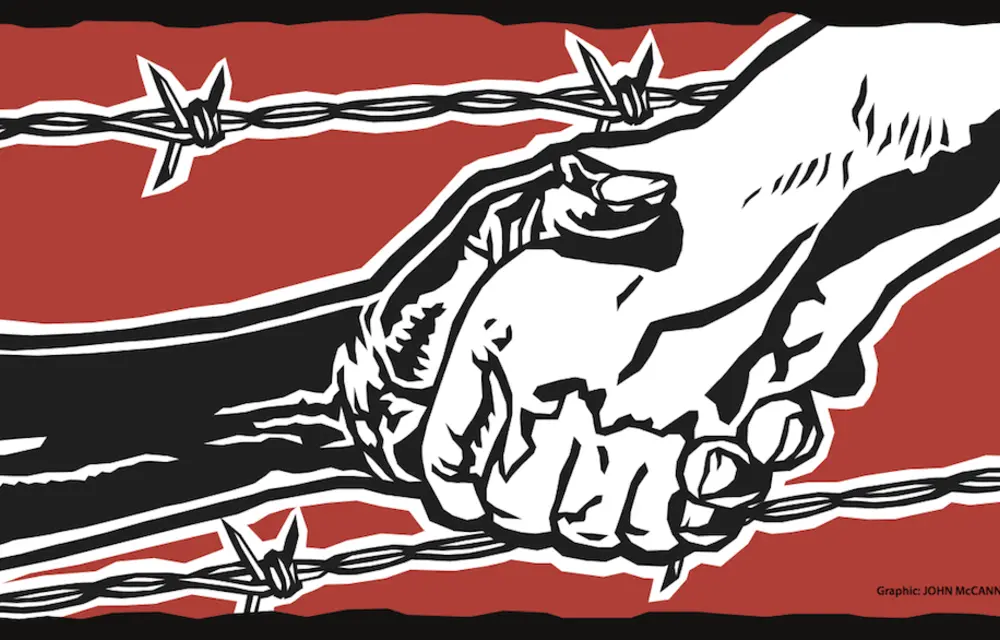
The Thabo Mbeki Foundation has warned that abandoning efforts to dismantle the economic legacy of apartheid while Afrikaner organisations pursue greater cultural autonomy could deepen South Africa’s racial divisions and ultimately provoke serious social instability.
In a sweeping 123-page paper, The United States of America and the Future of the Afrikaners in South Africa, the foundation examines the deteriorating relationship between Pretoria and Washington through t,he prism of South Africa’s unresolved racial and economic inequalities.
The paper argues that the dispute cannot be understood simply through disagreements over BEE, land expropriation, farm attacks or South Africa’s foreign policy.
Instead, the foundation places the confrontation within what it calls the “national question” — the continuing consequences of colonialism and apartheid in South Africa and slavery and racial segregation in the US.
It devotes a substantial part of the paper to the US experience, tracing the country’s attempts to address the legacy of slavery through civil rights legislation, affirmative action and programmes intended to expand economic opportunities for black Americans.
The foundation argues that the US experience demonstrates how long the economic consequences of racial discrimination can persist after discriminatory laws have been abolished.
It points, among other examples, to Donald Trump’s 2020 election campaign “Platinum Plan” aimed at black Americans, which included proposals to increase access to capital and create jobs.
The foundation uses that history to challenge US criticism of South Africa’s transformation policies, arguing that 32 years after the end of apartheid, the country cannot reasonably be expected to have eliminated the economic consequences of centuries of racial discrimination.
The paper then turns to the relationship between the Trump administration and Afrikaner organisations that have taken their complaints about the South African government to Washington.
It examines the February 2025 visit by representatives of the Solidarity Movement, AfriForum and Solidarity and the “Washington Memorandum” prepared during their engagement with the US.
According to the memorandum, Afrikaners were seeking recognition and institutionalisation of cultural autonomy in South Africa and assistance, including from the US, for an Afrikaner Development Fund.
The proposed fund would support safety, social, employment and training structures as well as infrastructure enabling Afrikaners to settle in a more concentrated manner.
The foundation argues that the proposals go beyond the protection of Afrikaans language and culture and could amount to an attempt to establish increasingly separate Afrikaner-controlled communities.
It goes further, describing the project as an aspiration for “separate development” and alleging that its proponents ultimately envisage an Afrikaner enclave or volkstaat.
The Washington Memorandum does not explicitly call for an independent Afrikaner state. It describes Afrikaners as a “Western community indigenous to Africa”, says their protection depends on their own institutions and calls for cultural autonomy in South Africa.
The foundation nevertheless argues that the reference to concentrated settlement, combined with the development of community-controlled institutions, raises questions about how far that autonomy is intended to extend.
It also examines subsequent statements from Solidarity leaders about federalism, population concentration and what they regarded as new opportunities created by the Trump administration.
The paper says the developments should be viewed against the settlement negotiated before South Africa’s first democratic election, which envisaged an undivided country based on common citizenship rather than racially separate political futures.
The foundation also challenges claims that Afrikaners have been subjected to systematic economic persecution since 1994.
While acknowledging South Africa’s high levels of crime, unemployment, poverty, inequality and failures of governance, it argues that the conditions have disproportionately affected the black majority and that significant racial disparities in wealth and living standards remain.
It contends that ending BEE and other measures intended to address the disparities would risk preserving what former president Thabo Mbeki famously described as South Africa’s “two nations” — one relatively prosperous and largely white and the other poor and overwhelmingly black.
The paper’s argument becomes considerably more pointed in its concluding sections.
The foundation accuses what it calls “AfriSol” — its collective term for the Afrikaner organisations it discusses — of seeking to protect the standard of living Afrikaners acquired through South Africa’s history of colonialism and apartheid while securing legal recognition for cultural autonomy.
It links this to what it describes as a broader “counter-revolution” against the transformation project pursued after 1994.
These are the foundation’s characterisations and will probably be strongly contested by the organisations concerned.
The foundation argues that weakening the state’s commitment to transformation would leave the socioeconomic structure inherited from apartheid substantially intact and perpetuate racial inequality.
It also draws a connection between the proposed concentrated settlement of Afrikaners and the growth of private, self-governing communities.
Citing legal academic Koos Malan’s description of some such communities as “micro-republics”, the foundation suggests that these could provide a model for the kind of cultural autonomy envisaged by the Afrikaner organisations.
The paper reserves its starkest warning for the consequences of abandoning racial redress.
Drawing again on the American experience and the racial unrest that led to the appointment of the Kerner Commission in the 1960s, the foundation argues that persistent racial inequality can eventually produce social upheaval.
It warns that if South Africa abandons a determined programme to eradicate the legacy of colonialism and apartheid, the country risks a “social explosion”.
The language marks a significant escalation from the foundation’s broader argument about transformation: it is warning of the possible consequences of continued racial inequality, rather than suggesting violence is inevitable or justified.
The intervention comes at a particularly strained point in relations between Pretoria and Washington, with disputes over BEE, land policy and US allegations of racial discrimination against Afrikaners forming part of the diplomatic breakdown.
It also follows controversy over comments by US ambassador Leo Brent Bozell III about Mbeki and the diplomatic impasse. Bozell subsequently denied that he had called for the former president to intervene or mediate between the two countries. Neither government has announced a mediation role for Mbeki.
The foundation ends its paper by returning to negotiations before the 1994 election and an encounter between Mbeki and the late Afrikaner Volksfront leader General Constand Viljoen. It recalls Viljoen telling Mbeki about a lesson he had learnt as a child about starting fires in the veld: never light one unless you know you can extinguish it.
The foundation applies the warning to the present confrontation. “Do not start a fire unless and until you are sure you can put it out,” it concludes.