


Economists have welcomed the government’s R10 billion temporary fuel levy relief as a timely inter-vention to cushion households and businesses against rising fuel costs.
However, they say South Africa needs more far-reaching changes to its fuel pricing system and a stronger economic growth trajectory.
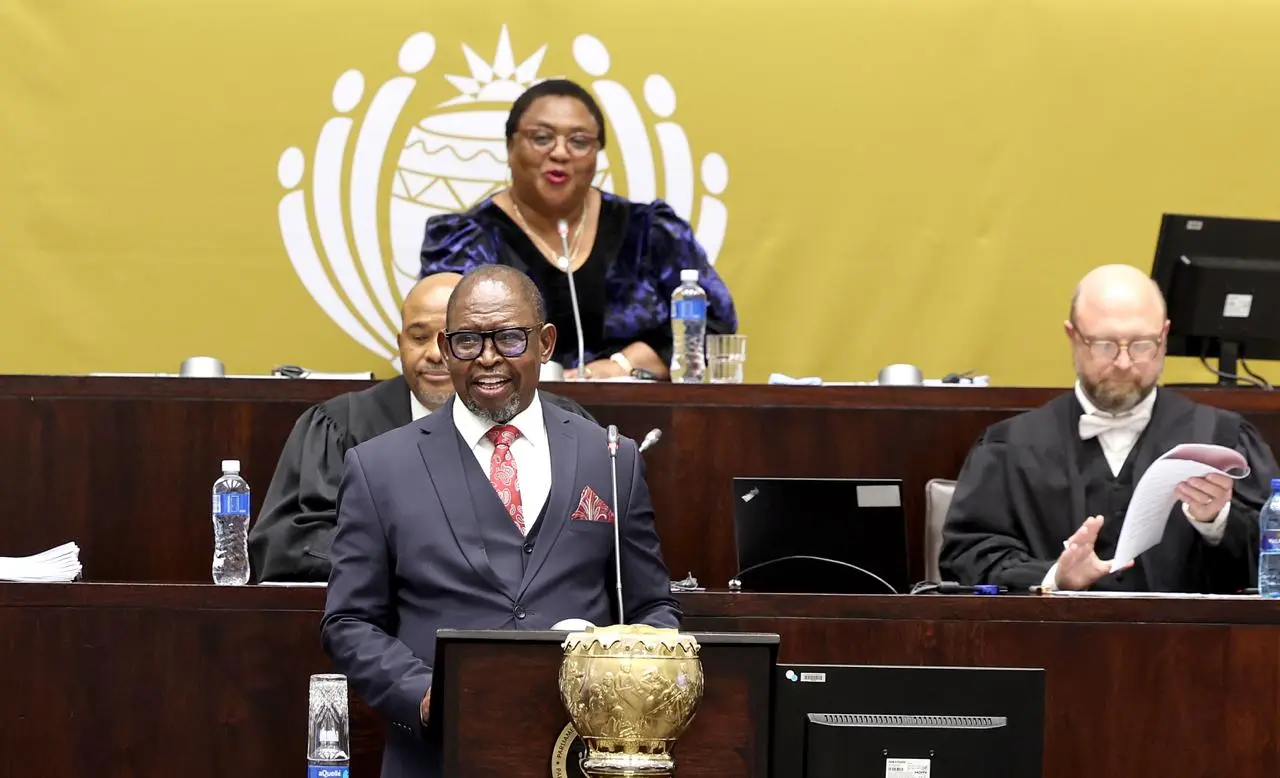
Professor Raymond Parsons, of North-West University Business School, described Finance Minister Enoch Godongwana’s 2026 Medium- Term Budget Policy Statement (MTBPS) as “a realistic, positive and credible approach to a challenging economic and fiscal situation”.
He welcomed the temporary relief, funded by higher-than-expected revenue but said the overdue commitment to review and streamline the formula used to set fuel prices each month should be expedited to give the government greater flexibility in responding to future price pressures. The fuel levy will be reduced by R3 a litre for diesel and R1.50 a litre for petrol from 4 November to 1 December, with the relief continuing at a lower amount until 5 January 2027.
The temporary R10 billion relief, transferred to the Central Energy Fund (CEF), will be returned to the National Revenue Fund and put into the contingency reserve.
National Treasury director-general Duncan Pieterse said the R10 billion originated from revenue collected above forecast in the 2025/26 financial year. The money was placed on the Special Appropriations Bill for allocation to the CEF.
Parsons said the MTBPS’s broader message was “confidence-building”. Although the global energy crisis had disrupted South Africa’s modest economic recovery, it had not definitively derailed it, he said.
The budget reaffirmed the government’s commitment to stabilising debt and pro-tecting the primary surplus, which pro-vides predictability for bond markets and credit rating agencies.
Parsons cautioned that the surplus was increasingly a defensive measure against a tougher economic climate rather than a springboard for inclusive growth.
He welcomed the budget’s emphasis on infrastructure, local government and partnerships with the private sector but said fiscal discipline alone would not reduce public debt without stronger, job-rich growth.
Parsons also pointed to rising transport costs and fuel price pressures reflected in September’s consumer price index figures, arguing that the monthly fuel-pricing formula needed to be reviewed.
Looking to next February’s main budget, he said fiscal policy should help shift the focus from stability to faster growth. The economy was expanding too slowly, he warned, and weak growth “will undermine the fiscal trajectory”.
“What South Africa now needs from the right policies, including help from future fiscal policy, is a GDP growth rate that outpaces interest spending and debt ratios,” he said. University of Johannesburg associate professor of economics Peter Baur described the MTBPS as “an honest reflection of key challenges faced by government, particularly as we head towards the next elections”. “Going forward, government has some serious financial considerations to address — providing adequate support to an economy working, through turbulent times,” Baur said.
Labour federations Cosatu and the South African Federation of Trade Unions criticised the MTBPS as another example of the government’s “obsession with neo-liberal austerity budget”.
Cosatu national spokesperson Matthew Parks said the federation was disappointed that the budget had not delivered a bolder response to unemployment, which he put at 43.8%, despite the competing demands facing the state.
Weak economic growth, averaging 1% for more than a decade, had entrenched poverty and inequality, while crime and corruption had contributed to embattled public and municipal services, he said.
“Whilst it is important to place the budget’s debt and deficit on a sustainable trajectory, this cannot be at the expense of stimulating the very economic growth and job creation essential to South Africa’s long-term recovery,” said Parks.
“An unhealthy obsession with neoliberal austerity budget cuts, prioritising early retirement packages is not a sustainable path to unlocking economic growth and slashing unemployment.
“A forecast to only reach the 3% economic growth needed to see unemployment fall in 2034 is beyond depressing,” Parks said, noting that unemployment had risen 2.2% this year alone.
“We do however, welcome efforts that have secured R18 billion worth of investments in industrial projects and R1 billion to boost local pharmaceutical and vaccine manufacturing, helping to create over 5 200 jobs.”
The R2 billion approved allocations for 32 infrastructure pro-jects would have a massive impact, Parks said.
Cosatu also welcomed the fuel relief, saying it reflected the government’s response to its call for support for workers and the economy.
The federation appreciated “government’s heeding its call for muchneeded relief to the working class and the economy with a R10 billion fuel levy holiday for November and December”.
“This will ease the burden on commuters, inject money in the economy, lower inflation and hopefully prevent a November repo rate hike. An overhaul of the fuel taxes and levy is needed, including fixing the Road Accident Fund,” he added. However, Cosatu said it was “extremely disappointing that no further allocations have been made to boost public employment pro-grammes to give hope to 12 million unemployed”.
“It is beyond shameful that despite R13 billion worth of savings in social grants, yet again there is no inflationary relief for the eight million destitute SRD grant recipients,” said Parks.
While Cosatu remained worried about the loss of skills with the early retirement packages offered to public servants, it welcomed the government’s commitment to use savings to hire young recruits, filling an additional 7 101 frontline service posts.
Saftu general secretary Zwelinzima Vavi echoed Cosatu’s criticism, saying the MTBPS continued to impose neoliberalism and austerity on a society “already being torn apart by unemployment, poverty and inequality”.
“These policies reinforce the same economic structure that has driven deindustrialisation, a bloodbath of job losses and persistently low growth. They shrink the public resources needed to meet social needs, while leaving the concentration of wealth and economic power largely untouched.”
The result is a deepening crisis for workers and poor communities, Vavi warned.
“More people are pushed into unemployment and poverty, while public services deteriorate and the cost of survival rises. This is not a path to inclusive growth. It is a continuation of policies that protect the interests of capital while workers and the poor carry the burden.”
Vavi criticised Godongwana’s forecasting economic growth of 1.2% in 2026, rising to 1.6% in 2027 and around 2% by 2029. “These figures confirm that the economy remains trapped in low growth.
“Yet the MTBPS offers no break with the policies that have entrenched deindustrialisation and mass unemployment.
“Fiscal restraint and debt reduction remain the priority, while workers are told to wait for growth and jobs that have not materialised. Austerity means less public spending per person.”
The public spending squeeze was “already clear”, he said. “In 2024/25 rand values, real public spending per person is projected to fall from R34.607 in 2019/20 to R26.496 in 2026/27 - a decline of about 23%.
“By 2022/23, real spending per person had already fallen back to its 2008/09 level.
“This is what austerity means in practice: fewer resources per person for the services and support communities rely on,” he said.
The hardship was “stark”, Vavi said. “Expanded unemployment, measured by Statistics SA’s LU4 measure, stands at 46.3%. Nearly 66.7% of people lived below the upper-bound poverty line in 2023, that the poverty line is R2.962 per person per month in 2026.
“A nutritious food basket costs R6 459.83, while food for one child costs R970 27 a month — far above the R580 child support grant. Workers, pensioners and unemployed families are forced to choose between food, transport and basic services.” Federation of Unions of South Africa general secretary Riefdah Ajam said fiscal stability should “translate into tangible improvements in the lives of workers, their families and vulnerable communities”. “South Africans continue to face high living costs, unemployment, pressure on public services and uncertainty about the country’s economic prospects.
While welcoming the temporary fuel levy relief, Ajam cautioned that fuel prices affected transport costs, food prices, production and the cost of delivering essential goods and services.