

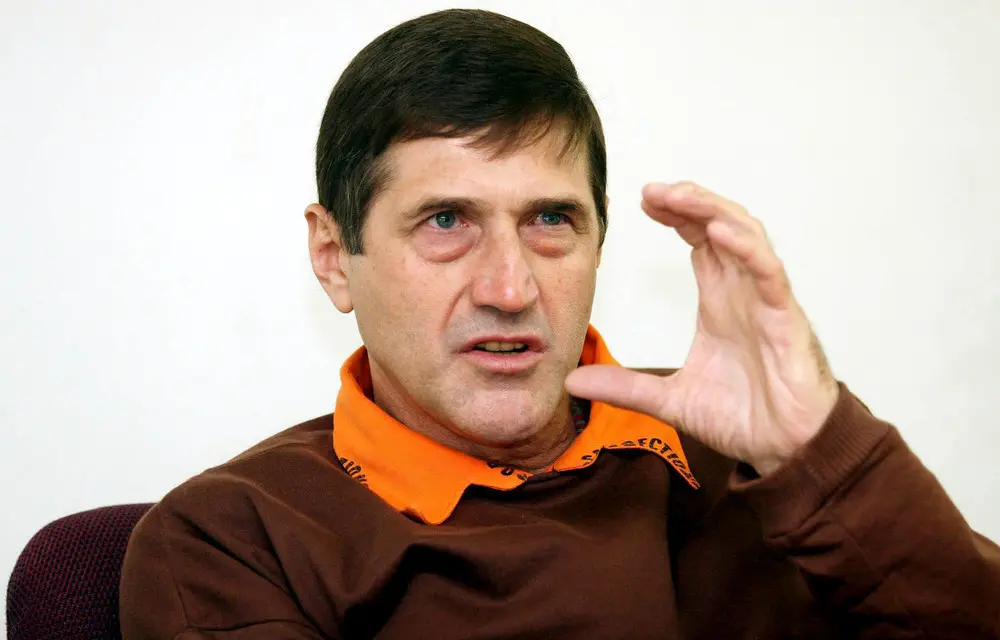
Former apartheid-era police colonel Eugene de Kock has accused the National Prosecuting Authority (NPA) of criminal negligence, saying prosecutors never approached him for evidence that could have helped secure convictions for apartheid-era crimes.
“My own experience as I went on in the years is that there was terrible criminal negligence on the part of the prosecuting authorities,” De Kock told the Khampepe Commission on Monday.
De Kock, dubbed “Prime Evil”, commanded the notorious C10 counter-insurgency unit based at Vlakplaas, a farm west of Pretoria that became synonymous with state-sponsored violence against anti-apartheid activists.
The inquiry, chaired by retired justice Sisi Khampepe, was established after legal pressure from the families of apartheid-era victims. They allege that successive democratic administrations deliberately stalled the cases the Truth and Reconciliation Commission (TRC) referred to the NPA.
De Kock said he had been willing to provide information to prosecutors about several cases, including the Motherwell bombing case, the Cradock Four murders and the murders of Sweet Sambo, Goodwill Sikhakhane and Jappie Maponya but had never been asked to give a statement.
He accused former NPA head Anton Ackermann and former Transvaal attorney general Jan D’Oliveira of choosing not to pursue criminal cases against those implicated in apartheid-era atrocities.
“I was never approached, never asked, no statements taken,” he said.
Asked by the commission whether he would have provided the information had prosecutors approached him, De Kock replied: “Yes, immediately.”
He said he remained willing to testify and provide a full account of the crimes.
Evidence leader advocate Geoff Budlender asked De Kock about his statement that he could identify the generals who had instructed security police to carry out murders and other illegal acts.
“Were you ever asked by the NPA to identify the generals who gave the instructions to carry out the murders and the unlawful acts?” Budlender asked.
“No,” De Kock replied.
Asked whether he would have provided the information if approached, De Kock said he would have testified fully.
De Kock also described his trial and sentencing as a “kangaroo court”, saying the process was intended to prevent him from testifying about the alleged involvement of senior generals and politicians in apartheid-era crimes.
He told the commission that he had testified before the TRC on 1 October 1997 and expressed his dismay that the state had not pursued senior officials despite their alleged involvement.
He said he had been the only link between the perpetrators on the ground and the generals who issued instructions, and that severing the connection had protected those higher up the chain of command.
If the generals had been prosecuted, De Kock said, they could have revealed who had given the orders and provided further evidence of the involvement of political office-bearers.
“My own experience demonstrates that the political office-bearers were aware of what was happening and were involved in it,” he said.
De Kock cited former law and order minister Louis le Grange’s alleged approval of the bombing of the ANC’s London office and his visits to Vlakplaas as examples of senior political figures’ involvement in the security establishment’s operations.
He also recalled being instructed by a brigadier to bomb Cosatu House, saying he was told the order had come from the highest levels of government.
“When I was instructed by a Brigadier to bomb Cosatu House, he said the instruction to do this came from very high. I asked him how high and he said that it came directly from President PW Botha,” De Kock testified.
He said senior officials had benefited from the violence while seeking to conceal the security branch’s activities and its chain of command.
De Kock said he remained willing to provide further information about the generals implicated in the crimes, many of whom did not apply for amnesty and were never prosecuted.