

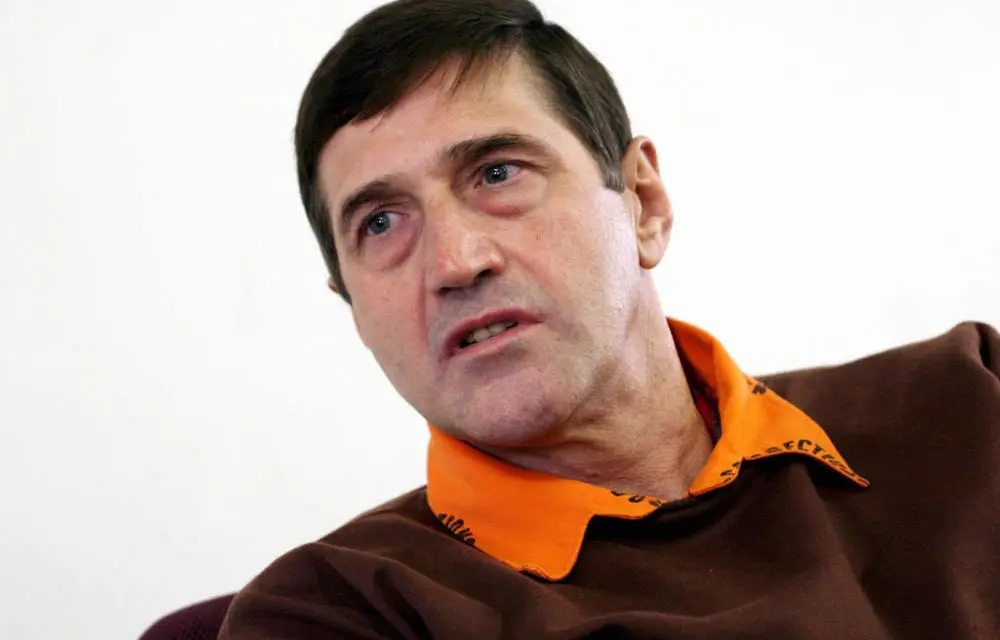
Former apartheid-era police colonel Eugene de Kock, dubbed ‘Prime Evil’ for his role in the regime’s notorious death squads, is testifying before the Khampepe Commission investigating the failure to prosecute apartheid-era crimes.
De Kock commanded the C10 counter-insurgency unit based at Vlakplaas, a farm west of Pretoria that became synonymous with state-sponsored violence against anti-apartheid activists.
The inquiry, chaired by retired justice Sisi Khampepe, was established following legal pressure from families of apartheid-era victims. They allege that successive democratic administrations deliberately stalled cases referred to the National Prosecuting Authority (NPA) by the Truth and Reconciliation Commission (TRC).
De Kock joined the South African Police in 1968 and entered counter-insurgency operations in 1983. He is expected to testify about his training of askaris, former members of Umkhonto we Sizwe (MK) and the Azanian People’s Liberation Army (Apla) who were turned and recruited to work for the apartheid security forces.
Vlakplaas operated as a covert unit responsible for the kidnapping, torture and extrajudicial killings of anti-apartheid activists. De Kock oversaw operations in which state agents targeted opponents of the apartheid government.
Following the transition to democracy, he was convicted in 1996 and sentenced to two life terms plus 212 years in prison. He was released on parole in 2015 after serving 19 years.
De Kock came to prominence during the TRC hearings in 1997 and 1998, when he confessed to crimes and applied for amnesty for more than 100 offences, including murder, torture and fraud.
His testimony exposed the lengths to which the apartheid security establishment went to maintain its grip on power. De Kock claimed that orders to eliminate activists came from senior officials, including former state president PW Botha and FW de Klerk.
The TRC granted him amnesty for several politically motivated offences but rejected applications relating to some of his most serious crimes, finding that he had exceeded his operational mandate.
The Khampepe Commission is examining allegations that the NPA and political figures in the democratic era interfered with or obstructed the investigation and prosecution of unresolved apartheid-era cases.
De Kock’s knowledge of Vlakplaas operations and his cooperation with investigators could provide insight into the fate of missing activists, the location of victims’ remains and the handling of leads he supplied in earlier statements.
Former president Thabo Mbeki testified before the commission on 19 October 2026, strongly denying allegations of a secret amnesty arrangement or political interference to shield those responsible for apartheid-era crimes.
Mbeki rejected claims that an informal agreement existed between ANC leaders, the National Party and apartheid-era generals to grant blanket immunity. He described the allegations as a “complete fabrication”.
He argued that delays in prosecuting TRC-related cases rested with the NPA. Mbeki also pointed to the establishment of a specialised unit within the authority during his administration to deal with the cases, saying this contradicted claims that his government deliberately suppressed prosecutions.