


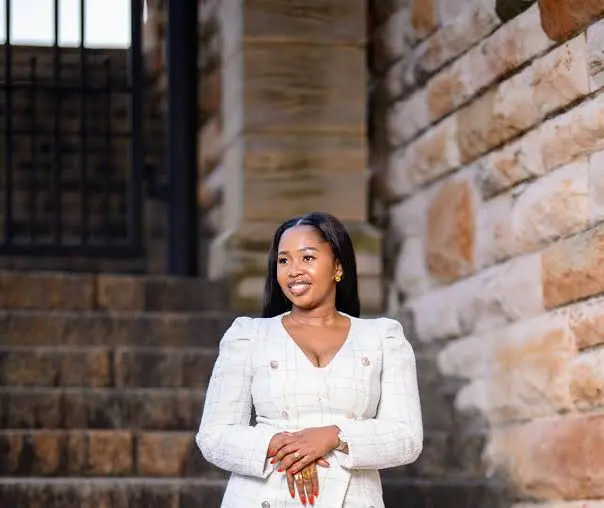
Speaking out against wrongdoing is not always easy. People who expose corruption can lose their jobs, face threats or put their lives at risk. At the 2026 Whistleblowers Awards in Johannesburg, people who have faced difficult situations while standing up for what is right were recognised, including Brigadier Dineo Mokwele.
Mokwele received the Integrity Under Fire Special Award on Monday, 26 October. The award comes after months of public scrutiny following her arrest on fraud and corruption charges linked to her appointment in Crime Intelligence. The charges against her were withdrawn unconditionally in August 2026.
Her case came under scrutiny at the Madlanga Commission, where questions were raised about how the investigation was handled and whether the information used to support the charges had been properly checked.
Former head of the Investigating Directorate Against Corruption, Advocate Andrea Johnson, told the commission that she had not personally checked Mokwele’s qualifications before charges were brought. Johnson also apologised for previously describing Mokwele’s appointment as a “token appointment”.
Mokwele holds a Master of Business Administration (MBA), a Bachelor of Technology in Industrial Engineering and a National Diploma in Mechatronics Engineering. The charges against her and her co-accused were never tested in court, but the evidence presented at the commission raised questions about the investigation.
For Mokwele, the award marks a moment of recognition after a difficult period. Her experience has also highlighted the need for fair investigations and the importance of verifying information before people are charged with serious crimes.
Other police officers were also recognised at the awards. Warrant Officer Karl Sander, a Hawks investigator who testified at the Madlanga Commission, received recognition for his role in bringing information about alleged wrongdoing to light.
Brigadier Attie Lamprecht received the Whistleblower Sherpa Support Award for his work supporting anonymous crime reporting and protecting informants. With decades of service in the South African Police Service, Lamprecht has worked to help people report crime.
The recipients reflect different parts of the fight against wrongdoing. Some speak out about what they have seen, while others help people report crime safely or face difficult situations within the institutions they serve.
The awards were organised by Public Interest SA and took place on 26 October, followed by the Whistleblowers Summit on 27 October. The summit brought together people from different sectors to discuss how whistleblowers can be better protected and how institutions can be held accountable.
In South Africa, speaking out can have serious consequences. People who report corruption may face threats, lose their jobs or struggle to find support. This can make others afraid to come forward, even when they have important information about wrongdoing.
Recognising whistleblowers is important, but it is not enough. Institutions must also ensure that people who report wrongdoing are protected and that their reports are taken seriously.
Mokwele’s case adds another side to this discussion. Although her case centred on allegations linked to her appointment rather than a finding that she had exposed corruption herself, the questions raised about the investigation show why public institutions must also be held accountable for their actions.
The awards celebrated people who have faced difficult circumstances while standing up for their principles. But the bigger challenge is making sure that their experiences lead to change.
For South Africa to build trust in its institutions, investigations must be fair, evidence must be checked and people who expose wrongdoing must be protected. Speaking out should not leave people to face the consequences alone.