



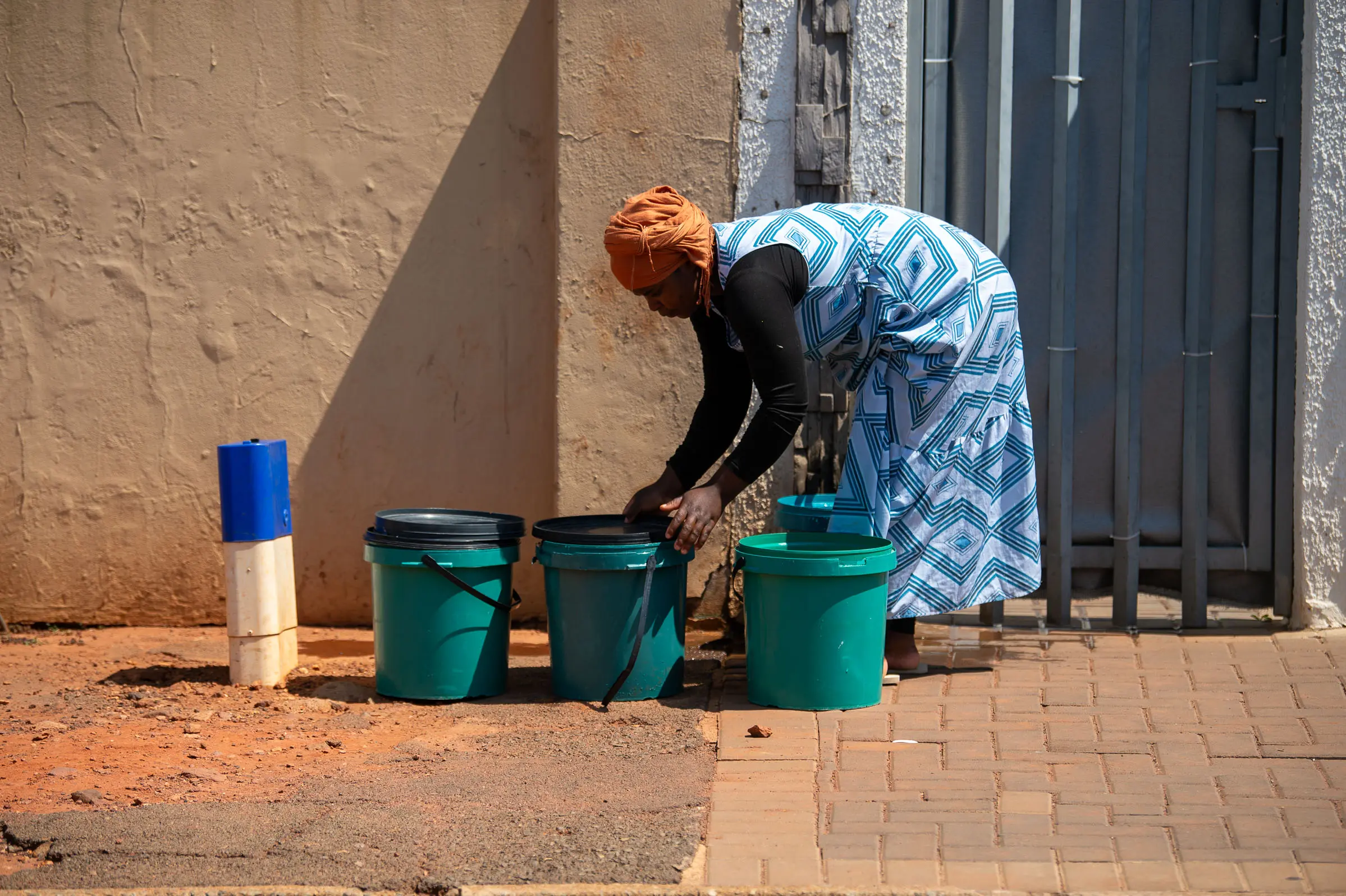
As voters prepare to go to the polls on 4 November, major political parties promise to restore basic services, tackle corruption and improve municipal governance. But their plans for delivering on these promises differ.
In Matjhabeng in the Free State, sewage flows through streets, potholes scar roads and residents buy bottled water because they fear drinking from their taps.
In Ditsobotla in the North West, raw sewage and uncollected rubbish blight communities, while some residents say they have lived without electricity for more than five years. In Johannesburg, prolonged water and electricity outages, broken traffic lights and deteriorating infrastructure fuel frustration.
These failures will test parties contesting the elections. Some offer specific mechanisms and deadlines; others promise to rebuild struggling municipalities.
The ANC must convince voters it can deliver after years governing many municipalities. In traditional strongholds, including Limpopo, the Free State, North West and the Eastern Cape, it faces accusations of neglecting basic services and has been forced into coalitions in some municipalities.
Matjhabeng illustrates the scale of the problem. The municipality recorded a deficit of R871.6 million in 2024/25, while its liabilities exceeded its assets by R5.8 billion, according to Auditor-General Tsakani Maluleke. During the Mail & Guardian’s visit earlier this year, residents described sewage entering homes and shopping centres, mounting rubbish and children falling ill after drinking tap water.
In Ditsobotla, residents have described a decade of persistent potholes, sewage spills and uncollected waste. In Johannesburg, where the ANC governs through a coalition, prolonged water and electricity outages have fuelled frustration, while factional battles have complicated the party’s position.
The ANC promises an intensive programme of interventions in its first 100 days in office, including repairing potholes and streetlights, stopping water leaks and sewage spills, clearing illegal dumping sites and unblocking stormwater drains. Councillors would have to publish their contact details and establish communication channels with residents within 30 days, while municipalities would publish reports on governance, finances and service delivery within six days.
It proposes local economic development desks, payment of legitimate, compliant suppliers within 30 days and blacklisting contractors who fail to deliver. Other commitments include reviewing municipal development plans, expanding free basic services for vulnerable households and establishing community safety forums.
The Democratic Alliance (DA) promises corruption-free, professional municipal administrations. It wants to end cadre deployment, introduce merit-based appointments and impose consequences for poor performance, mismanagement and corruption.
The party also promises to hold municipal employees accountable for corruption and mismanagement. The DA proposes public-private part-nerships to design, finance, build and maintain infrastructure, from water treatment plants to electricity networks, under performance agreements.
It also wants contractors vetted through recognised industry bodies and for the recruitment of more engineers, planners and finance officials, including from the private sector, while training would build municipal capacity.
The Economic Freedom Fighters (EFF), contesting the elections under the slogan “Victory or Death”, proposes rebuilding struggling municipalities through greater state capacity, land reform and improved public services.
It wants permanent teams of engineers, plumbers and electricians to maintain infrastructure and reduce reliance on contractors and labour brokers. They would repair roads, water pipes and electricity networks, upgrade reservoirs and address sewage spills.
The EFF also wants municipalities to use their expropriation powers to acquire abandoned land and vacant or hijacked buildings.
It proposes ending the sale of municipal land and reserving it for redistribution to black communities and youth-led businesses, with 5% to 10% of redistributed land allocated to people with disabilities. Municipal market clearing houses would help rural farmers sell their produce.
Its other commitments include expanded sexual and reproductive healthcare, mental health services and HIV care, including mobile health units. It also proposes local sign language interpreters at primary healthcare clinics, gender-neutral toilets in municipal buildings and campaigns against sub-stance abuse and genderbased violence (GBV).
The Inkatha Freedom Party (IFP) pledges to refer allegations of corruption, fraud, tender manipulation, theft and misuse of public resources for prompt investigation, with consequences for wrongdoing.
“Senior management and municipal employees will be accountable for measurable outcomes. IFP municipalities will pursue the lawful recovery of losses caused by misconduct, negligence or unlawful decisions,” the party says in its manifesto.
It promises to protect employees, councillors and residents who report corruption in good faith from intimidation, retaliation and victimisation. The party also commits to supporting women in management and leadership positions, arguing that local government transformation requires women to have meaningful influence over decision-making.
It pledges to make women’s safety a budgetary priority in municipalities it governs, investing in GBV and femicide desks, social workers, shelters, community safety initiatives and psychosocial services.
To improve service delivery, the IFP says it will publish municipal budgets, tenders, expenditure reports, service delivery standards and performance results in accessible formats.
“Municipalities will prioritise preventative maintenance and the timely repair of infrastructure instead of waiting for systems to collapse. Water, sanitation, electricity, roads and refuse collection will be prioritised in budgets, operations and maintenance schedules,” the manifesto states.
The party also promises to reduce reliance on external service providers by rebuilding internal municipal capacity, recruiting qualified engineers, project managers, financial professionals and technical experts through fair, transparent and meritbased processes.
The uMkhonto weSizwe (MK) party is campaigning under the slogan “Sithatha Omaspala” (We are taking municipalities), with a manifesto centred on jobs, infrastructure, electricity, service delivery and radical economic transformation.
It promises job creation through mining, agriculture, reindustrialisation, tourism and local infrastructure projects, alongside expanded municipal electricity capacity and improved basic services. It also pledges to strengthen the role of traditional leaders and reform municipal administration through state intervention and skills transfer.
In ActionSA’s manifesto, its president Herman Mashaba draws on his experience as Johannesburg mayor and the governance records of other party leaders.
The party prioritises reliable water and electricity, sanitation, road maintenance and refuse collection. It also pledges to insulate tenders, supplier appointments and payments from political interference, and investigate credible corruption allegations against its representatives regardless of political connections.
Municipal appointments should be based on qualifications, competence, experience and merit rather than political patronage. ActionSA also proposes leaner political offices and a clearer separation between elected representatives, who set policy and administrators, who manage daily operations and procurement.
On coalitions, it is open to working with parties across the political spectrum, provided agreements are transparent, written and centred on service delivery, fighting corruption and addressing illegal immigration.
The Freedom Front Plus (FF Plus), campaigning under the slogan “It is our time”, presents its manifesto as a recovery plan for municipalities plagued by maladministration, financial mismanagement and infrastructure decay.
It argues that local government needs more powers, with decisionmaking brought closer to communities. The party wants to revisit the megacity model and municipalities encompassing several towns, giving communities greater control over their taxes, services, safety, development and heritage.
The FF Plus also proposes reinvesting locally raised revenue in the communities where it originates, merit-based appointments, better infrastructure maintenance and limits on rates and tariff increases to inflation. Cutting administrative spending and red tape would encourage business and job creation, while stable, accountable coalitions would improve governance.
The African Christian Democratic Party (ACDP) promises more competent, ethical and accountable municipalities, with appointments based on merit and expertise.
Its proposals include reviewing municipal trading entities to reduce management layers, prioritising basic services and infrastructure maintenance, improving billing and revenue collection and strengthening financial oversight and public accounts committees.
The ACDP pledges action against corruption, including prosecution and personal liability for those found guilty of financial mismanagement. It also proposes reducing red tape, supporting small businesses through training and funding schemes, and expanding public-private partnerships.
The South African Communist Party (SACP) calls for reliable public services, decent work, affordable electricity, clean water and properly maintained roads. The party opposes outsourcing and tender-driven service delivery, arguing that municipalities should rebuild their own capacity and bring essential services back in-house.
It also proposes using public land for housing and food production, eradicating bucket toilets and expanding community participation in municipal budgets and decision-making.
The African Transformation Movement (ATM) promises to tackle corruption and political interference in municipalities by ending cadre deployment, introducing merit-based appointments, conducting lifestyle audits of councillors and senior officials and publishing procurement and spending information. It pledges strict consequences for irregular and wasteful expenditure.
The party wants traditional and faith-based leaders formally involved in municipal planning and community development. It also proposes giving traditional leaders a direct route to representation and voting rights in municipal councils.
It will prioritise neglected rural and township infrastructure, improve water and sanitation services, waste removal and road maintenance and support local small businesses through municipal procurement.
The Afrika Mayibuye Movement, led by Floyd Shivambu, has put jobs, water and service delivery at the centre of its manifesto. It promises to improve municipal water and sanitation infrastructure, repair leaks, upgrade roads and electricity networks and expand housing and informal settlement services.
The movement also proposes converting public employment programmes into permanent jobs, supporting small businesses and township economies and strengthening anti-corruption measures, including lifestyle audits of public representatives.
For voters living with dry taps, sewage spills, unreliable electricity and dark and crumbling roads, the test will be whether parties can explain how they will pay for their plans, who will be held responsible and how residents will know when things have changed.