


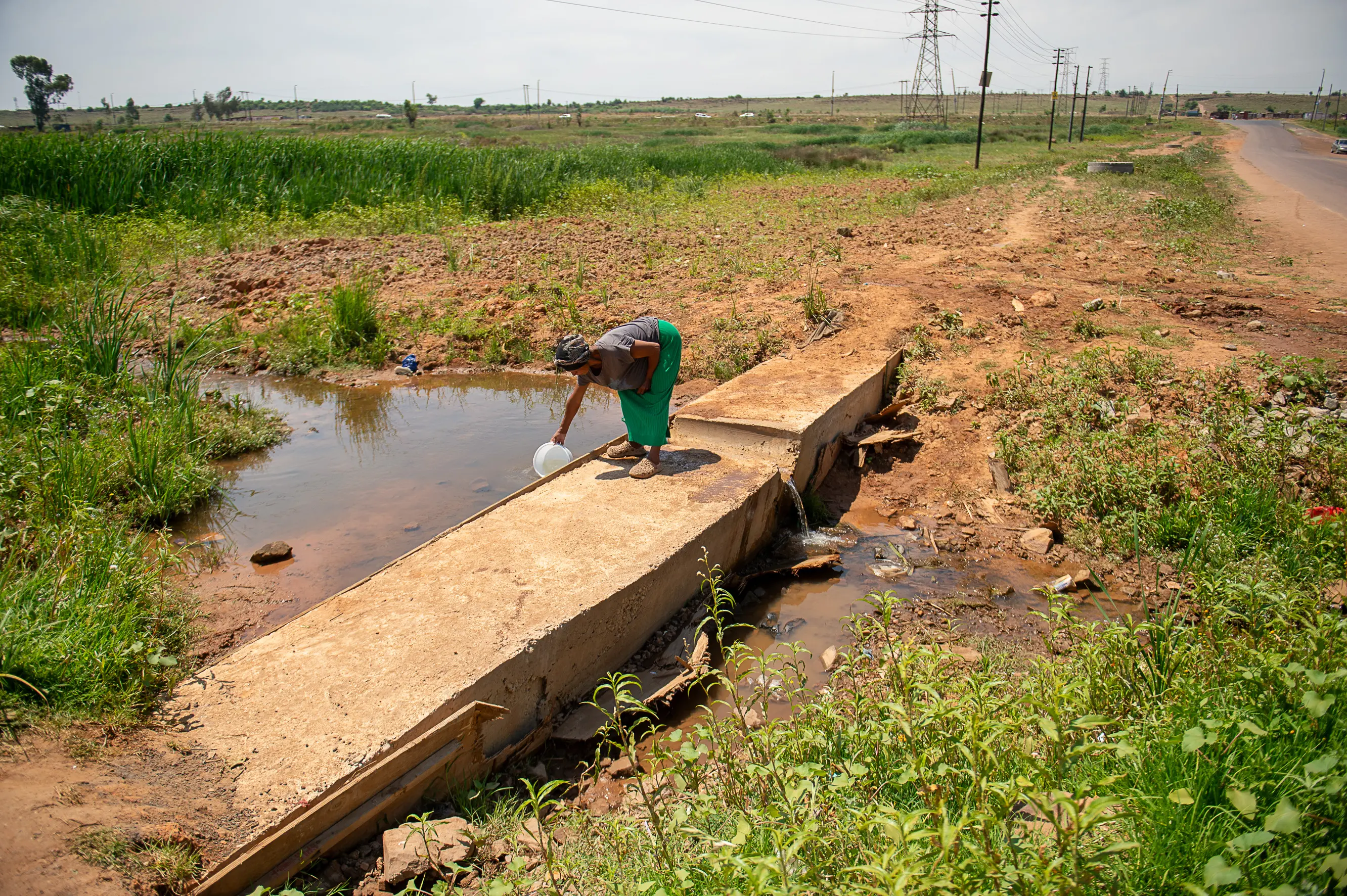
It’s a scorching midday in Bronkhorstspruit and 16-year-old Kwanele Kabini and her mother, Anna, dip their buckets into the murky Bronkhorstspruit River in Zithobeni.
“We want water to drink,” Kwanele says, with a shrug. “We don’t have a choice, even if it’s dirty water. It’s too hot.”
With no tanker in sight and no money for bottled water, they have turned to the river. They will boil the water before drinking it. Both have sore stomachs and they have not seen a tanker since Saturday.
“It’s not good for the stomach, but we don’t have a choice anyway,” she says. “We must drink and cook with this water, because we have no other choice.”
More than 800 people in Bronkhorstspruit have fallen sick from acute gastro-intestinal illness after the town’s water treatment works, also in Zithobeni, supplied water without chlorination for three weeks, from 24 September to 14 October.
The City of Tshwane failed to warn residents that the water was unsafe, according to the department of water and sanitation (DWS).
The plant draws water from the polluted Bronkhorstspruit River, which receives sewage from dysfunctional wastewater treatment works in Victor Khanye and malfunctioning Tshwane sewage pump stations. Without chlorine, the water was not disinfected before entering the distribution system.
I won’t vote because I’m suffering
In Zithobeni, the crisis has compounded daily hardships in a community where residents describe unemployment, unreliable basic services and homes flooded by rain and sewage.
In Waterland, a section of the township, Thobile Ntombeni says she fell ill about two weeks ago with vomiting and diarrhoea. She is still experiencing symptoms.
“If you drink one glass, you can feel inside, after two minutes you must run to the toilet,” she says. Although tankers have begun arriving, she says, residents cannot trust the taps. “The water from the taps is not safe at all.”
Ntombeni has lived in Waterland for more than 20 years. When it rains, she says, water enters homes and residents struggle to sleep. The lack of jobs and money makes it difficult for families to move elsewhere or to seek medical care.
“I didn’t have money to go to the doctor and that’s a problem,” she says. With local government elections approaching, Ntombeni questions what years of voting have achieved. “I don’t think I want to vote because I vote for other people to go up but me, I’m suffering. Nothing is going to change here. We are on our own, especially in this place. The government doesn’t care about us.”
We’re lucky we didn’t sleep in the hospital
For Phumzile Mahlangu, the water contamination crisis became particularly frightening when her infant daughter, Nqobile, developed diarrhoea and vomiting. Mahlangu, who had also fallen ill, rushed her baby to a clinic, where she was told she had lost weight. Ngobile received a drip and oral rehydration treatment.
“The other month, I took her to the clinic and she was weighing 9.95kg. When I took her back, she was weighing 7.98kg. I was so worried because the diarrhoea and the vomiting wouldn’t stop.”
Mahlangu, an unemployed mother-of-three, had little choice but to buy water. She had previously used the municipal supply to prepare porridge for her baby and suspects that is how she fell ill.
She is angry that residents were not warned about the danger. “We are lucky we didn’t sleep in the hospital. Most of the people went to hospital.”
Nqobile has since improved. But Mahlangu says the crisis has deepened residents’ frustration with the lack of progress in their community. She has not decided whether she will vote.
And even when the municipal water is deemed safe to drink again, Mahlangu’s trust will not be so easily restored. “I don’t trust it. Me, maybe I will use it to bathe and to wash, but for drinking and cooking, no. I’m scared now. I was boiling the water when I cooked the porridge for my baby and she still got sick.”
Nearby, 64-year-old Sara Mota struggles to carry water collected from a tanker to her home. Her feet and legs are swollen and she says she must carry five buckets because there is no water in her taps.
“There’s nothing I can do. I don’t have water at the house,” she says.
Mota says her four-year-old granddaughter, Lethu, developed vomiting and diarrhoea after drinking the tap water. “That water was dirty, it smelled like poof,” she says.
She also started buying water from a local shop, paying R5 for five litres, which drains her meagre pension. “If I don’t have water, I must drink that filthy water,” she says.
Warnings ignored
The water contamination crisis came despite prior warnings. In February, the DWS issued the city with a letter of non-compliance over the treatment works. The city submitted a remedial plan in March, committing to refurbish filtration equipment, install pumps and improve infrastructure by specified deadlines.
But the DWS told parliament last week that none of the commitments had been met within the agreed timeframes. Inspectors subsequently found that the plant had been operating without chlorine since 23 September.
WaterCAN’s Ferrial Adam says the failure was not simply an infrastructure problem.
“The issues there have been known since March this year, if not longer,” she says.
The key failure, she argues, was that officials did not follow due pro-cess or act timeously when water was found to be unsafe. “This then turns an infrastructure problem into a people and health problem. The failure is not only about infrastructure. It is about the failure to act.”
The city says Rand Water and its water and sanitation business unit are continuing to rehabilitate the plant. Cleaning of the larger reservoir has been completed, work on the smaller reservoir continues and preparations for the filtration system are about 90% complete. Testing, chlorination and flushing must follow before the plant can return to service.
The city also suspended tanker-filling operations at a Cullinan hydrant after elevated turbidity was detected, while it awaited test results and pursued alternative filling arrangements.
For Kwanele and her mother, however, the immediate problem remains finding enough water to drink and cook with. Until safe water reaches their taps or a tanker arrives, they are left weighing the risks of drinking from a polluted river against the cost of going without.