


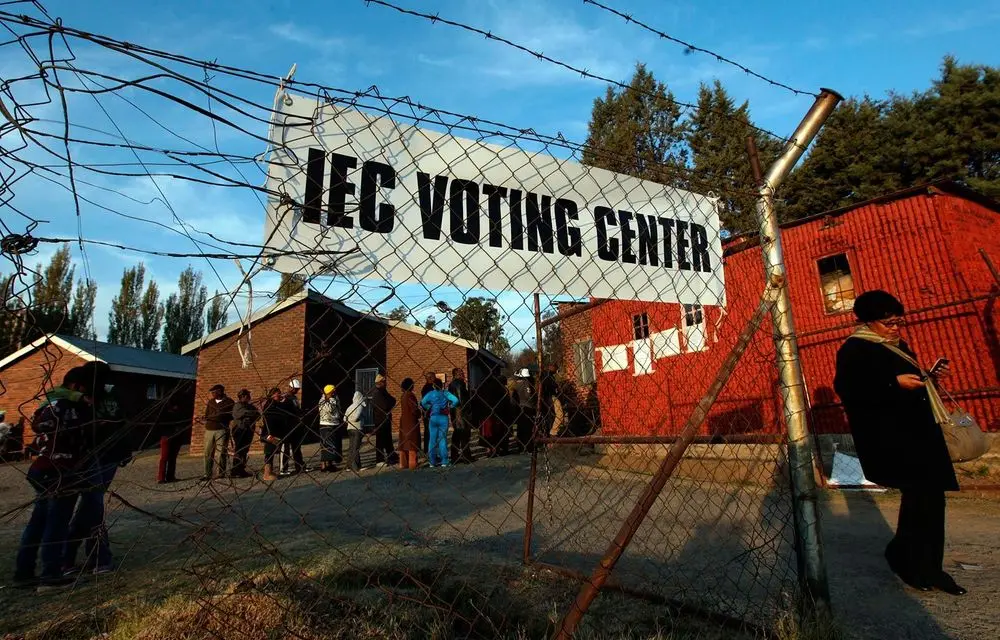
For some voters, special voting is an opportunity to cast their ballots before election day, particularly when work commitments or other circumstances make it difficult to vote on the day. But while the process is intended to make voting more accessible, a visit to a voting station in Germiston revealed several minor organisational difficulties that raise questions about preparations for the main voting day.
With work commitments scheduled for Wednesday, 4 November, special voting offered a chance to get the process out of the way before the main election day. Arriving shortly before 8am, there was an expectation that voting would begin at the scheduled time.
Instead, those waiting were informed by an election official that staff were attending to a few things before opening. Voters were assured that they would be allowed inside shortly but it was only at around 8.10am that the process got under way.
The delay was relatively short and there were only a handful of people waiting. However, once inside, another problem became apparent. Although chairs were available, they had been stacked away, leaving people standing while waiting to be assisted.
Among those waiting were elderly people and people with mobility difficulties. One man in front of the queue was using a wheeled walker and appeared to be wearing a back support, while another man behind him also relied on a four-wheeled walker. Chairs were eventually brought out after officials noticed that some voters needed somewhere to sit.
For a process that is partly intended to accommodate people who might struggle to access ordinary voting arrangements, the lack of readily available seating was an unnecessary inconvenience.
The difficulties continued when officials began checking voters' IDs. The scanner used to process IDs was not working, forcing staff to stop and try to resolve the problem. After attempts to get it working, the equipment was taken outside the voting hall, with voters waiting another 15 to 20 minutes before the process could continue.
At the voting booths, where two stations had been set up, another basic requirement was missing — there were no pens available for voters to use. Officials had to look around for one, eventually borrowing what appeared to be a personal pen from someone nearby. Other voters also had to borrow pens from people waiting in the queue before completing their ballots.
Eventually, the voting process was completed but the experience left a bigger question hanging over the preparations for Wednesday. If these difficulties arose when only a handful of people were waiting, what happens when considerably larger numbers arrive at voting stations?
The concerns were not limited to the voting process. A subsequent attempt to collect media accreditation in Alberton also exposed confusion around the arrangements.
What should have been a straightforward collection process involved being directed from one place to another, with officials unable to provide clear information about where journalists were supposed to go. An IEC official eventually indicated that they knew nothing about media accreditation and could not offer further assistance.
Two other media representatives were also experiencing difficulties and were similarly unable to get the information they needed.
Rather than leave without their accreditation, further enquiries were made by contacting an official whose number was found online. The official acknowledged that there had been a few difficulties and offered to check. The accreditation was eventually located.
The experience highlighted a frustrating gap between the information available to those responsible for administering the process and the information being communicated to journalists attempting to collect their credentials.
Organising an election involving millions of people is undoubtedly a considerable undertaking. There will always be challenges and isolated incidents do not necessarily reflect the experiences of voters elsewhere.
However, the special voting period also provides an opportunity to assess the practical arrangements before the larger crowds expected on election day. The availability of basic materials, functioning equipment, accessible seating and clear communication might seem like small details but they all contribute to whether people can exercise their right to vote without unnecessary difficulty.