


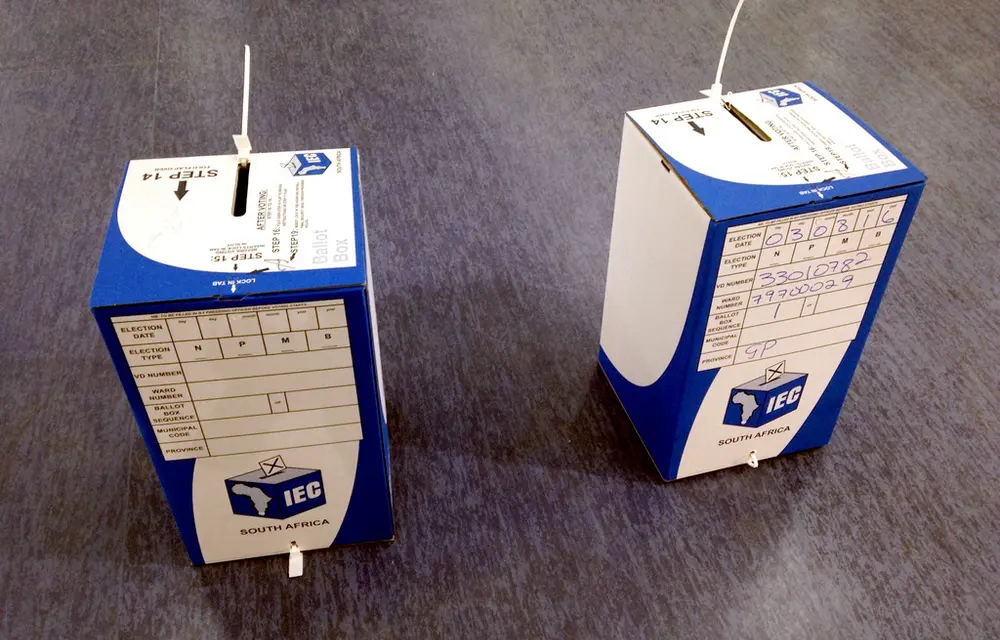
The Electoral Commission of South Africa (IEC) has ordered recounts in five wards across the City of Tshwane and Mangaung following objections to the 2026 local government elections, as the commission works towards declaring the final results on Sunday.
The recounts affect wards 97 and 192 in Tshwane and wards 4, 12 and 19 in Mangaung. IEC chairperson Mosotho Moepya said the commission had received 197 objections by 3 pm. Of these, 54 had been dismissed, 8 withdrawn and 2 upheld. The commission was still considering the remaining objections, with Moepya warning that provisional results and the seats allocated to political parties could change once all objections had been determined. He reminded contestants and the public that “results remain provisional until all objections have been determined by the commission”.
Moepya explained that the IEC could uphold an objection either before or after election results had been officially declared. Before the declaration, the commission may decide that votes cast at a particular voting station should not count, either in whole or in part or that votes allocated to a party or candidate should be adjusted. This means figures already displayed on the IEC’s provisional results platform could still change before the official announcement.
The same principle applies after results have been declared. In such cases, the commission may amend the results in accordance with the law or refer an objection to the Electoral Court if it believes the seriousness and extent of unlawful conduct or irregularities justify setting aside an election.
Moepya outlined the process followed when an objection is found to have merit. The commission communicates its findings to the objector and the Chief Electoral Officer, who then arranges a political liaison meeting in the affected area. Results slips are reprinted and political parties are given an opportunity to send agents to observe the recount. Once the votes have been recounted, the result slips are completed, signed, and entered into the system.
He said the process would be followed whether an objection was upheld before or after the results were declared. The commission would also ensure that affected parties were informed and able to participate through their agents. The recounts are therefore part of the formal process for resolving objections and determining whether reported results require correction.
The IEC also cautioned against drawing conclusions from incomplete election statistics, including voter turnout and spoiled ballots. Moepya said these figures were used in calculating the allocation of seats in municipal councils, meaning a complete picture could only be provided once all results had been processed. Seat allocation includes ward, local proportional representation and district council seats, each determined through the relevant legislative formula.
At the time of the briefing, results processing had been completed in the Free State, Mpumalanga, Northern Cape, Western Cape, Eastern Cape and Limpopo. Processing was still outstanding in the City of Johannesburg and Ekurhuleni in Gauteng, Rustenburg in North West, and Msunduzi and eThekwini in KwaZulu-Natal.
Moepya said the commission expected to conclude processing of outstanding results by Saturday evening and urged political parties, candidates, citizens and the media to allow it to complete the remaining work. He said the commission was working to finalise objections before the announcement.
The IEC is scheduled to officially announce the 2026 local government election results on Sunday, 8 November, at 6 pm. The declaration will provide a clearer picture of seat distribution across municipalities and set the stage for political parties to begin coalition negotiations in councils where no party has secured an outright majority.