

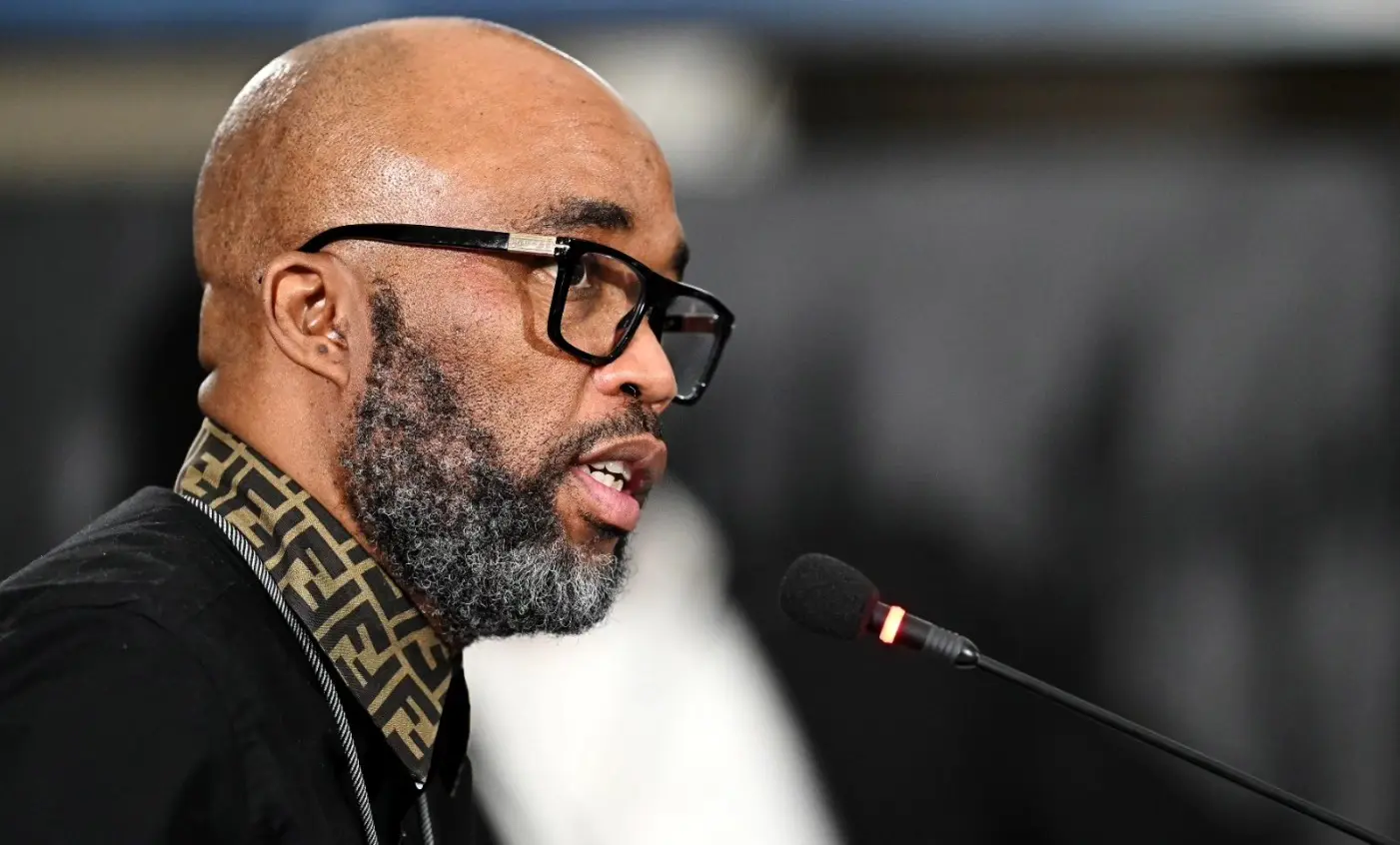
Annelene van den Heever argued against the inclusion of an unsigned statement which reveals evidence from her client Vusimuzi “Cat” Matlala’s botched plea deal during the first of his two-day appearance at the Madlanga Commission.
Matlala made his fourth return to the Commission's witness stand, scheduled for 9 - 10 November.
His defence counsel, Advocate van den Heever blamed the National Prosecuting Authority for sending the Madlanga Commission an unsigned statement which reveals evidence from Matlala’s failed plea deal.
The Commission's evidence leader Mahlape Sello argued the failed plea between Matlala and the National Prosecuting Authority no longer protected his 204 Statement that he provided as a witness.
Commission Chairperson Mbuyiseli Madlanga rejected Matlala’s application to exclude Matlala’s witness statement from his two-day testimony.
The Pretoria Specialised Commercial Crimes Court collapsed the plea deals of eight-year prison sentence in favour of a proposed 12-year stay in prison.
Matlala rejected the deal.

Van den Heever told the commission that she was surprised when she was informed that the Commission ordered him to respond to questions that come from the plea deal. However, Sello stated the NPA had sent an email to Matlala’s previous counsel.
She said the Commission evidence leaders were creating an artificial distinction between the 204 statement Matlala was ordered to submit and confidential evidence he cannot respond to, which formed part of the botched eight-year plea deal.
Van den Heever said under no circumstances, even in the broadest way to interpretation of rules of evidence, the Commission’s powers to compel a witness to provide a statement, does not supersede the rules of the plea deal.
She said IDAC investigators Brian Padayachee and Dylan Perumal approached Matlala for evidence in the Medicare24 corruption investigations which charged National Police Commissioner Fannie Masemola and Crime Intelligence head Dumisani Khumalo with corruption.
Matlala agreed to provide evidence for the eight-year plea deal. She said IDAC prosecutors Santhos Manilal and Suneel Bellochun were also part of the agreement.
Most of the work was done by IDAC. Part of the agreement proposed Matlala must depose a statement and testify on all criminal matters instituted by IDAC, even other cases he is not involved in.
“Everybody, when they engage in this kind of plea sentence agreement, understand at that stage that whatever is part and parcel of the agreement, if the agreement does not come to fruition, in other words if it does not stand in a court of law, will therefore fall by the wayside”.
She said her team received a confirmation letter with the seal of then head of IDAC Andrea Johnson who signed off on the plea agreement. As such the evidence would not be used against Matlala beyond the charges already agreed to.
She said it was made perfectly clear that the documents which formed part of the agreement should not be used as the deal fell apart.
She said an email from Manilal acknowledged that the evidence would not be used.
“It was acknowledged by all and sundry that the affidavit, and all statements and all questions put down, which I respectfully submit were put into a document by Dylan Perumal. The agreement at all relevant times was that it goes hand in hand with the plea deal, the section 105A agreement, and if the same does not stand, everything else will fall by the wayside,” said van den Heever.
She said it was impertinent that it was the understanding of Matlala all the time that whatever statement he made would ever be used if the plea deal fell off.
The plea deal was that a carrot was dangled before Matlala to solicit information from him.
“This situation where the NPA is allowed to break that solemn agreement, break the provision of the criminal procedure act when it comes to section 105A, to go behind the back of any person that's entered into plea negotiations, and later on comes to not, would in my respect, cause that provision to become a nullity.
“Because not a single person would ever again enter into a plea and sentence agreement with the state. The NPA word is not their word anymore,” said van den Heever.
She said she was shocked when she learnt that the NPA had given the Madlanga Commission a statement that was part of the plea deal.
“That means the NPA does not care about the criminal procedure act, does not care about their own regulations…it doesn't care about their worth to other people. In fact what they did is totally contrary to the provisions of section 105A by just handing it over. Because there was a solemn agreement as stipulated in section 105A that none of the negotiations nor impartial agreement would not be made available to anybody else once the plea and sentence agreement doesn't come to its fruition,” said van den Heever.

Advocate Sello told the Commission that Matlala’s defence representatives had been aware of the evidence and had not brought up any objection. She said van den Heever was attempting to delay Matlala’s testimony.
Sello said the deal states the plea agreement and record thereof would not be permitted to serve as evidence in Matlala’s criminal trial. She argued other institutions may have access to it.
“We submit therefore there is no basis for the document not to be admitted into evidence and we request the commissioners to permit the evidence leaders to lead Mr Matlala through that statement,” said Sello.
The commission has previously stated that it would not be held hostage by private agreements witnesses make to conceal evidence.
Sello stated that Matlala still had two protections for himself under the law.
“He is actually afforded two protections. The first is under Section 34 of the Act, which is to assert his right against self-incrimination. The second is in regulation H2 which specifically provides that any evidence that he tenders in this commission can never be used against him in a court of law,” said Sello.