

President Cyril Ramaphosa has approved part of the Independent Commission for the Remuneration of Public Office-Bearers’ recommendation and decided to increase politicians, traditional leaders and judicial officers’ salaries by between 3.5% and 4%.
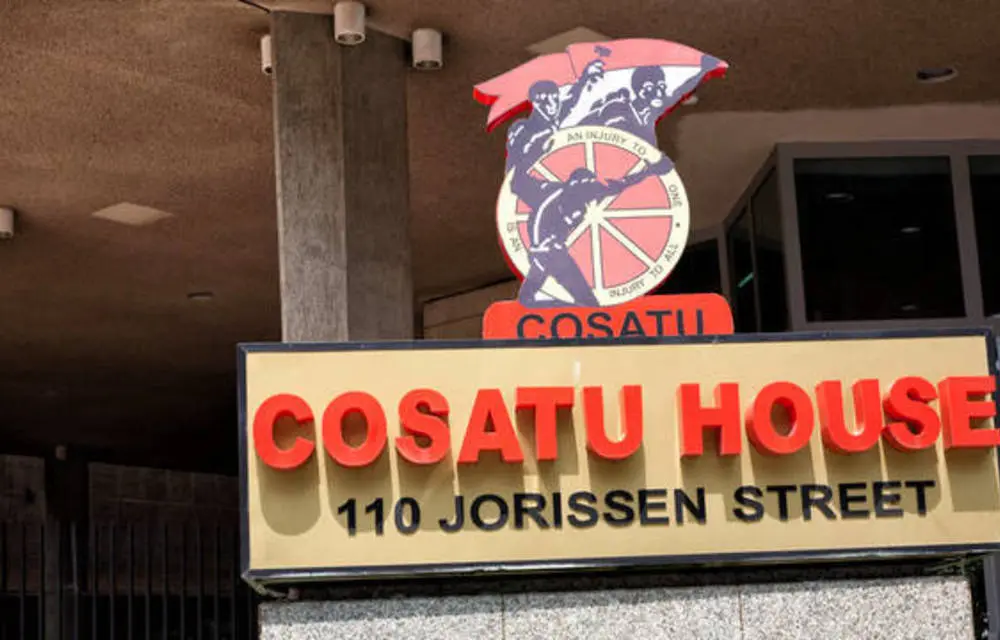
Trade union federation Cosatu has expressed its irritation at what it described as a generous increase for politicians.
Cosatu indicated it supported the 4% adjustment for magistrates given that they are a skilled profession and measures are needed to retain them and avoid a brain drain upon an already overwhelmed judicial system.
“We believe, however, that this hike for public representatives remains excessive and sends an ill-considered message to an increasingly frustrated public of a political elite that is dangerously out of touch with the lived realities of ordinary South Africans. No clearer indication of society’s anger and frustrations was confirmed with the recent local government election results,” Cosatu added.
The commission chaired by Land Court Judge President Zeenat Carelse had recommended pay hikes of 4% across all the country’s 20,609 public office-bearers in three three spheres of government, the judiciary and traditional leaders.
The commission’s recommendation would have seen the salary of public office-bearers become more than R14.2-billion.
“The commission considered submissions received during statutory consultation and acknowledges that salary adjustments are influenced by multiple factors beyond inflation. While the National Treasury projected 2026/27 inflation at 3.4%, data from Statistics SA indicate a lower annual average of 3.2%, with the latest rate recorded at 3.5% in January 2026,” the commission had indicated in its recommendation to Ramaphosa.
According to the commission, it was expected that inflation would increase from 3.2% in 2025 to 3.4% in 2026, driven by higher food prices (particularly meat due to supply disruptions linked to foot-and-mouth disease).
“Inflation is forecast to ease to 3.3% in 2027 and 3.2% in 2028, but risks from geopolitical tensions, exchange rate volatility, administered prices, and animal disease outbreaks remain elevated. The reduction of the inflation target to 3% with a 1% point tolerance band will structurally reduce inflation, helping to protect real income levels,” it stated in its recommendation.
The commission continued: “In line with the above, the commission notes a modest but gradual improvement in the economic outlook. Based on these considerations, a 4% cost of living adjustment for all public office-bearers is recommended to mitigate and maintain public office-bearers' purchasing power”.
However, Ramaphosa has decided that an increase of 3.5% will apply to members of the national executive, members of the National Assembly and permanent delegates to the National Council of Provinces, premiers, members of provincial executive councils and members of provincial legislatures.
Additionally, he has also determined a 4% salary increase for judges of the Constitutional Court, judges of other courts and magistrates.
A 4% increase will also apply to traditional leaders, members of the National and Provincial Houses of Traditional and Khoi-San leaders.
Members of independent constitutional institutions such as Auditor-General Tsakani Maluleke, Public Protector Advocate Kholeka Gcaleka and the Electoral Commission of SA as well as the SA Human Rights Commission, among others, will also receive a 4% pay rise.
All the increases are backdated to April this year.
Ramaphosa said the commission considered, among others, comments and inputs from stakeholders, the role, status, duties, functions and responsibilities of the public office bearers concerned, economic variables including fiscal affordability, historic inflation, future inflation forecasts, wage settlement data, its prior recommendations.
In addition, Ramaphosa’s determination for the previous financial year and the average annual wage increments were also taken into account.
Cosatu also stated that it appreciates that the government reduced the proposed salary increase for politicians from 4% to 3.5% for the highest paid public office-bearers.
According to Cosatu, it is beyond shameful that whilst the government has consistently refused to provide any inflationary relief for the eight million unemployed and destitute social relief of distress grant recipients, it found an additional R536 million to fund the salaries of politicians, commissioners and judges.
“Most galling is the inclusion of the 9,331 local government councillors under whose watch the state of municipal finances and services has deteriorated at an alarming rate, with numerous municipalities failing to pay their employees’ salaries, pensions, medical aids and taxes, and many on the verge of collapse,” said the organisation.
Cosatu added that if the government has spare funds, then it must hire the doctors, nurses, teachers, police officers and other frontline workers needed to provide essential services to working class communities and the economy.