

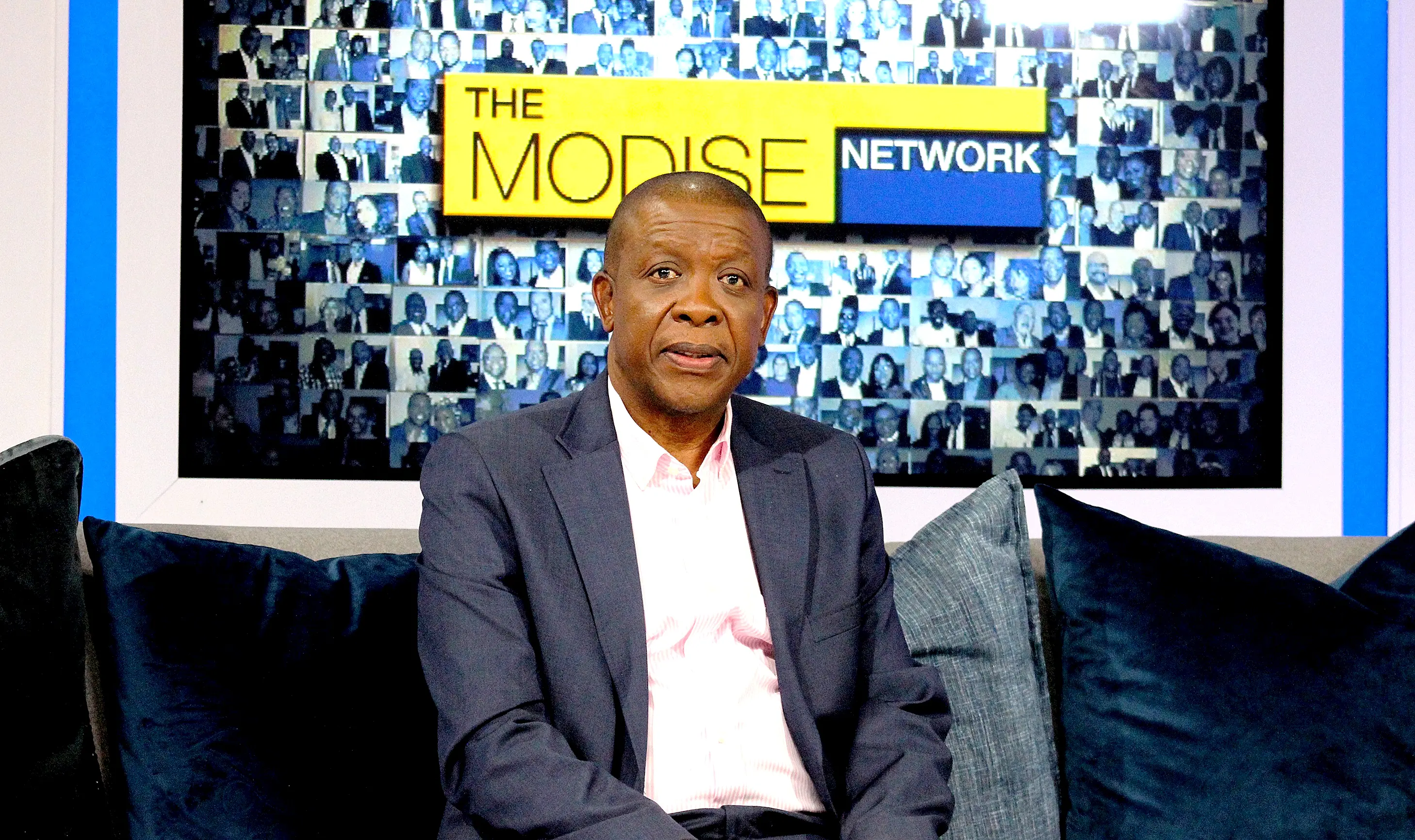
In the early 1980s, a young man named Timothy Modise arrived in Mafikeng to work for Radio Bop, the station of the old Bophuthatswana homeland. On 22 October 2026, he returned to the same town, now Mahikeng, to receive an honorary doctorate in communication science from North- West University for his contribution to South African broadcasting, public communication and democratic debate.
For a generation of listeners, his name meant radio you could trust. He gave South Africans a place to talk to one another when we needed it most, and for many of us who grew up listening to him, the honour was long overdue.
For more than three decades, Modise helped shape the history he reported, earning the nation’s respect and becoming a source of pride for many black South Africans. He had a sharp mind, a voice that made people listen and a gift for making complex politics clear. His quick wit and common touch won over listeners, while his even-handed questioning won the trust of politicians across the spectrum. Radio rarely finds all of that in one person.
From the control room to the microphone
He started behind the scenes, as a sound controller at Radio 702. In those days, the station broadcast from a mountain above Ga-Rankuwa, its transmitter in plain view of his home. The young man who used to look up at that towering mast would spend his life on the airwaves.
I grew up in Ga-Rankuwa too, a few years after him, under the same mast and with the same love of radio. Voices like Modise’s told boys like me that the people on air could sound like us and come from where we came from. They also opened a window onto a wider world of ideas, debate, books and music, and showed us the polish we could aspire to.
Radio Bop gave him his first job on air, presenting the K-Mart Top 20. I was a young boy then and I remember that voice finding its place in South African radio. He was part of an illustrious generation of broadcasters shaping the sound of the station: Modisane Modise, Thuli Moagi, Fred Mogamisi, Pearl Moatshe and Lesley Smith were among the new names that built its brand.
But it was Radio Metro, now Metro FM, that made him famous after it launched in 1986. Fame did not come easily. Like many young people starting out, Modise did not yet own a car. Former Metro colleague Hazel Tlhabanyane recalls that when he was scheduled for a midnight show, he would take public transport from Pretoria and arrive in the afternoon to prepare. While he waited for his slot, he slept under the table in the production studio. It was a humble start for a man who would one day question a president on live television.
Once on air, he made every minute count. Even on music shows such as Person to Person and The Joyride, Modise filled the gaps with information and ideas. He believed radio could teach listeners about their health, their money and their rights, as well as entertain them.
A nation in conversation
In 1992, Modise moved into early evening talk. His new show, Jungle Fever, brought political talk to the national station and stations across the country have kept that slot for talk ever since.
The timing mattered. Liberation movements had been unbanned, Mandela was free and exiles were coming home. At Codesa, the Convention for a Democratic South Africa, political parties had begun negotiating an end to apartheid. There was hope in the land, but the scars of the past ran deep and building a better life for everyone would be a long road.
Shaping the future would take talk, compromise and, in time, reconciliation. No one had all the answers and South Africans had to learn to listen to one another. People whose voices had been silenced for decades could finally speak and many of them found their way into Modise’s studio. Through a partnership led by Metro’s Koos Radebe and the late Sowetan editor Aggrey Klaaste, the Sowetan– Radio Metro Talkback carried those conversations to the newspaper’s readers too. When the parties at Codesa needed to speak to their supporters, they turned to his show.
Night after night, with Hugh Masekela and the Union of South Africa’s “Shebeen” playing between segments, he brought rival politicians into the same room. He questioned them, listened, pushed back and kept the conversation going. Listeners phoned in to challenge their leaders directly.
In the most dangerous years of the transition, his studio became one of the places where that conversation happened.
He also looked beyond our borders. War was raging in Bosnia at the time, and I remember Modise comparing it with South Africa on air. That evening, he warned that we should not be oblivious to what was happening there.
If we failed to learn from that ethnic conflict, he said, we could follow the same path. I remember it vividly, because I had never used the word “oblivious” until I heard him say it.
Behind the scenes, he went to great lengths for that kind of depth. Tlhabanyane remembers with fondness and respect that Metro paid for only some of the subscriptions the show needed. Modise did not let that stop him. He used part of his own salary to pay for the rest, so he could give his listeners world-class content. Jungle Fever became the station’s flagship show.
On the world stage
Television soon came calling: Good Morning South Africa and Agenda on SABC, and later Carte Blanche on M-Net. Good Morning South Africa and Agenda aired on channels aimed mostly at white viewers and most of their pre-senters were white.
His work on radio made SABC executives rethink that approach.
South Africa was changing and he was the right person for the moment. He took to television with ease and earned the respect of viewers across the country.
His biggest moment came on 14 April 1994, two weeks before the first democratic election, when he sat on the panel of journalists questioning Nelson Mandela and FW de Klerk in their televised debate.
He asked the first question. Political violence was tearing through black townships, and de Klerk’s government faced persistent allegations that elements of its security forces were fuelling the killing. Modise put it to him directly: what was his government doing to stop it?
He asked a sitting president to his face, on live national television, and in doing so he spoke for millions. That moment made his name at home and abroad.
After the election, he brought that credibility to SAfm, where he presented The Tim Modise Show and later PM Live. As the SABC changed from apartheid’s state broadcaster into a public broadcaster, his presence helped win over a sceptical public. Mandela, Tutu and Masekela were among the guests who sat across the microphone from him.
His career has since taken in 702, eNCA, Business Day TV, Soweto TV and Power FM. He was founding chairperson of Proudly South African and a primary school in his home township of Ga-Rankuwa carries his name. Through the Tim Modise Foundation, he continues to give back, with a focus on community upliftment and empowerment programmes.
Those who worked with him are not surprised by the honour. “Tim had a great gift in broadcasting, and he became a gift in service of his country in related opportunities,” says Thuli Moagi, a former colleague at Radio Bop. “When I heard that the NWU was to honour him, I was not surprised!”
Former colleague and friend Ferdinand Mabalane put it simply in a social media post: “Congratulations Tim. About time. None deserved it more!”
North-West University’s doctorate honours a broadcaster who believed public conversation matters. When the stakes could hardly have been higher, Tim Modise kept South Africans talking.
For that and for a lifetime given to the craft of broadcasting, the honour is richly deserved.