


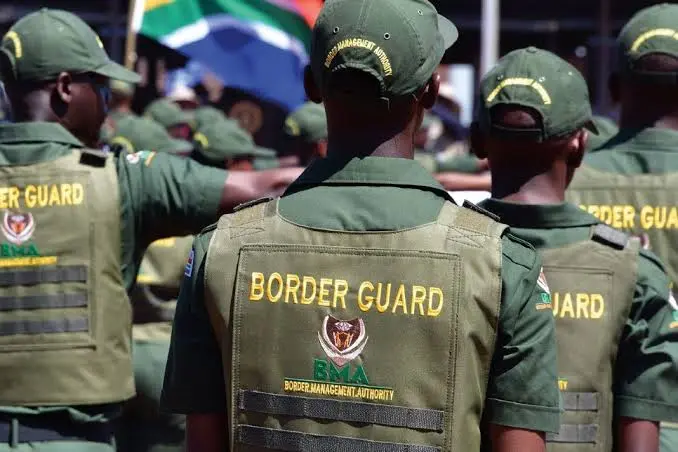
The Border Management Authority (BMA) has turned to drone technology to strengthen surveillance along South Africa's borders as it battles illegal migration, drug trafficking and organised crime, while operating with significantly fewer personnel than required.
Speaking at the third Border Management Conference and Expo in Pretoria on Wednesday, BMA Commissioner Dr Nakampe Michael Masiapato said drones had been deployed to monitor vulnerable sections of the country's borders and help response teams identify and intercept people attempting to enter South Africa illegally.
He said the first deployment took place in April 2025 and the technology had since become an important part of the authority's border management operations.
Masiapato explained that the introduction of drones had helped the authority reduce the costs associated with traditional border patrols, which previously required officers to spend significant amounts of money on fuel while travelling along extensive border areas in search of illegal crossings.
“Initially, before the drones, we were spending over a million in a day, burning diesel, burning petrol, doing patrols as they used to do in the ’50s,” Masiapato said.
He said traditional patrols were often ineffective because people attempting to cross the border illegally would change their routes, depending on the movements of officers. That made it difficult for patrol teams to monitor large areas and respond effectively to illegal crossings.
The BMA had since adopted a different approach by positioning response teams at strategic and vulnerable sections of the border before deploying drones to monitor activity. That allows officers to identify people attempting to enter the country illegally and direct response teams to the specific locations where intervention was needed.
Despite the introduction of the technology, Masiapato acknowledged that the authority continued to face resource and personnel constraints.
He said the BMA's organisational structure provided for about 11 200 personnel but the authority was operating at just below 26% of its required capacity, with more than 8 000 positions to be filled.
The shortage of personnel raises further questions about the authority's ability to monitor the country's extensive borders while responding to growing security threats. The BMA is expected to play a central role in controlling the movement of people and goods into and out of South Africa, making sufficient staffing and resources essential to its operations.
Acting executive cluster manager for defence and security at the Council for Scientific and Industrial Research, Sepanki Pheto, said South Africa's borders could no longer be viewed simply as geographical boundaries separating the country from its neighbours. Instead, they should be recognised as strategic national assets that connected South Africa to the region, the continent and international economic opportunities.
Pheto said borders were also spaces where some of the country's most complex security challenges converged. Those included organised transnational crime, illicit trafficking of goods and people, illegal immigration, infrastructure-related crime and other threats to national security and economic stability.
He said the challenge facing South Africa was not only about protecting its borders, but also about developing an integrated, intelligent and responsive border management system capable of addressing those interconnected threats.