



In a world increasingly defined by geopolitical fragmentation, shifting trade alliances and the rapid disruption of artificial intelligence, the post-Second World War international architecture is visibly unravelling. Yet, as the old global order erodes, the contours of what will replace it remain fiercely contested.
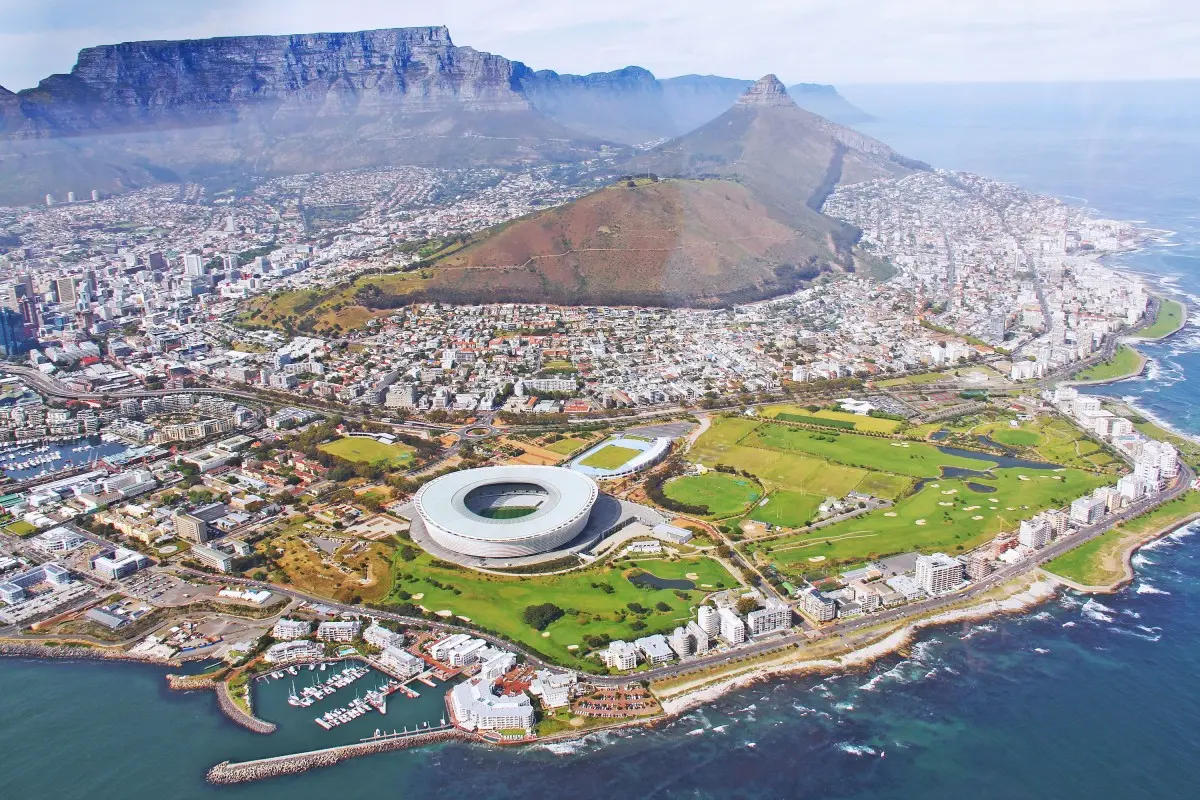
Next week, from 23 to 24 November, some of the most influential policymakers, captains of industry, academics and civil society leaders from across the developing world will gather at The Westin in Cape Town to ensure that the Global South is not merely a spectator to this historic transition, but one of its primary architects.
Hosted jointly by the Thabo Mbeki Foundation and India’s prominent think tank, the Observer Research Foundation (ORF), the fourth edition of the Cape Town Conversation arrives at what organisers describe as a watershed moment for international relations.
Convened under the theme Shaping Shared Futures in a Transforming World, the two-day dialogue seeks to bridge the persistent gap between diplomatic rhetoric and tangible policy implementation across Africa, India, and the broader Global South—while engaging key stakeholders from the Global North.
“We meet at a moment when the old order is neither fully intact nor yet replaced. The Global South cannot be a bystander to what comes next,” said Max Boqwana, chief executive officer of the Thabo Mbeki Foundation, ahead of the gathering. “The Cape Town Conversation exists so that Africa, India and their partners can move from shared aspiration to shared action and shape the institutions and rules that will govern our common future.”
When the Cape Town Conversation was inaugurated in 2023, the geopolitical mood in the developing world was buoyed by cautious optimism. That same year, the African Union was admitted as a permanent member of the G20 during India’s presidency—a milestone widely hailed as a breakthrough for a more representative and equitable global governance system.
Three years on, however, the international landscape has hardened considerably. Multilateral institutions face unprecedented strain, sovereign debt burdens continue to stifle fiscal space across the African continent and major powers are increasingly weaponising trade, supply chains and technology.
Against this backdrop, the relationship between Africa and India has taken on renewed strategic urgency. Historically anchored in anti-colonial solidarity and South-South cooperation, the partnership has matured into a formidable economic axis, underpinned by nearly $100 billion in annual bilateral trade.
Now, thinkers in both New Delhi and across African capitals argue that the relationship must evolve beyond traditional trade and diplomatic goodwill toward genuine co-creation. Across the continent, there is a growing insistence on an “Africa by Africans” approach—one in which developmental priorities are defined, financed, and executed on African terms rather than dictated by external donors or creditors. This ethos resonates strongly with India’s own pursuit of strategic autonomy and nationally owned development.
Organisers point to the natural synergy between the African Union’s Agenda 2063—the continent’s 50-year blueprint for inclusive growth and sustainable development—and India’s Viksit Bharat (Developed India) vision, which aims to transform the country into a developed nation by 2047. Aligning these two long-term frameworks, delegates will argue, offers a practical pathway for pooling resources, sharing technical expertise, and building resilient institutions independent of traditional Westerndominated models.
To move beyond the familiar platitudes that often characterise international summits, the 2026 Cape Town Conversation has structured its keynote addresses, panel discussions, and closed-door expert engagements around six rigorous thematic tracks. Each is designed to interrogate a specific pressure point facing developing economies:
Power, Agency and Sovereignty
Under the banner The New Age of Uncertainty, delegates will confront a fundamental geopolitical question: as traditional multilateralism falters and great-power rivalry intensifies, how can African states convert their collective demographic and geographic weight into cohesive diplomatic influence? Rather than being forced to choose sides in emerging global rivalries, the track will explore how the Global South can assert genuine strategic agency.
Trade, Markets and Resilience
In Commerce in an Age of Geopolitics, discussions will turn to the rewiring of global supply chains. As protectionism rises and industrial policy makes a forceful return in the Global North, participants will examine how Africa and India can deepen intra-regional markets, reduce structural dependencies on external powers, and jointly write the regulatory rules for emerging industries.
A New Development Pact
With the United Nations’ 2030 Agenda for Sustainable Development fast approaching—and many targets severely off-track—The New Compact for Development will tackle the thorny issue of global finance. Delegates will debate what a fairer international financial architecture should look like, focusing on reforming multilateral development banks, unlocking affordable capital, and building domestic institutional capability.
Claiming a Stake in the AI Economy
Perhaps no force threatens to widen global inequality faster than the rapid rise of artificial intelligence and frontier technologies. Under Claiming a Stake in Technology Futures, policymakers and innovators will ask who will ultimately own, govern, and profit from the AI economy. The focus will be on ensuring that digital public infrastructure, data governance, and technological diffusion empower developing nations rather than relegating them to mere consumers and data-extraction hubs.
Connectivity, Corridors, and Logistics
For decades, infrastructure across much of Africa was designed to extract raw materials from the interior to coastal ports for export abroad. The New Geography of Growth seeks to invert that colonial-era logic.
Experts will assess where strategic infrastructure investment should be directed so that transport corridors, ports, and logistics networks actively serve African domestic production, value addition, and continental regional integration.
Capturing the Green Transition
Finally, The Great Green Opportunity will address the paradox of the global energy transition.
While African nations hold vast reserves of the critical minerals essential for renewable energy technologies and electric vehicles, they risk remaining trapped at the bottom of the value chain. This track will explore how mineral-rich and energy-abundant countries can move beyond raw extraction to capture the green manufacturing, industrial processing, and clean-energy jobs that follow.
As delegates prepare to convene in Cape Town next week, the underlying message from the Thabo Mbeki Foundation and the Observer Research Foundation is clear: the era of waiting for the Global North to reform international institutions from within is over.
Whether in boardrooms negotiating supply chains, laboratories designing AI governance, or diplomatic halls debating climate finance, the Global South possesses the demographics, resources, and markets to dictate its own trajectory. The challenge in Cape Town—and in the years that follow—will be turning that latent potential into coordinated, decisive action.