


When Simon Buta died in March 2024, his family wanted to bury him on the farm in Mpumalanga where he had lived all his life, in keeping with what they say was a long-standing burial practice.
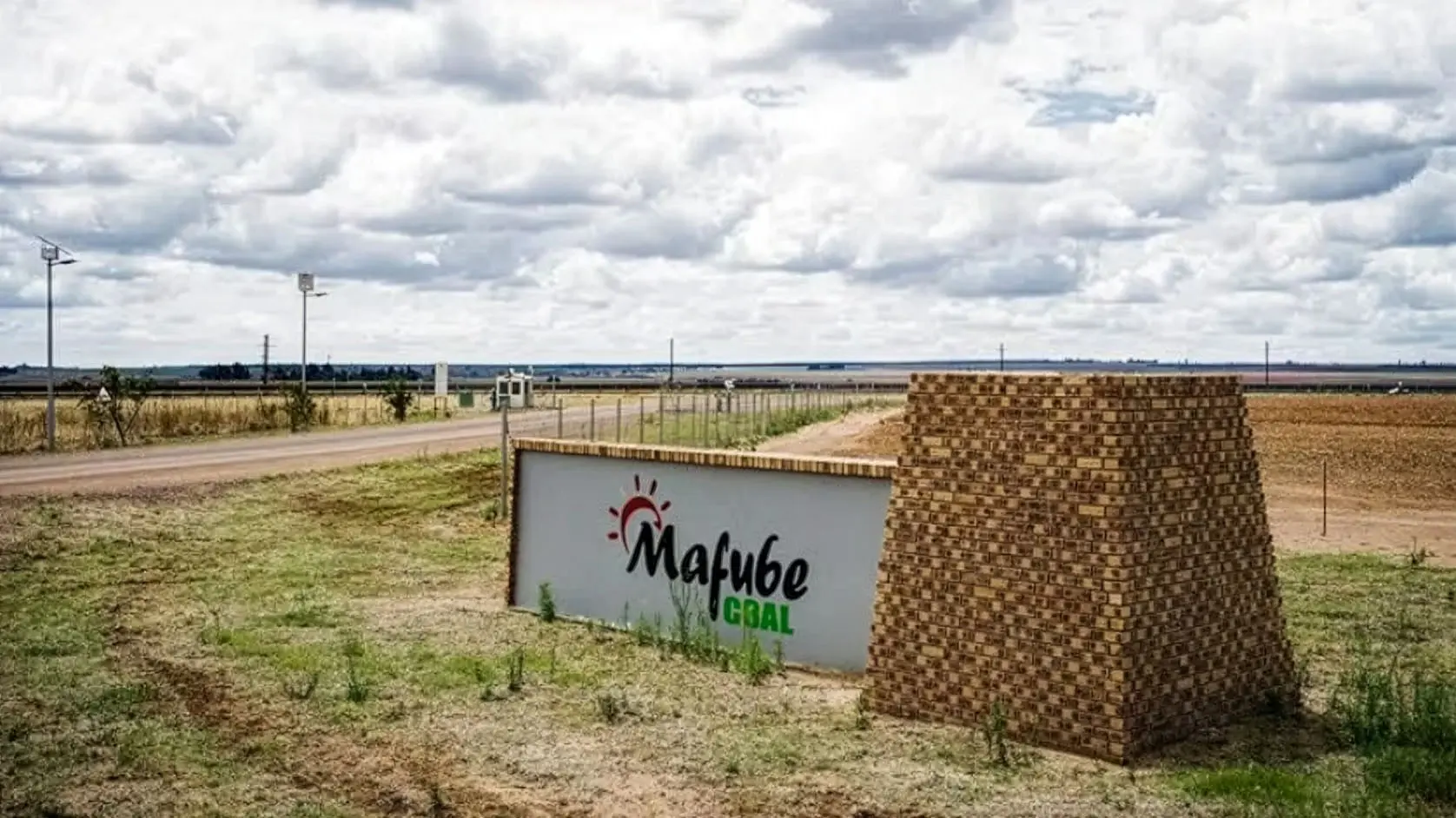
But the farm’s owner, coal mining company Mafube Coal Mining, opposed the burial. On 15 March 2024, it approached the Land Court urgently for an order preventing the family from burying Buta at Graveyard 1, where other family members were buried, or at any other graveyard on its land.
The court granted an interim interdict that evening. After the planned burial at Graveyard 1 was prevented, the family buried Buta at their homestead the following day. Mafube then amended its application to seek a declaration that the burial was illegal and an order compelling the family to exhume his remains.
On 18 July 2024, the Land Court granted the exhumation order, finding there was no established practice of burying family members at the homestead and that the burial had taken place without Mafube’s consent. It did not find the family in contempt of the interim order.
Simon Buta’s children are challenging the order in the Constitutional Court. The appeal raises questions about burial rights on land owned by others, mining-related relocation and when human remains may be removed.
They argue that Buta was entitled to be buried on the farm under section 6(2)(dA) of the Extension of Security of Tenure Act (Esta).
The provision gives an occupier the right to bury a deceased family member who was residing on the land at the time of their death, in accordance with their religion or cultural beliefs, where an established burial practice exists in respect of the land.
The Buta children say Mafube’s own court papers refer to about 172 graves on the farm and efforts to relocate them, supporting their argument that an established burial practice existed. Mafube disputes that there was an established practice of families burying their loved ones on the farm.
The applicants say previous owners permitted burials on Nooitgedacht and that ancestral graves are evidence of an established practice.
They argue that the Land Court misinterpreted section 6(2)(dA) by focusing on whether there was an established practice of burying family members at the homestead. The provision requires an established burial practice “in respect of the land”, they say, not at a particular part of it.
Relying on two earlier judgments, Dlamini and Mampies, which they say were binding on the Land Court, the applicants argue that the section creates a real right in the land itself.
They say there was undisputed evidence of an established practice of burials at Graveyard 1 and that the absence of previous burials at the homestead was irrelevant, particularly because Mafube had prevented them from using Graveyard 1.
“The right is in respect of the land itself and not a particular portion of it,” they argue.
Mafube disputes that the existence of graves proves an established practice across the farm. It argues that any such practice was confined to Graveyard 1 and did not give the family the right to open a new grave at its homestead.
“A right to bury in Graveyard 1, if it existed, was not a right to a new grave at the family homestead,” it argues in its court papers.
Mafube acquired the farm in November 2017 and holds a mining right granted in August 2013. It says its Life Extension project required further resettlement and the relocation of graves.
The applicants say negotiations over the relocation of their homestead and ancestral graves were ongoing when Buta died.
Mafube says it introduced a moratorium on further burials across the farm in 2020, after notices, meetings and newspaper advertisements, and explained its reasons to the family.
The company says about 142 of the 172 graves had been relocated at its expense, with the agreement of next of kin.
When Buta died on 12 March 2024, the family asked to bury him at Graveyard 1, where they had prepared a grave. Mafube refused, citing the site’s proximity to active blasting. It says the graveyard was about 157m from blasting activities, while the regulatory threshold it relied on for blasting near places where people congregate was 500m.
The company says it had to protect funeral-goers and that a burial there would have been temporary because the graves were being relocated.
It says it offered an alternative at a new cemetery, including a portion reserved for the family, payment of plot fees, transport and R15 000 towards funeral costs.
The family rejected the offer, maintaining that it was entitled to bury Buta on the farm.
The applicants also challenge how the case proceeded in the Land Court. They say Mafube’s original application had become moot once Buta was buried and that its amendment introduced substantially new relief without giving them a fair opportunity to respond.
The Land Court described the amended application as seeking “a completely new relief of contempt of court and exhumation”. It said Mafube should have withdrawn its original application and brought a new one.
Mafube says the family did not object to the order allowing further papers to be filed, seek to have it set aside or ask for more time to respond. It says the applicants answered the amended case, filed written submissions and argued the merits. They cannot now claim they were denied a fair hearing.
Although the Land Court did not find the family in contempt, it declared the burial illegal because there was no established practice at the homestead and Mafube had not consented.
It ordered Buta’s remains to be exhumed within 60 days and reburied at the new cemetery or another suitable site, with Mafube providing financial assistance.
The applicants challenge whether exhumation was an appropriate remedy. They describe the order as “highly offensive” and “one of the gravest incursions on the occupier’s rights under the Constitution and ESTA”. They argue that exhumation should not follow automatically from an illegal burial and that a court must consider whether it is just and equitable and whether less intrusive measures could protect the landowner’s rights.
The applicants also argue that the burial right must be understood against the history of land dispossession. In their written submissions, they say the burial right has its roots in the role of burial places in African custom and the “gross disruption” of African people’s connection with burial sites through the land seizures of colonialism and apartheid.
They argue that ancestral graves are central to the spiritual and cultural ties between the living, their deceased relatives and the land.
The case has drawn submissions from the Centre for Applied Legal Studies (CALS) and the Centre for Environmental Rights (CER), both admitted as friends of the court.
CALS argues that the Land Court placed the landowner’s property rights above the burial and cultural rights of people living on the land.
It says Esta should be interpreted in the context of constitutional protections for security of tenure, dignity and cultural rights. Removing human remains should be a last resort. It also says international human rights law should inform the interpretation of protections for burial practices and access to family graves.
The CER approaches the case from an environmental justice and public-interest perspective, highlighting constitutional questions about mining-induced displacement, security of tenure and vulnerable communities.
Its intervention considers the burial rights of people living on land earmarked for mining and how these should be balanced against mining companies’ interests.
The CER argues that a company’s ownership of land and mining rights should not, by themselves, establish that a grave must be removed.
It says the court must consider the specific mining activities authorised, the applicable approvals and conditions, and whether the continued presence of the grave would prejudice operations.
Mafube maintains that it was entitled to protect its property and mining operations and made efforts to facilitate a dignified burial elsewhere. It also disputes the family’s wider allegations about the relocation of graves and access to burial sites, describing them in its answering affidavit as unsupported by evidence.
The applicants say the legal questions at stake extend beyond their own dispute, affecting millions of people living on land under the protection of Esta, as well as landowners.
They say the Constitutional Court’s judgment will guide the Land Court in how similar cases should be approached in future.