


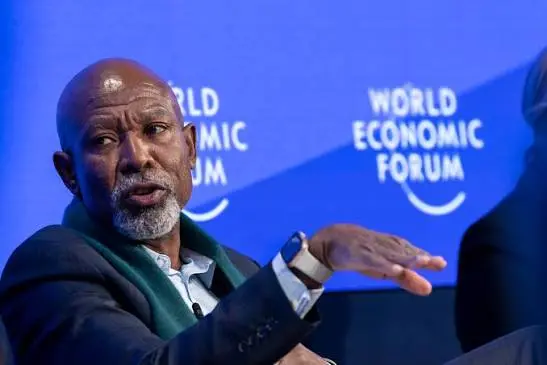
The South African Reserve Bank has kept interest rates unchanged at 7.25%, but a divided monetary policy committee decision has revealed deepening concern about inflation risks, with three of its seven members favouring a 25-basis-point increase.
Announcing the decision on Thursday, Reserve Bank governor Lesetja Kganyago said the committee had assessed inflation risks as being tilted to the upside, amid elevated fuel costs, geopolitical uncertainty and the prospect of higher food prices.
The decision leaves the repo rate at 7.25% and the prime lending rate at 10.75%.
The global economy remained in a difficult position, he said. “Although oil prices have eased over the past few weeks, they remain elevated. Further pressure on fuel costs is coming from higher refinery margins and shipping rates, both linked to geopolitical conflicts. Global food inflation is also accelerating.”
Inflation was expected to remain above 5% into early next year, largely because of higher fuel costs. Fuel inflation was around 40%, with transport accounting for more than a third of overall inflation.
Petrol was almost R30 a litre, compared with about R21 a year ago, Kganyago said.
Although the Bank expects inflation to ease after early next year, it warned that several factors could put further pressure on prices. Those included rising global interest rates, a weaker rand, geopolitical risks to oil and fuel prices and the possibility that dry weather associated with El Niño could damage agricultural harvests.
Water restrictions had been announced in the Western Cape because of lower dam levels, Kganyago noted.
The governor said the Bank would not hesitate to increase interest rates if necessary to bring inflation back to its 3% target over the policy horizon.
The committee’s decision to pause comes after two interest rate adjustments this year, with the Bank describing its current policy stance as moderately restrictive.
Its quarterly projection model continues to indicate lower interest rates next year, as inflation is expected to move towards the 3% target.
But Kganyago cautioned that the model’s projections were a broad guide and that decisions would continue to be taken at each meeting, depending on economic data and the balance of risks.
The Bank’s growth outlook is broadly unchanged, with economic growth expected to improve to about 2% annually over the forecast period, from just over 1%.
There are signs of a gradual recovery, supported in the short term by stronger domestic trade and wholesale and retail sales, pointing to some resilience in household demand.
Kganyago warned that longer-term growth would require a substantial increase in investment.
Fixed investment stands at about 13% of economic output, well below historical peaks and among the lowest rates globally.
The Bank also outlined two scenarios illustrating the risks facing the economy.
In one, oil prices rise to $130 a barrel, while refinery margins remain elevated. This would keep headline inflation above 5% next year, constrain growth to about 1% and require about two further interest rate increases.
A second scenario, involving higher global bond yields, increased risk premiums for countries such as South Africa and a weaker rand, produced similar outcomes: higher inflation, weaker growth and at least two rate hikes.
Kganyago said 2026 had been a challenging year.
“Inflation has been much higher than expected at the start of the year and growth has been lower, with unemployment rising. We trace this mainly to negative supply shocks from geopolitical conflicts.
“It is unclear how conditions will evolve from here — but we remain committed to steering inflation back to the 3% target. With lower inflation, an improving fiscal position and ongoing structural reforms, South Africa has clear potential to achieve higher growth in the years ahead.”
The MPC's next statement is scheduled for 28 January.